The Supreme Court on Thursday granted a four-week interim protection from arrest to journalist Abhisar Sharma and asked him to approach the Gauhati high court to challenge a criminal case lodged against him in Assam over a video.
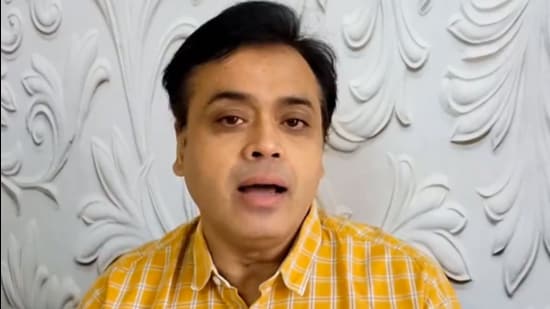
“We will protect you, but why are you bypassing the high court,” said a bench of justices MM Sundresh and Kotiswar Singh. “We are not inclined to entertain the challenge to the FIR [first information report]. We grant interim protection of four weeks to the petitioner to enable him to approach the high court.”
Sharma challenged a private person’s FIR against him for questioning the state government’s move to allot 3,000 bighas of tribal land to a private entity for a cement factory. The video was based on a Gauhati high court proceeding on it. Sharma criticised Assam’s government for divisive politics instead of focusing on issues of grave public importance.
Senior advocate Kapil Sibal, who appeared for Sharma along with senior advocate Vivek Tankha, pointed out that his client has also challenged the validity of the Bharatiya Nyay Sanhita (BNS)’s Section 152, a repackaged provision of the sedition offence (Section 124-A) under the Indian Penal Code (IPC).
Sibal said Section 152 punishes acts against the country’s integrity, sovereignty, and unity. “[It] has become an omnibus provision. They are using it against journalists, and similar matters are pending consideration before this court.”
{{/usCountry}}Sibal said Section 152 punishes acts against the country’s integrity, sovereignty, and unity. “[It] has become an omnibus provision. They are using it against journalists, and similar matters are pending consideration before this court.”
{{/usCountry}}The court agreed to tag the petition with the pending cases on Section 152. Former Army officer SG Vombatkere and Foundation for Independent Journalism, a non-profit organisation that runs the news portal ‘The Wire’, have filed petitions against this section.
In his petition, Sharma called the FIR against him “a classic case of misuse and abuse of section 152 BNS to stifle dissent and journalistic freedom.” He added that the prosecution under a provision carrying life imprisonment, over a journalistic video, is grossly inappropriate and a constitutional affront.
Sharma, who sought the quashing of the FIR, has been in journalism for over three decades. His YouTube channel has nine million subscribers.
Sharma said he was exercising his freedom of speech and expression to question the government’s decision, which cannot amount to an act against the country’s integrity and sovereignty.
“Criticism of a chief minister’s policies and politics cannot by any stretch be treated as an attack on the unity of India. If every dissenting voice against a state government is criminalised as ‘anti-national’, the constitutional guarantee of free expression becomes illusory,” said Sharma in his plea filed through advocate Sumeer Sodhi.
He added that Section 152 has been used to stifle journalistic freedom. Sharma said that such instances are part of a larger pattern of repeated misuse of criminal provisions against journalists and the government’s critics.
“At no point does the petitioner call for violence, insurrection, or public disorder. The statements are confined to questioning the use of divisive rhetoric and highlighting governance failures, which is well within the constitutional right to free expression,” he said. He pointed out that elected representatives remain open to public scrutiny and criticism in a democracy.
The FIR alleged that Sharma hurt religious sentiments with his reference to “Ram Rajya”. Sharma’s petition said nowhere in the video was the Hindu faith, much less any faith, or religious practices disparaged. “The critique was directed only towards the political appropriation of ‘Ram Rajya’ by those in power.”
Sharma quoted Assam chief minister Himanta Biswa Sarma’s speeches allegedly employing communal rhetoric. “These were not inventions of the petitioner but documented political speeches in the public domain,” he said. Sharma added that the video post explicitly condemned communal politics, urging people to look beyond polarising rhetoric and focus on governance failures.