The Supreme Court on Friday highlighted the absence of clear guidelines for assessing the potential of persons with disabilities (PwD), particularly those using assistive devices or other aids, in pursuing educational programmes.
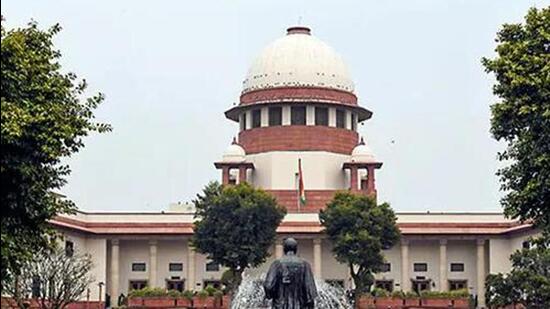
Chief Justice of India (CJI) Dhananjaya Y Chandrachud, heading a bench with justices JB Pardiwala and Manoj Misra, emphasised the principle of reasonable accommodation -- a concept enshrined in the Rights of Persons with Disabilities (RPwD) Act, 2016, which requires necessary modifications to ensure PwD can participate equally in society without imposing undue hardship. Reasonable accommodation, as defined under Section 2(y) of the RPwD Act, involves making appropriate adjustments to ensure individuals with disabilities can exercise their rights on an equal basis with others.
The bench focussed on the need for individualised assessments that take into account not just a candidate’s disability percentage but also their ability to complete the course with the help of assistive technologies.
Also Read: SC upholds contentious clause in Citizenship Act
This came during the hearing of a petition by a candidate seeking admission to an MBBS course despite an 88% disability caused by limb girdle muscular dystrophy. The candidate had cleared the NEET-UG 2024 exam, securing 601 marks and achieving an All India PwD rank of 84, but was earlier denied admission by the Bombay high court due to his high level of disability.
{{/usCountry}}This came during the hearing of a petition by a candidate seeking admission to an MBBS course despite an 88% disability caused by limb girdle muscular dystrophy. The candidate had cleared the NEET-UG 2024 exam, securing 601 marks and achieving an All India PwD rank of 84, but was earlier denied admission by the Bombay high court due to his high level of disability.
{{/usCountry}}During the hearing, senior counsel Shadan Farasat, representing the petitioner, urged the court to involve Dr Satendra Singh, a renowned disability rights activist and medical professional, in assessing the candidate’s ability to pursue the medical course. Dr Singh, noted for his work in championing the dignity and rights of PwD, was recognised by the Supreme Court in a landmark judgment on October 15, which stressed the need for flexible standards in disability assessments.
Accepting this request, the bench directed Dr Singh to independently examine the candidate and submit a report by October 21. This report will provide a crucial assessment of whether the candidate can pursue medical education, given his specific disability and the potential assistance of modern aids.
The order follows follows the Supreme Court’s October 15 judgment, where another bench comprising justices Bhushan R Gavai, Aravind Kumar and KV Viswanathan ruled that disability assessment boards must evaluate whether a candidate’s specific disability impairs their ability to complete a course, rather than relying solely on the percentage of disability. The decision reaffirmed that educational opportunities should not be denied based on rigid benchmarks and that assessments should be flexible and individualised.
The October 15 judgment has far-reaching implications for educational and regulatory frameworks, encouraging a progressive shift and ensuring that institutions assess candidates based on their potential rather than their limitations. The ruling not only highlighted the principle of reasonable accommodation but also elucidated the importance of equality and inclusive education in achieving an accessible society, making it imperative to delve into the key aspects of this judgment and its implications on disability rights in education.”
As per 2011 census, there are 26.8 million persons with disabilities in India, making up 2.21 per cent of the total population. There are 14.9 million males and 11.9 million females with disabilities in India – accounting for 56 and 44% of the total population of disabled persons.