E-Paper



SC quashes Army’s male-female seat split in Judge Advocate General branch
The court said that the “true meaning” of gender neutrality was that all meritorious candidates, irrespective of gender, must be selected

 Prefer HTon Google


No nation can be secure if half of its force is held back, the Supreme Court said on Monday as it struck down the Indian Army’s policy of earmarking six out of nine Judge Advocate General (JAG) posts for men and only three for women, holding that the move was “arbitrary”, violated the right to equality and ran contrary to the concept of gender neutrality.
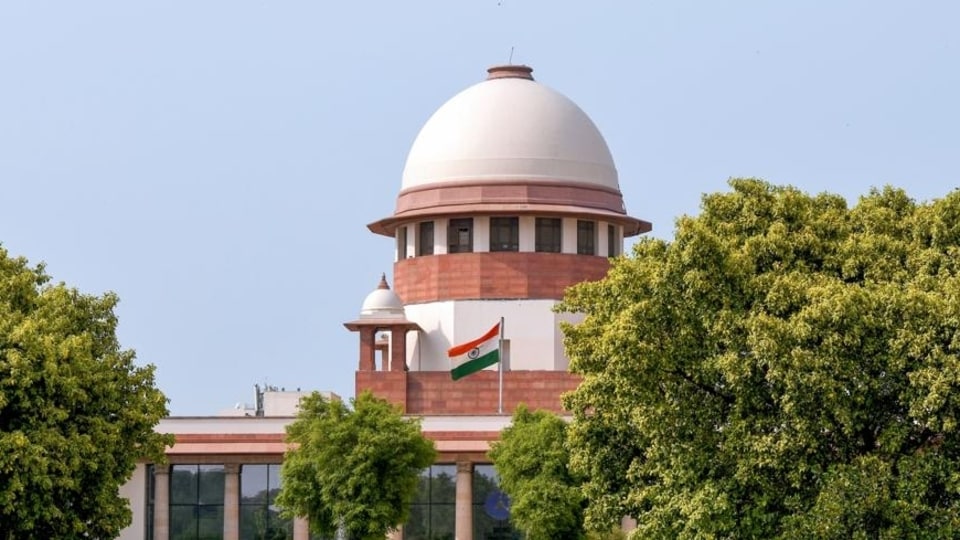
A bench of justices Dipankar Datta and Manmohan said that the “true meaning” of gender neutrality was that all meritorious candidates, irrespective of gender, must be selected. It directed the Union government and the Army to conduct future JAG recruitments without bifurcating vacancies by gender, making it clear that if all deserving candidates happen to be women, all of them must be selected.
Also Read: 60% of army’s women COs serving in operational areas
“The respondents, by notification issued under Section 12 of the Army Act, 1950, have permitted women to join the JAG branch. This court is of the view that the executive cannot restrict numbers and/or make reservation for male officers under the guise of induction by way of policy or administrative instructions…The impugned notification, to the extent it provides for only three vacancies for female candidates as against six for male candidates, is against the concept of equality,” the court said.
The judgment noted that although men and women apply for separate posts in the JAG branch, the selection criteria and testing parameters are identical. Male and female officers, it said, do not belong to distinct cadres and have no different conditions of service. “The Union of India shall recruit the most meritorious candidates irrespective of gender, as the primary role of this branch is to legally advise,” it said.
The petitions were filed by two women candidates who had ranked fourth and fifth overall but were denied selection due to the larger share of vacancies reserved for men under a 2023 notification. The bench pointed out that in this case, one petitioner had secured 447 marks, higher than the 433 scored by a male candidate ranked third in the men’s list, yet she was excluded. It held that such a selection amounted to “indirect discrimination”.
To compensate women for past exclusion, the court said the Union “shall allocate not less than 50% of the vacancies to women candidates”. But it stressed that even this figure could not operate as a cap where women outperformed men. “To restrict women to 50% of the seats despite being more meritorious than male candidates is violative of the right to equality.”
The court finalised its earlier interim directive to induct the first petitioner into the JAG branch and ordered that she be placed in the next available training course. The second petitioner was denied relief.
The court directed that henceforth, the Army must prepare and publish a common merit list for all candidates, along with the marks obtained by each participant. “This court agrees with the view that no nation can be secure if half of its population, that means its own force, is held back. We are not imposing our own predilections on the Army but implementing the Constitution and the mandate of law.”