
 E-Paper



SC refuses to lift stay on T’gana OBC quota hike
The Supreme Court upheld a Telangana High Court stay on increased OBC reservations, citing a 50% ceiling on total local body reservations.


The Supreme Court on Thursday declined to interfere with a Telangana High Court order that stayed two government orders (GOs) enhancing reservation for Other Backward Classes (OBCs) in seats in municipalities and panchayats to 42%, taking the total reservation in local bodies to 67%.
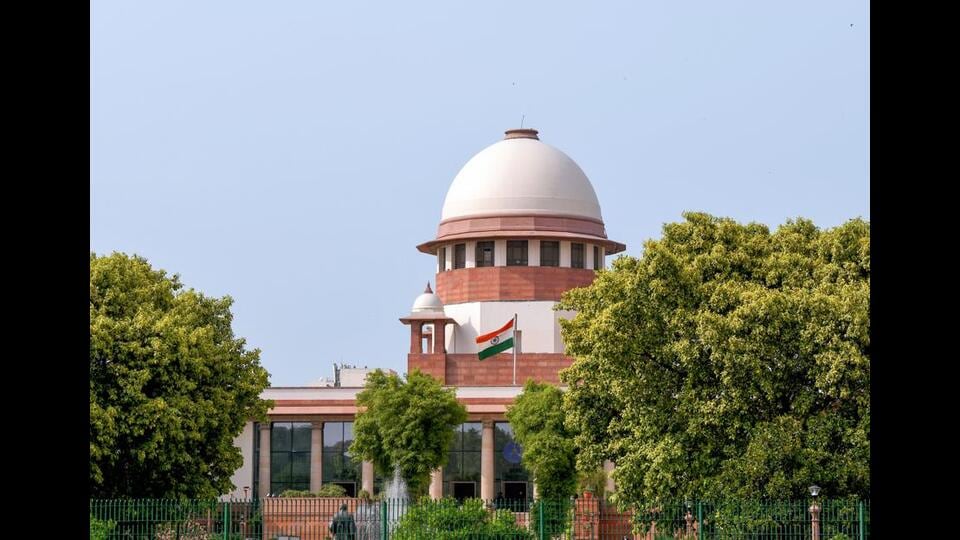
A bench of justices Vikram Nath and Sandeep Mehta, while refusing to stay the high court’s interim order, said it could not take a view different from that of the constitution bench, which fixed a 50% ceiling on total reservations in local body elections. “This dismissal will not affect the pending matter before the high court,” the bench clarified.
The bench was hearing the Telangana government’s plea challenging the high court’s October 9 order that stalled its move to raise OBC quotas, which would have taken the overall reservation, including 15% for scheduled castes and 10% for scheduled tribes, to 67%, breaching the 50% limit prescribed by the Supreme Court in earlier rulings.
Appearing for the state, senior advocate Abhishek Manu Singhvi argued that the enhanced quota was a “policy decision” aimed at empowering marginalised classes and that there was “a misconception that reservations cannot exceed 50%.” He cited the Indra Sawhney (Mandal Commission) judgment to contend that exceeding the ceiling was permissible in exceptional situations.
“It is a policy decision by the elected government to benefit marginalised classes. What is the meaning of an elected government if it cannot implement socio-economic policies?” Singhvi urged, asking the court to issue notice and allow a detailed hearing.
The bench, however, pressed the state on the timing and legality of its actions. “Why could you not issue your GOs prior to notifying the elections but on the same day?” the judges asked. They further questioned the state for bringing the GOs while the legislative process was still underway and whether its exercise had accounted for the K Krishna Murthy precedent, which mandates compliance with a “triple test” -- identifying backwardness, ensuring adequate representation, and maintaining administrative efficiency.
Singhvi responded that the state had relied on the Vikas Kishanrao Gawali (2021) judgment and had collected empirical data through a detailed socio-economic and caste survey. “The high court gave an interim stay without reasoning. That’s not justified,” he submitted, adding that the legislation allowing reservation up to 67% was itself not under challenge.
When the bench pointed out that the Bill cited by the state had yet to receive assent, Singhvi referred to the Supreme Court’s April ruling in the Tamil Nadu Governor case, arguing that the concept of “deemed assent” now applied if the Governor failed to act within a stipulated time. To be sure, the ratio of the ruling is presently under consideration by a constitution bench following a presidential reference.
Opposing the plea, senior advocate Gopal Sankaranarayanan, appearing for social activist Buttemgari Madhava Reddy, who challenged the state orders before the high court, said the stay was based on settled constitutional principles. He cited the Supreme Court’s constitution bench judgments in K Krishna Murthy (2010) and Vikas Kishanrao Gawali, which reaffirmed the 50% ceiling for reservations in local body elections. “The high court’s order strictly followed these rulings,” he said, adding that the state’s ordinances lapsed on August 30, making the subsequent GOs legally questionable.
The bench appeared in agreement, telling Singhvi: “You cannot expect us to take a view different from the Constitution Bench about the 50% ceiling,” before dismissing the plea.
The Telangana government had earlier this month approached the Supreme Court against the high court’s interim stay, arguing that the 50% cap was merely a “general guiding principle” and not an absolute limit. In its petition, the state said it had undertaken a “comprehensive and scientific exercise” through the Socio-Economic, Educational, Employment, Political and Caste (SEEEPC) Survey, 2024-25, which found that backward classes constituted approximately 56.33% of the state’s population.
Based on this data, a One-Man Commission chaired by retired IAS officer Busani Venkateshwara Rao recommended 42% reservation for backward classes in rural and urban local bodies. Acting on the recommendation, the Telangana legislature unanimously passed the Backward Classes (Reservation of Seats in Rural and Urban Local Bodies) Bill, 2025, in March.
The Bill was later reserved by the Governor for presidential consideration, and the state has claimed that it replied to all queries raised by the Union home ministry in July, but the Bill has yet to receive assent. Despite this, the government went ahead and issued the two GOs in September, prompting the high court’s stay order.
Polling for the Telangana local body elections is scheduled for October 23 and 27.
In its October 9 order, the high court imposed an interim stay on the state’s decision to provide 42% reservation for OBCs in local bodies, holding that the move breached the 50% ceiling mandated by the Supreme Court.
However, the court clarified that it was not halting the conduct of the local body elections. It allowed the state election commission to proceed with the polls by notifying the proportionate seats as open category seats, ensuring the overall reservation remained within the 50% limit.



