E-Paper



Supreme Court seeks Centre, high courts' view on hybrid hearing
The decision comes two days after the Union cabinet sanctioned the infusion of a huge corpus of ₹7,210 crore for the third phase of the eCourts mission

 Prefer HTon Google


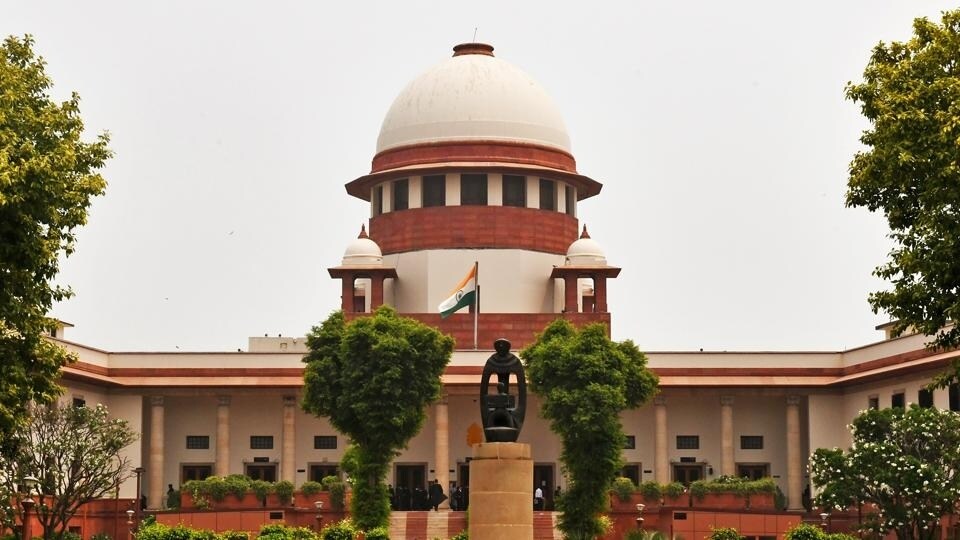
The Supreme Court on Friday sought replies from the Union government and all 25 high courts regarding continuance of hybrid hearings, calling it an “important issue” that, it said, warrants suitable directives to ensure public money spent on creating infrastructure for video-conferencing facility do not go waste.
Read here: Free speech is about putting forth view without prosecution fear, says Supreme Court
The decision of a top court to take stock of the use of technology as an enabler of open court philosophy and access to justice comes two days after the Union cabinet sanctioned the infusion of a huge corpus of ₹7,210 crore for the third phase of the eCourts mission, spearheaded by the e-committee of the Supreme Court, chaired by Chief Justice of India Dhananjaya Y Chandrachud.
The CJI, heading a three-judge bench on Friday, issued notices to the registrar generals of the high courts, giving them two weeks to inform it about the status of video-conferencing facility to conduct proceedings.
“All registrar generals shall intimate this court whether hearings in the hybrid mode are being allowed or the facility has been disbanded,” said the bench, which also included justices JB Pardiwala and Manoj Misra.
Additionally, the bench sought the assistance of solicitor general Tushar Mehta to obtain appropriate instructions from the finance ministry with respect to availability of video-conferencing facility for the proceedings being conducted by debt recovery tribunals and other tribunals, working under the aegis of the ministry.
The court further asked the registrars of the National Green Tribunal, National Company Law Appellate Tribunal and National Consumer Dispute Redressal Commission to submit their affidavits within 10 days, explaining whether hybrid hearings are being allowed by these bodies and if not, why.
“You have given us the platform to do what we have been thinking for a very long time. We will now issue some directions...Video-conferencing facility is an important point,” the bench told Sarvesh Thakur, the petitioner in the matter.
Thakur, a resident of Gurugram in Haryana, approached the court with a complaint that the Punjab and Haryana high court had stopped the video-conferencing facility, prompting the bench to widen the scope of the matter and seek replies from all high courts and the Centre.
In February, CJI Chandrachud, while hearing a separate clutch of petitions seeking access to justice through virtual courts as a matter of fundamental right for the litigants, had observed that technology “is here to stay” and cannot depend on the liking of the high court chief justices.
“Whether a chief justice understands technology or not, they are duty bound. Some tribunals are also disbanding...as if they’re saying it was only for pandemic. Technology is not only for pandemic. It’s here to stay...it’s here for future and all times to come,” remarked the court, adding it was inclined to issue a detailed order in the matter.
On the day, the CJI highlighted that a budget of more than ₹7,000 crore was being made available for the third phase of e-court project. “This money, of course, will be used for infrastructure in district courts also. Technology should not be exclusionary; it should be for inclusion of people...This money is not for our personal use. As the Chief Justice of India, I will ensure that everyone is in line. Whether they are pro-technology or not, all chief justices of high courts need to learn that technology is to be used. This is public money. Our mission is to reach out to people,” he said in February.
On Wednesday, the Union cabinet approved a corpus of ₹7,210 crore for the third phase of the eCourts mission, under which the digital infrastructure of courts are planned to be spruced up by setting up 2,500 new modern, virtual-friendly courts, establishment of 1,150 virtual courts, 4,400 eSewa kendras in all court complexes from where citizens who are not technology-savvy can access virtual courts, besides a host of judicial services online, including e-filing and e-payment of court fees.
Under the third phase, the government further seeks to digitise the entire court records, both legacy records and pending cases, estimated to be around 3,108 crore documents at a cost of ₹2,038.40 crore. The project also envisages migration of the data storage facility in courts to cloud technology providing 25 petabytes of cloud storage at an estimated cost of ₹1,205.20 crore.
Read here: Supreme Court trashes allegation against it, says it heard voice of the nation on Article 370
On Thursday, the Supreme Court linked its case management data on pending and disposed matters on the National Judicial Data Grid (NJDG), which came for praise from Prime Minister Narendra Modi who said the step would further transparency in judiciary and enhance the justice delivery system in the country.
This is the first time data on case disposal with detailed charts and graphs will be available on NJDG, a flagship project under the eCourts mission, which so far contained data with regard to trial courts and high courts.