The Supreme Court on Thursday sharply criticised the West Bengal government over the 14-hour delay in registration of the FIR after the rape and murder of a doctor at Kolkata’s RG Kar Medical College and Hospital on August 9, directed a magisterial court in Kolkata to pass an order within 24 hours on conducting a polygraph test on the accused to move the case along, and implored stirring doctors at the hospital and across the country to resume work.
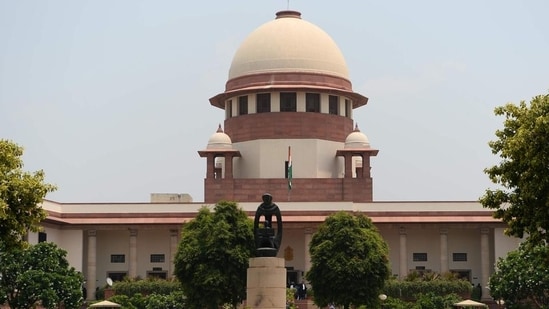
Simultaneously, the bench led by Chief Justice of India (CJI) Dhananjaya Y Chandrachud issued a stern directive to states and Union territories (UTs) prohibiting any coercive measures against doctors who participated in protests following the gruesome incident to highlight the growing concern over the safety of medical professionals.
The bench, also comprising justices JB Pardiwala and Manoj Misra, directed the Union health secretary to hold a meeting with the chief secretaries and director generals of police (DGPs) of all states and UTs within a week to establish a mechanism ensuring the safety of doctors at public hospitals.
The court’s scrutiny came during the hearing of a suo motu case, initiated in response to the horrific incident that has sparked widespread protests and a strike by doctors across the nation. The victim — a second-year postgraduate student at the state-run hospital — was found brutally assaulted and murdered in the seminar hall on August 9. A civic volunteer assigned to the hospital was arrested the next day in connection with the crime. The incident sparked widespread protests across the state, especially after the government’s delay in removing the principal and then reinstating him at another institute within four hours. The victim’s family and protesters have alleged that the crime was a gang rape, demanding a thorough investigation. An autopsy later confirmed that the victim was sexually assaulted before her death.
Read more: Kolkata rape-murder: CBI gets nod for polygraph test on ex-principal, 4 doctors
Kolkata Police in the dock Highlighting the discrepancies in the police’s records, the bench on Thursday pointedly asked senior advocate Kapil Sibal, representing the West Bengal government, why the FIR was registered only at 11.45pm, almost 14 hours after the discovery of the victim’s body.
{{/usCountry}}Kolkata Police in the dock Highlighting the discrepancies in the police’s records, the bench on Thursday pointedly asked senior advocate Kapil Sibal, representing the West Bengal government, why the FIR was registered only at 11.45pm, almost 14 hours after the discovery of the victim’s body.
{{/usCountry}}“Nothing seems to explain why the FIR was registered at 11.45pm when the incident was reported in the morning. What’s the reason for the FIR almost 14 hours after the discovery of the body? What was the principal of the college doing? What was his connection? And after he was made to step down from that hospital, how was he made the principal of another hospital? Let the investigation continue. We are going to assess the investigation,” said the bench, fixing September 5 as the next date of hearing.
It added that the top court would continue to closely monitor both the Central Bureau of Investigation (CBI) probe into the rape and murder and the Kolkata Police’s investigation into the vandalism of the crime scene within the hospital precincts on August 14 by an unruly mob that the Kolkata Police failed to control.
The court’s criticism was further underscored by the bench’s volley of questions for Sibal, who tried to assert that the Kolkata Police followed procedure even as the court appeared unconvinced.
Read more: Kapil Sibal ‘laughs’ in SC amid hearing on Kolkata case, SG Tushar Mehta reacts
“Mr Sibal, there is one aspect which is extremely disturbing. The GD (general diary) entry with regard to unnatural death is recorded at 10.10 in the morning. So, the police station is informed that there is an unnatural death. Notwithstanding all this, securing the crime scene, seizure etc. take place at 11.30 at night. What was happening all this while?” the bench asked.
The court’s examination of the case revealed further inconsistencies in the police records. Solicitor general Tushar Mehta, appearing for CBI (which took over the probe following the August 13 order of the Calcutta high court) and the Union government, raised concerns over the timing of the lodgment of the Unnatural Death (UD) case, suggesting it was suspect and highlighting the delay in the FIR registration.
“The most shocking fact is that the FIR was lodged at 11.45pm after she was cremated. First, the parents were informed that she wasn’t well, and then they were told she had committed suicide. It was only on the insistence of her colleagues and friends that a medical examination was done,” he argued.
Sibal, assisted by senior counsel Menaka Guruswamy, attempted to counter these allegations by presenting the case diary. He maintained that the UD case was registered at 1.45pm on August 9, insisting that there was no inordinate delay. Sibal also pointed to the inquest report, post-mortem report and the seizure list to bolster his claim that the police acted promptly. However, the bench remained unconvinced, noting that the facts on record indicated a significant delay in registering the FIR, a matter that would be examined further when CBI submits its next status report.
The court ordered CBI to submit another status report on its investigation into the rape and murder, while directing the Kolkata Police to submit its report on the vandalism incident by September 5. The bench further instructed the additional chief judicial magistrate (ACJM) of Sealdah, to pass an order on CBI’s request for a polygraph test of the accused within 24 hours.
Ensuring safety of medical professionalsAt the same time, the top court ordered proactive steps to address the larger issue of doctors’ safety in public hospitals, a concern that has resonated across the medical community in the wake of the Kolkata incident.
As several doctors’ associations and groups, represented by senior advocates Maninder Singh, Geeta Luthra, Vijay Hansaria, Aparajita Singh, Devdatt Kamat and Karuna Nundy laid bare a raft of concerns regarding the safety, well-being and conducive working conditions of doctors, nurses and other medical staff, the bench issued an order to ascertain that the national task force (NTF), set up by the court on August 20, will give them an audience and specific attention to their pleas regarding a distress call system, regulation of duty hours and a compensation mechanism. The nine-member NTF, comprising eminent doctors and health care administrators, has been tasked with formulating effective recommendations to remedy the issues of concern pertaining to the safety, working conditions and well-being of medical professionals. It is expected to submit an interim report within three weeks, detailing its findings and proposed measures.
Flagging the long working hours for doctors, the bench commented: “We are deeply concerned about the inhuman working hours of resident doctors across the country. Some doctors work 36-hour shifts. The committee appointed should look into streamlining the on-duty hours of all doctors; 36 or 48 hour shifts are just inhuman!”
During the proceedings, the bench appealed to all the parties and stakeholders to refrain from politicising the matter, underscoring that the court’s prime concern was to ascertain the safety and well-being of the medical professionals in the country.
“Law will take its own course, and we are assuring you that it will happen quickly... we are not just going to lay down the guidelines based on the NTF’s report, but we will pass enforceable directions to be followed by Centre and all states and UTs,” it said.
Imploring doctors who have been on strike at the RG Kar Hospital and in several government hospitals across the country, it remarked: “How does a public health infrastructure run if the doctors don’t report to work? Justice and medicine cannot go on a strike.”
To address the doctors’ predicament regarding coercive action against them for protesting against the grisly incident and demanding improved safety measures, the bench ordered: “An apprehension has been expressed on behalf of doctors that some of them have been acted against for the protest. We have been assured that doctors will resume work. In the meantime, we order that no coercive steps shall be taken against the doctors for participating in the protests prior to our passing of this order.”
Awaiting NTF’s interim report on guaranteeing the protection of the medical professionals in state-run hospitals, the court directed putting in a system for the time being.
It ordered: “In view of the fact that this court has taken certain measures to streamline the concerns of medical professionals, we expect that doctors will now continue to work. Pending submission of the NTF’s report, all states and UTs shall ensure there are adequate measures in place against apprehended violation of breach and peace at healthcare institutions.” The bench further directed the Union health secretary to convene a meeting with the chief secretaries and DGPs of every state and UT within a week and take appropriate steps to ensure their safety.
The Union ministry of health and family welfare was also directed to open a redressal portal for all the stakeholders to convey their concerns to the NTF.
“It is undoubted that the views of diverse stakeholders be taken by the NTF before framing the recommendations. To facilitate the filing of suggestions before the NTF, we direct the Secretary, Ministry of Family Welfare of the Union to open a specific portal on the website of the ministry on which the different stakeholders can submit their suggestions or consideration,” the bench recorded in its order.
Addressing Sibal’s apprehensions regarding a proposed protest in Kolkata on August 27 which the senior lawyer contended could take a violent turn, the bench clarified that its previous order directing the West Bengal government not to unleash the might of the State on peaceful protestors did not injunct the state from taking lawful measures against breaches of law and order. It, however, reiterated that there must not be coercive actions against peaceful protestors.