E-Paper



Scientists, researchers discover new gecko species endemic to Mizoram
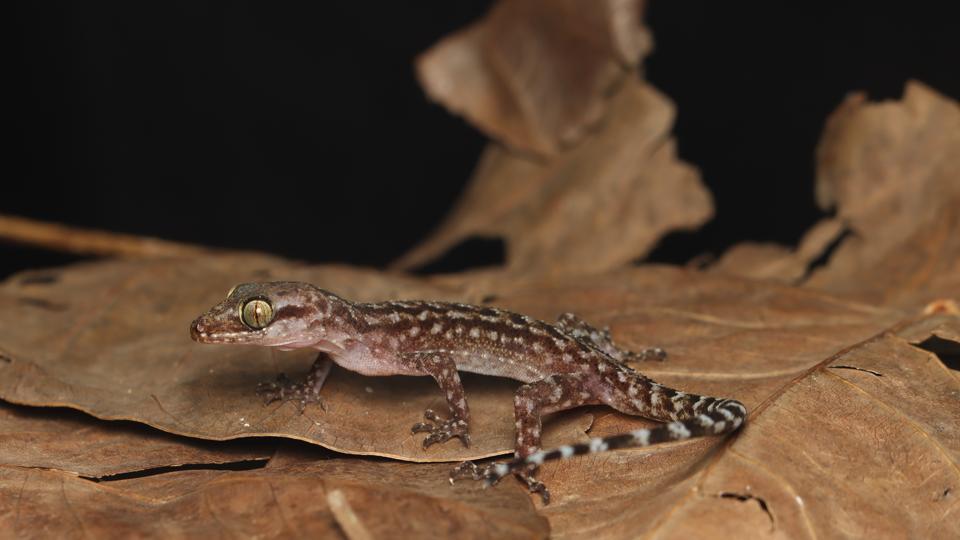
The new species has been named ‘Cyrtodactylus vairengtensis’ after the town in Mizoram where it was found, while the common name suggested for the new species is ‘Vairengte bent-toed gecko’

 Prefer HTon Google


A team of scientists and researchers have discovered a new species of gecko endemic to Mizoram, taking the number of geckos native to the state to 6, and 22 across northeast India.
Results of the discovery have been published in the latest issue of Zootaxa, a peer-reviewed journal for animal taxonomists.
There are 335 gecko species across the world, of which 42 are found in India. The new species has been named ‘Cyrtodactylus vairengtensis’ after the town in Mizoram where it was found, while the common name suggested for the new species is ‘Vairengte bent-toed gecko’.
According to the researchers, the new species was found near the human habitation at Vairengte in Kolasib district of Mizoram. A total of six specimen – three males and three females – were collected for study in June last year. The new species is a moderate-sized gecko, with adults measuring between 57.6mm and 73.6mm.
“The distinct feature of this new species is the number of femoral pores which distinguishes it from other members of the Cyrtodactylus family,” said Lal Muansanga, from the zoology department of Mizoram University, who is one of the nine persons involved in discovery.
Femoral pores are located on the underside of the hind legs in lizards that secrete a mixture of lipids and proteins and are thought to be used to attract mates and mark territories.
According to the Zootaxa report, 9-11 precloacal (also called femoral) pores were found in males and 5-9 precloacal pits were found in females of the specimens collected by the researchers.
“More extensive surveys are recommended to establish the exact range of distribution and population status of this little-known gecko, which will be important for implementing knowledge-based conservation strategies,” the report stated.
Since information on range of distribution, food preferences, breeding behaviour, other natural history, population status or potential threats to the new species are not yet known, the researchers proposed that it should be categorised as ‘data deficient’ by the International Union for Conservation of Nature (IUCN).