The Supreme Court on Monday sparked renewed debate on India's colonial-era criminal defamation laws, as it agreed to hear pleas filed by news portal The Wire seeking to quash summons in a defamation case filed by former JNU professor Amita Singh.
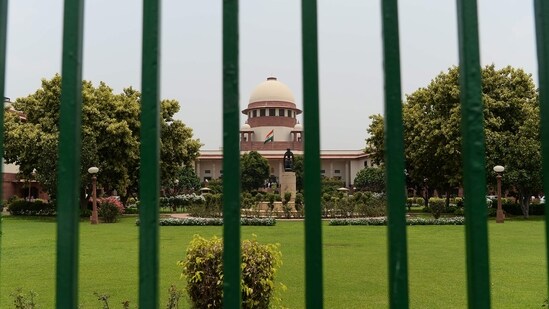
During the hearing, a bench of Justice MM Sundresh and Justice Satish Chandra Sharma said that the time has come to decriminalise the defamation law, Live Law reported.
"I think the time has come to decriminalise all this," Justice Sundresh orally commented while agreeing to issue notice on the matter.
Also Read | Air India crash: SC seeks Centre, DGCA replies on ‘fair, expeditious’ probe plea
The top court made the observation while hearing a plea against The Wire and its Deputy Editor Ajoy Ashirwad Mahaprastha. The case stems from a 2016 article published by The Wire, titled “Dossier Calls JNU 'Den of Organized Sex Racket'; Students, Professors Allege Hate Campaign”.
Former JNU professor Singh alleged that the article, authored by Ajoy Ashirwad Mahaprastha, falsely implied she authored the controversial dossier and accused her of stoking hate against students and faculty.
{{/usCountry}}Former JNU professor Singh alleged that the article, authored by Ajoy Ashirwad Mahaprastha, falsely implied she authored the controversial dossier and accused her of stoking hate against students and faculty.
{{/usCountry}}Also Read | Supreme Court approves draft Constitution for the AIFF
The complaint alleged that the editor did not verify the authenticity of the dossier and used it to benefit its magazine financially, defaming Singh's reputation.
Represented by Senior Advocate Kapil Sibal, the petitioners, including Foundation for Independent Journalism (the trust which runs The Wire), are challenging a fresh summons issued by a Delhi court.
Also Read | Why Trump is suing New York Times for a massive $15 billion
A Delhi metropolitan court had passed a summoning order against The Wire's Siddharth Bhatia and Ajoy in 2017. The Delhi High Court had quashed those original summons in 2023, but the Supreme Court reversed that decision in 2024 and remanded the case for fresh consideration.
A second round of summons, now being contested, was upheld by the Delhi High Court in May 2025.