
 E-Paper



Supreme Court approves draft Constitution for the AIFF
It also permits the existing Executive Committee led by President Kalyan Chaubey to complete its tenure next year

 Prefer HTon Google


New Delhi: The Supreme Court on Friday approved the draft Constitution for the All India Football Federation (AIFF) to herald a new era for Indian football, one that is based on fairness, transparency, and accountability while permitting the existing Executive Committee led by President Kalyan Chaubey to complete its tenure, which will end in September next year.
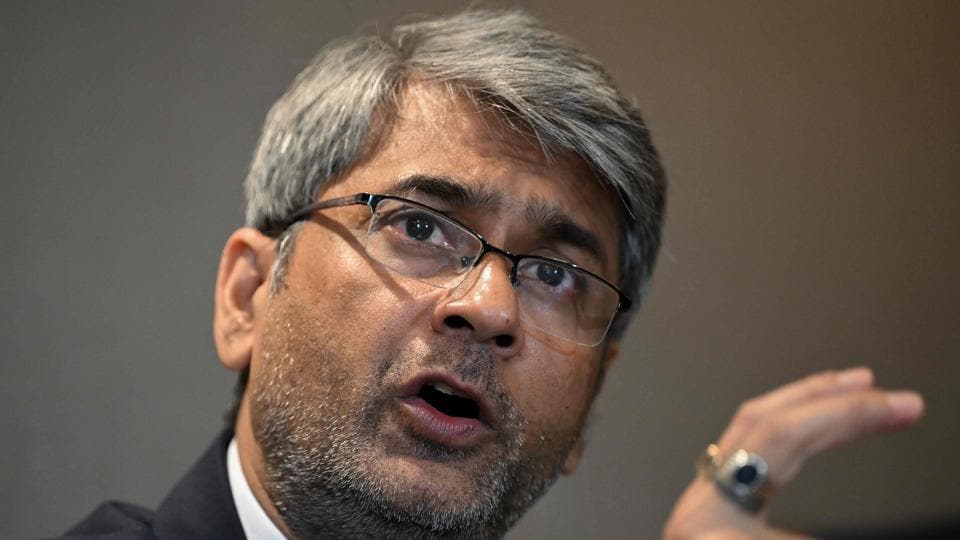
Suggesting changes in some key provisions of the constitution, that was finalised by former Supreme Court judge, justice L Nageswara Rao, the top court directed the AIFF administration to call for a special general body meeting within four weeks and adopt the draft Constitution with the modifications proposed by the court.
The bench of justices PS Narasimha and Joymalya Bagchi said, “We are of the firm opinion that the Constitution, once adopted in terms of Article 84, will mark a new beginning for Indian football and take the sport to greater heights.”
The court passed the order while dealing with an appeal filed by AIFF in 2017 challenging a decision of the Delhi high court which set aside the AIFF elections holding it to be not in compliance with the National Sports Code (NSC) of 2011.
The top court had in November 2017 stayed the HC order as it formed a committee of administrators to run the AIFF till the global football body FIFA decided to suspend the membership of AIFF.
Fresh elections were held and an Executive Committee took charge even as the court appointed amici curiae - senior advocate Gopal Sankaranarayanan and advocate Samar Bansal to assist in the framing of Constitution. The task of finalising the document was given to former Supreme Court judge L Nageswara Rao, who submitted a draft Constitution, which has now been approved with modification after receiving suggestions from amici curiae, state football associations, eminent football players, the Centre, AIFF, sports enthusiast Rahul Mehra (who filed the petition in the high court) and other stakeholders.
Harping on the unifying role that sports plays in the country by bringing together individuals from diverse social, linguistic, and cultural backgrounds under a common pursuit, a bench of justices PS Narasimha and Joymalya Bagchi underlined that it is through sports that the Constitutional objective of fraternity is realised and to this end, sports must remain accessible to all and not a privilege of the few.
The bench said, “Accessibility of sports is important, for when opportunities to participate are open to all— irrespective of race, caste, religion, sex, or economic status—the unifying power of sport is amplified. This inclusiveness ensures that sports become not a privilege of the few but a medium through which fraternity is strengthened across society.”
Sports operationalise what the framers envisioned – an intangible yet indispensable force that holds us together through shared effort and common purpose,” said justice Narasimha, writing for the bench. To this end, the bench held, it is the Constitutional duty of the state “to ensure that sporting facilities and opportunities flourish with institutional efficiency, integrity, professionalism, and expertise.”
The court rejected suggestions to reduce the proposed strength of 15 eminent players in the General Body but tweaked the criteria for deciding their eligibility. The bench said, “We are of the opinion that the freedom of choice to form an association is not in any way compromised by the requirement to incorporate 15 eminent players.” It tweaked the eligibility for eminent players for men to be one who has played 5 matches and women to be one who has played 2 matches to ensure a wider pool and participation by retired players.
As per Article 20.2, the General Body is to comprise of one representative from every Member Association; 15 eminent players elected from a national player body with minimum 5 being women, 3 club representatives, one each from ISL, I-League and Indian Women’s League, 2 representatives from Referees (male and female), and 2 representatives from Coaches (male and female).
On Vice Presidents, the court accepted AIFF’s suggestion to have three VPs, of which one would be a woman. The other changes proposed by the court related to criteria for disqualification of office bearers. The court held “We are inclined to modify the provision of disqualification based on framing of charge to the standard as envisaged in the later judgement of BCCI i.e., conviction followed by a sentence of imprisonment.” The other ground of disqualification for being a minister or government servant, the court held that if such a person is a public servant, if he or she has the necessary approval of the government, there should not be a problem for his/her continuation.
The court held that the AIFF constitution will apply even to state associations. While state associations opposed it, the bench said, “In view of the chequered history of Indian football administration, and also that governance of football undisputedly trickles down from the superstructure to the base, i.e., NSFs conform to FIFA, it is important that the state associations and local bodies conform to the NSFs.” This would also help gradual succession of office bearer(s) of the state association in the NSF, it added.
The court did not wish to disturb the current tenure of the AIFF administration amid calls by stakeholders and eminent players to hold the fresh elections. Since the current executive committee is to end its term in September 2026, the court treated the present body as a permanent body which shall discharge its function in accordance with the relevant laws and the AIFF Constitution
The court also proposed other tweaks to the definition of a “Candidate” of the executive committee to be both “a citizen and resident of India” who has attained at least twenty-five years of age, something that was not there under the draft Constitution. It further held that the definition of “immediate family” shall not include sibling(s).
The court said, “It is high time we recognize that sporting facilities and opportunities are material resources of the community and their organizers are the institutions of the national life.” As places of public resort, sporting institutions and bodies must remain accessible, not just for pursuing sport, but also for its administration, the judgment held.
“It should be the deeper sadhana (endeavour) of the State, and it is also our Constitutional duty to ensure that sporting facilities and opportunities flourish with institutional efficiency, integrity, professionalism, and expertise,” the bench said. Further, it added, “It is also necessary to ensure that sporting facilities and opportunities are not concentrated in the hands of the urban economic elite and that the revenues from sporting events, intellectual property and media rights are so distributed to subserve and encourage accessible and affordable sport in our country.”


