
 E-Paper



India's US ambassador Vinay Mohan Kwatra debunks 'myths' on FCRA bill: 'Transparency, clearer rules'
In a thread on X, the ambassador to the US has stated that the bill aims to improve transparency, make way for better governance and clearer rules.

 Prefer HTon Google


Amid the controversy surrounding the Foreign Contribution (Regulation) Amendment Bill (FCRA), 2026, India's ambassador to the United States, Vinay Mohan Kwatra, has taken to social media to debunk some 'myths' about the bill.
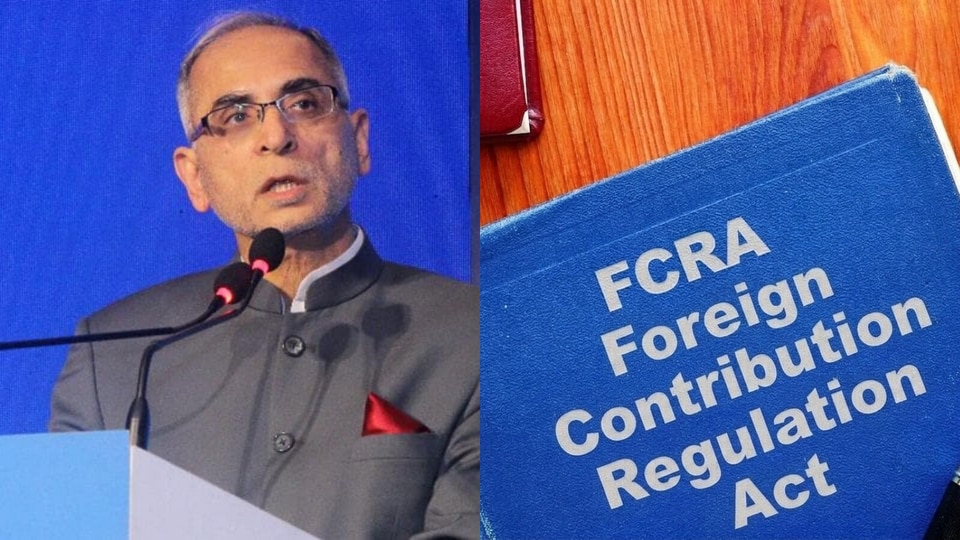
In a thread on X, the ambassador to the US has stated that the bill aims to improve transparency, make way for better governance and clearer rules.
The Indian envoy debunked five myths surrounding the bill, most of which allege that the FCRA will target religions or NGOs' assets, or cut off foreign aid to civil society.
FCRA Bill 2026: Myths debunked
The following are the five myths debunked by the Indian ambassador to the US.
Myth: India is framing a new law to cut off foreign aid to civil society.
Truth: Regulation of foreign financial flows in public and political spaces is a sovereign step driven by national security concerns. It is an accepted feature of modern governance in many democracies around the world.
The first FCRA in India came in 1976. It was replaced in 2010 with a more modern framework, and strengthened by amendments in 2016, 2018 and 2020. The 2026 Bill and Rules are the next step in the same direction: more transparency, better governance, clearer rules.
The fact is that the law does not forbid Indians from receiving foreign donations or shut down law abiding civil society. Tens of thousands of associations are registered under FCRA and routinely receive foreign funds for health, education, disaster relief, research and humanitarian work.
Myth: FCRA has adversely impacted the working of NGOs and charitable organization and the new amendment would further restrict their ability to operate in India.
Truth: In reality, foreign money inflows into India have been rising, not falling. Foreign contributions to registered organisations grew from roughly $1.2 billion in 2010–11 to $2.67 billion in 2024–25.
India has over 3 million NGOs. A bare fraction of these, only 14,450, hold FCRA registration. Thus, the overwhelming majority of the civil society organizations are entirely outside the Act.
FCRA does not stop anyone from accepting foreign charity, research grants or humanitarian aid. It asks three things — register, receive the money through laid down process, report what you did with it.
Myth: The law will lead to seizure of assets of NGOs, including religious charities, places of worship, hospitals, schools, and charitable organizations that rely on foreign donations.
Truth: India welcomes genuine international partnerships and has always provided a legal framework within which such contributions can be received and utilised.
When a registration is cancelled or surrendered, foreign contributions and the assets created from them already vest in a State Government authority. This has been in force since 2010. It is not new.
What the 2026 Bill adds is a designated authority to safeguard those assets — and a way back. If the organisation restores its registration, all assets and unused funds are returned in full.
Places of worship carry their own protection. Where a cancelled association has created property connected to a place of worship, that property goes to another FCRA-registered association of the same faith to ensure continuity of worship.
Myth: FCRA specifically targets a particular religion or community
Truth: Nothing could be farther from it. The Act applies uniformly to all organisations regardless of religion, community or ideology. Faith-based welfare activities, including religious education, maintenance of places of worship, and charitable work by organisations of every faith, continue to be eligible for foreign funding.
Myth: India is an outlier in doing this.
Truth: The US has had FARA since 1938 and FATCA since 2010. Australia legislated in 2018, and Canada in 2024. The UK's scheme came into force in July 2025. The EU is legislating now.
What is the FCRA bill, and why has it raised concerns?
The Foreign Contribution (Regulation) Amendment Bill, 2026 or FCRA, was introduced in the Lok Sabha on March 25, 2026. The bill aims to regulate foreign donations to NGOs, trusts, and associations.
Under this, a "Designated Authority" is created to manage assets funded by foreign contributions if an organisation's registration is cancelled, surrendered, or not renewed.
Several critics and the Opposition in India have argued that the bill may result in organization to lose its assets - foreign and domestic - if they fail to renew their license.
The Opposition has also flagged that the bill will target minority groups, claiming that the FCRA bill will target NGOs and other minority-run institutions.
Also Read | Opposition gears up to resist Centre's FCRA amendment; why foreign funding bill is under fire
Criticism from the US
Furthermore, the ambassador's remarks also come after US Congressman Riley Moore expressed concern over the proposed bill, alleging that provisions could allow the Indian government to take over churches and religious charities.
The Republican Congressman from West Virginia warned that in passing the bill, ties between New Delhi and Washington would be impacted.
"Christians have been in India since St Thomas the Apostle travelled to the Malabar Coast just decades after the resurrection of our Lord Jesus Christ. But despite this long Christian history, India's Parliament is considering amending Foreign Contribution Regulation Amendment (FCRA) rules to permit government takeovers of churches and religious charities,” he wrote on X.
In response to this, the ministry of external affairs stated that the FCRA was an internal matter of the country.
“Legislative matters concerning India are our internal affairs on which decisions are taken by the Parliament of the country. I would also like to point out that there are several nations, including the United States, which regulate the flow of foreign funds," said MEA Spokesperson Randhir Jaiswal.


