
 E-Paper



Sediment-flushing from 3 Indus dams completed
The flushing activities to clear riverine deposits, which were earlier subject to conditions laid down in the treaty, could be carried out usually in August

 Prefer HTon Google


The poplar-ringed main office complex for Kashmir’s Kishanganga power station in Kralpora, three hours north of Srinagar, has been the venue for daily brainstorming sessions involving a visiting federal team of experts and local engineers, who are formulating a plan for the project’s upkeep.
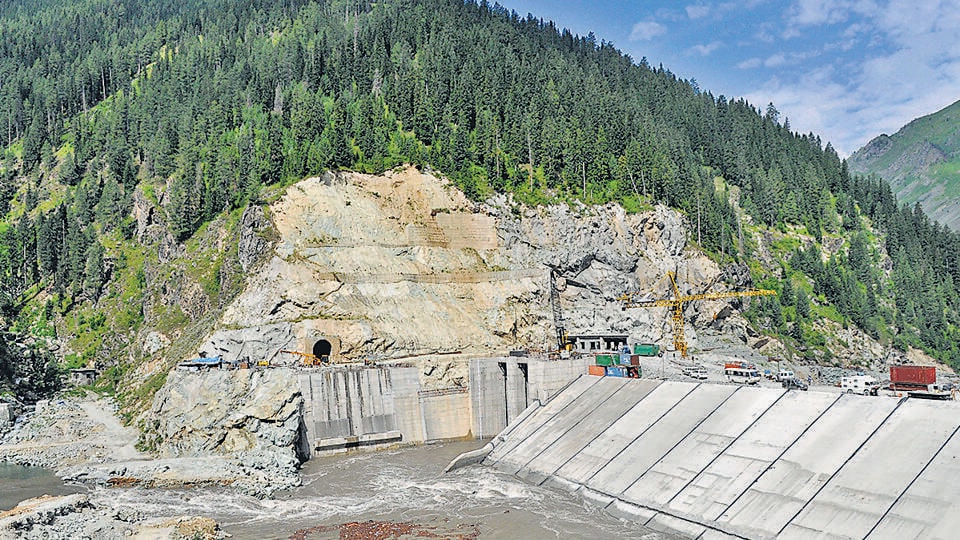
India has completed flushing sediments out of three other dams in Kashmir for the first time since they began operation decades ago and opened bids for wide-ranging upkeep activities in others, including desilting and repair, to boost power output, three officials said, requesting anonymity.
The overhaul and maintenance of dams operated by the National Hydroelectric Power Corporation (NHPC) Ltd, the country’s largest state-backed hydropower firm, is part of work undertaken outside the Indus Waters Treaty with Pakistan, which India suspended following a deadly terrorist attack in Jammu & Kashmir’s Pahalgam on April 22.
Prior to keeping the water-sharing pact in abeyance, India had been pressing Pakistan to renegotiate the treaty, citing natural changes in the Indus river basin itself, which, according to India, had diminished water availability amid a rising population.
The flushing activities to clear riverine deposits, which were earlier subject to conditions laid down in the treaty, could be carried out usually in August and only once annually.
Flushing has been completed in the 690 MW Salal, 900 MW Baglihar and the 390 MW Dulahasti dams on the Chenab river, which has helped to raise their operational efficiency, one of the officials said.
As part of the next set of activities, NHPC Ltd will carry out mechanised desiltation, for which the firm has invited bids, according to a second official.
The power company, on July 8, also opened tenders for a comprehensive “post-monsoon hydrographic survey of Salal dam reservoir at Dhyangarh for the year 2025-26”, the first official said.
The flush-out at Salal was the first to be taken up in May and desilting will be done after work is alloted in accordance with tendering conditions, said Jitendra Kumar, an official in command of the project.
Flushing is a relatively simpler process that involves releasing water to wash out less sticky deposits, but it was previously limited due to restrictions under the water treaty, according to the second official. Inadequate flushing had lowered performance of power-generation units linked to these dams, he added.
The Salal dam hadn’t been hydrographically surveyed since being built in 1987 and routine maintenance work was blocked several times due to frequent objections by Pakistan, the second official said.
Following India’s move on the treaty, Pakistan accused India of “weaponising water”. It has written a series of letters to Indian authorities to restart negotiations on the water agreement.
The Baglihar project has been substantially flushed and will be desilted for the first time since being built in 2008.
“When desilting for all the projects will be complete, power production will go up to near installed capacity because efficiency will be higher. Lack of adequate maintenance also led to a lot of wastage of resources,” the first official said.
India has quickened processes to kick off proposed infrastructure on the Indus system as well as speed up work on existing ones after suspending the 1960 water-sharing pact. India and Pakistan have fought four wars but the treaty had never been paused before.
Alongside flushing, India is also planning structural upkeep work, some of which will commence within a month or two. For instance, on July 10, NHPC Ltd opened online bids for ultrasonic testing of welding joints and necessary repair at the Salal project.
This month, the power firm also invited bids for routine maintenance of hydro-mechanical equipment at the Uri-II project on the Jhelum, a tributary of the Indus river, apart from bids for a cleaning operation at the Sewa II project on the Sewa river, a tributary of the Ravi.
All these activities were difficult to carry out earlier and Pakistan had to be notified prior to undertaking the work, a third official said. “The work proposed to be done for which bids have been invited is expected to be completed by the end of this year.”


