
 E-Paper



Sedition law: What has changed after Supreme Court's 1962 order
The Supreme Court's decision will re-examine the law in light of evolving constitutional principles and the interplay of fundamental rights.

 Prefer HTon Google


The Supreme Court’s decision to refer a bundle of petitions challenging the validity of the sedition law prescribed under Section 124A of the Indian Penal Code (IPC) to a Constitution bench of at least five judges has once again brought the controversial colonial era law into the spotlight.
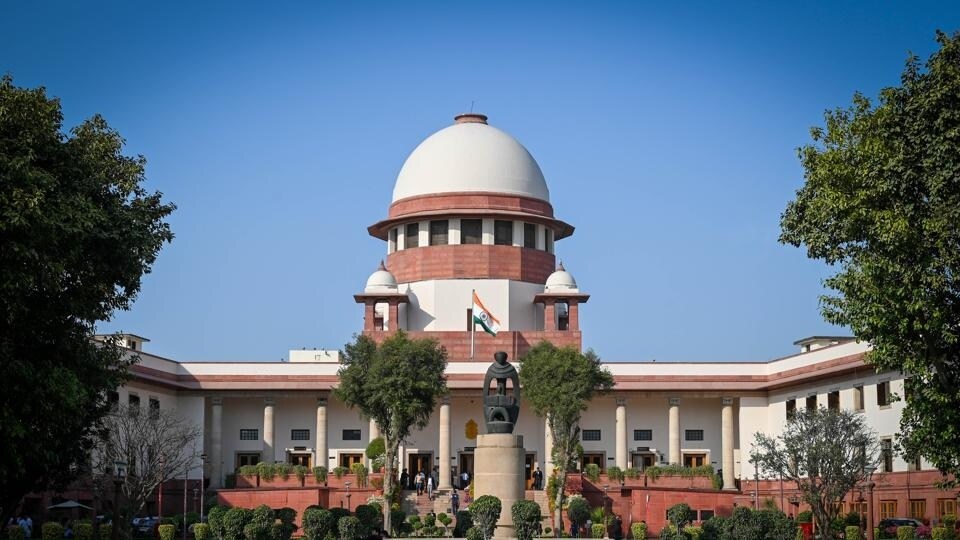
A three-judge bench, headed by Chief Justice of India Dhananjaya Y Chandrachud, remained unequivocal that the jurisprudential journey of constitutional principles, coupled with the evolution of the law in the last six decades, requires a close consideration by a larger bench before the Supreme Court’s 1962 judgment affirming Section 124A could be construed as the final word on the matter.
Read here: Bench of at least 5 judges will rule on sedition law
While making the reference, the court shot down the Centre’s plea to hold on because a new law on the subject was in the pipeline, and that an examination of Section 124A may have a bearing on the prospect of the proposed provision. The court held that pendency of a proposed law cannot become a reason to postpone examining a “live challenge” to Section 124A, which, it noted, remains on the statute book as on date and that the prosecutions under the said provision will continue for those already booked under it even if a new law is notified in future.
The colonial era law, which many say is used to quell protests and to quieten criticism against the government, carries a maximum punishment of life imprisonment and the police can arrest individuals without a warrant. The law has been amended after independence, only to make it more stringent and authorising arrests without warrants.
The proposed law, introduced by the Centre in the Lok Sabha on August 11 and subsequently referred to a parliamentary panel, has effectively retained sedition as a crime under a different name and with an expansive definition.
At a time when the Centre mulls over retaining the law on sedition in a new form, the Supreme Court’s decision to scrutinise Section 124A through the lens of jurisprudential transformation presents an intriguing development, necessitating a deep dive.
The 1962 judgment under the SC radar
The validity of the sedition law was tested for the first time in independent India by the then Punjab high court in 1951 in Tara Singh Gopi Chand Vs The State. The high court struck down Section 124A, terming it a restriction on the freedom of speech and expression under Article 19 of the Constitution of India. It was this judgment that prompted the Jawaharlal Nehru government to introduce, through a constitutional amendment, new grounds on which the right to freedom of speech and expression could be reasonably restricted.
But in 1954, the Patna high court, in Debi Soren & Ors Vs The State, upheld the validity of Section 124A, holding the law does not violate Article 19 of the Constitution. Seven years on, the Allahabad high court declared Section 124A void. In 1958, the Allahabad high court invalidated the law in the case of Ram Nandan Vs State, holding that the government must be ready to face a strong opposition apart from popular approval or disapproval.
The conundrum arising from various views of the high courts was finally settled by the Supreme Court by its constitution bench judgment in Kedar Nath Singh Vs State of Bihar in 1962, which is considered by far the most authoritative judgment of the apex court on the interpretation of the sedition law.
The five-judge bench in this case upheld the validity of the sedition law under the IPC, holding that the purpose of the crime of sedition was to prevent the government established by law from being subverted because “the continued existence of the Government established by law is an essential condition of the stability of the State”.
The judgment evaluated the legality of Section 124A on the anvil of Article 19 that protects free speech, subject to reasonable restrictions, and concluded that any law which is enacted in the interest of public order may be saved from the vice of constitutional invalidity.
Simultaneously, the bench outlined the scope of Section 124A, highlighting that the provision only penalised words that reveal an intent or tendency to disturb law and order or that seem to incite violence. A pernicious tendency to incite violence is a precondition to invoke the sedition clause, said the court, adding the penal provision cannot be used to stifle free speech. This definition has been taken as the judicial precedent for all matters pertaining to Section 124A ever since.
Evolution of jurisprudential principles since 1962
The verdict in the Kedar Nath case borrowed heavily from a line of previous judgments relying on a six-judge decision in AK Gopalan Vs State of Madras in 1950. The validity of a preventive detention law was challenged before the court, citing violation of Article 19 (freedom to move), which was argued by the petitioner as an intrinsic aspect of Article 21 (personal liberty).
The constitution bench, however, resorted to textual interpretation, focusing on the plain meaning of the constitutional provision and looking at each such article in a silo. The six-judge bench, by majority, ruled that Article 19 has no application to a law which relates directly to preventive detention since this provision deals with freedom to move and free speech, among others.
“The concept of the right to move freely throughout the territory of India referred to in Article 19 (1) (d), of the Constitution is entirely different from the concept of the right to personal liberty referred to in Article 21, and Article 19 should not, therefore, be read as controlled by the provisions of Article 21,” said the court.
Holding that Articles 19 and 21 deal with different aspects of “liberty”, the court declared that each of the articles in the Constitution covered different subject matters and should be read as independent codes rather than being read together. The judgment emphasised on the “object” test to determine whether the object of an impugned law falls foul of the Constitution.
The year 1970 witnessed the first chapter of a paradigm shift in the way AK Gopalan was decided. In RC Cooper Vs Union of India (popularly known as Bank nationalisation case), the top court took a view that two different articles in the Constitution could be read together. It differed with the view taken by the apex court in the AK Gopalan case that certain articles of the Constitution enact a code dealing exclusively with matters dealt with therein and that the protection which an aggrieved person may claim is circumscribed by the “object of the State action”.
“In the Constitution, the enunciation of rights either expressly or by implication does not follow a uniform pattern. But one thread runs through them; they seek to protect the rights of the individual or groups of individuals against infringement of those rights within specific limits. Part III of the Constitution (enumerating fundamental rights) weaves a pattern of guarantees on the texture of basic human rights,” held the 11-judge bench.
Propounding the ‘effect test’ instead of the ‘object’ test as cited in the AK Gopalan case, the larger bench ruled that it is not the object of the authority making the law impairing the right of a citizen, nor the form of action that determines the protection he can claim; it is the effect of the law and of the action upon the right which attract the jurisdiction of the court to grant relief.
“If this be the true view, and we think it is, in determining the impact of State action upon constitutional guarantees which are fundamental, it follows that the extent of protection against impairment of a fundamental right is determined not by the object of the Legislature nor by the form of the action, but by its direct operation upon the individual’s rights,” it said.
Eight years later, the judgment in Maneka Gandhi Vs Union of India categorically rejected the AK Gopalan case’s textualism and declared that fundamental rights must be read as a cohesive bill of rights rather than an exclusive grouping of distinct guarantees.
“Articles dealing with different fundamental rights contained in Part III of the Constitution do not represent entirely separate streams of rights which do not mingle at many points. They are all parts of an integrated scheme in the Constitution...Isolation of various aspects of human freedom, for purposes of their protection, is neither realistic nor beneficial but would defeat the very objects of such protection,” ruled the seven-judge bench.
In his distinguished style, justice VR Krishna Iyer, one of the judges on the bench, said: “No article in the Constitution pertaining to a fundamental right is an island in itself...Just as a man is not dissectible into separate limbs, cardinal rights in an organic constitution have a synthesis.”
The way forward
At the time of making the reference to a bench of at least five judges, the Supreme Court on Tuesday pointed out that the discussion in the 1962 judgment highlights that Section 124A was tested on the parameters of Article 19 because the constitutional position, as it was at the time, laid down that a challenge to a law can be brought only by citing a specific fundamental right.
Read here: Sedition gets new name in bill; ambit wider, penalty harsher
“But we now have evolved constitutional principles on doctrine of proportionality and Article 14. Subsequent judgments have given way to a more substantive reading of Article 14 and a more nuanced principles of the doctrine of proportionality...the 1962 judgment apparently has not considered the interplay between articles 19 and 14,” it observed.
The reference order thus recorded: “At the point in time when the constitution bench ruled on the validity of the provision, the challenge on the ground that Section 124A violated Article 19(1) (a) of the Constitution was tested only on the anvil of that article. This must be read in the backdrop of the constitutional position as laid down by this court at the relevant time...There was no challenge on the ground that Section 124A violated Article 14 nor did the constitution bench have occasion to consider the validity of the provision against a constitutional challenge on the basis of Article 14.”
Referring to the jurisprudential shift enunciated in the apex court rulings in the RC Cooper and Maneka Gandhi cases, the order added that the position, as it has evolved in constitutional jurisprudence, is that the fundamental rights do not exist in silos. “There is, in other words, a coalescence of several of the rights protected by Part III. Article 14, which presents an overarching principle of reasonableness permeates Articles 19 and 21 as well,” the court emphasised.
As only a bench of a coordinate strength or a larger bench can clarify or review the previous verdict, the court said that a bench of five or more judges should be set up to take a call whether the 1962 verdict in the Kedar Nath Singh case warrants a reconsideration or lending an interpretation to it in line with the current jurisprudential and constitutional design could suffice.
Either way, Section 124A in the IPC will be tested all over again, engaging the attention of the highest court of the land in a thorough rights reasoning, juxtaposing structural interpretation and interplay of fundamental rights with the sanction mandated by the State citing larger public interest. s



