With India and China agreeing to restore status quo ante on the Line of Actual Control (LAC), a meeting between National Security Advisor Ajit Doval and Chinese foreign minister Wang Yi, both special representatives on boundary resolution, will take place soon to sort out differences in perception over the undefined border, people familiar with the matter said.
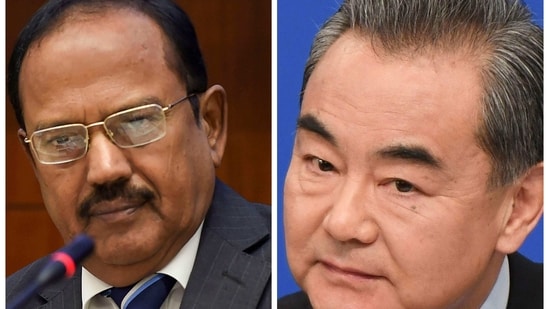
While the 10th meeting between military commanders will take place in Chushul on Saturday, the backchannel talks between the special representatives have ensured that no side will unilaterally alter the status quo along the 3488km long LAC and the status quo ante will be restored on all points. Doval and Wang had a video conference on June 7, 2020, and have kept in touch, with external affairs minister S Jaishankar holding the diplomatic end of conversations with Beijing.
Although both Indian and Chinese military commanders have been showcasing their role during the 10-month stand-off, the governments on both sides are taking a step forward to normalise relations on a reciprocal basis.
It is understood that the Indian side has made it clear that it will stand up to any use of force but is willing to discuss and build a positive atmosphere for sorting out all outstanding issues related to the LAC.
“We have conveyed that the two sides can sit together and work their way towards resolving differences in perception over the LAC after China has created positivity by restoring status quo ante on Pangong Tso. There can be no dialogue if PLA uses force but if China can persuade that India is wrong or vice versa on border perception, then the two sides can mutually adjust to the perception line,” said a senior official in the know of the developments.
{{/usCountry}}“We have conveyed that the two sides can sit together and work their way towards resolving differences in perception over the LAC after China has created positivity by restoring status quo ante on Pangong Tso. There can be no dialogue if PLA uses force but if China can persuade that India is wrong or vice versa on border perception, then the two sides can mutually adjust to the perception line,” said a senior official in the know of the developments.
{{/usCountry}}Also Read | Beijing on diplomatic charge amid pullback
According to national security planners, it is for China to create a positive atmosphere for forward movement in bilateral ties as India will respond in kind and more. “The trajectory that India and China ties take from Pangong Tso disengagement depends on Beijing but the PLA (People’s Liberation Army) withdrawal has been taken in the right spirit in New Delhi,” said a former Indian Army chief.
After the disengagement from Pangong Tso, the military commanders on Saturday are expected to work out the modalities of withdrawal of armour and artillery from friction points at Gogra-Hot Springs and work out the modalities for restoring full patrolling rights to the two sides in the Depsang Bulge area, south of Daulet Beg Oldi sector.