E-Paper



Supreme Court closes environmentalist MC Mehta's PIL on Delhi pollution after 40 yrs
The court noted that the proceedings had involved continuous mandamus for nearly 40 years, resulting in numerous directions on environmental issues.


The Supreme Court on Thursday formally disposed of the landmark 1985 public interest litigation filed by environmentalist MC Mehta that led to nearly four decades of continuous judicial oversight on pollution control in Delhi — from the conversion of the city’s bus fleet to CNG to restrictions on firecrackers and the phasing out of older commercial vehicles.
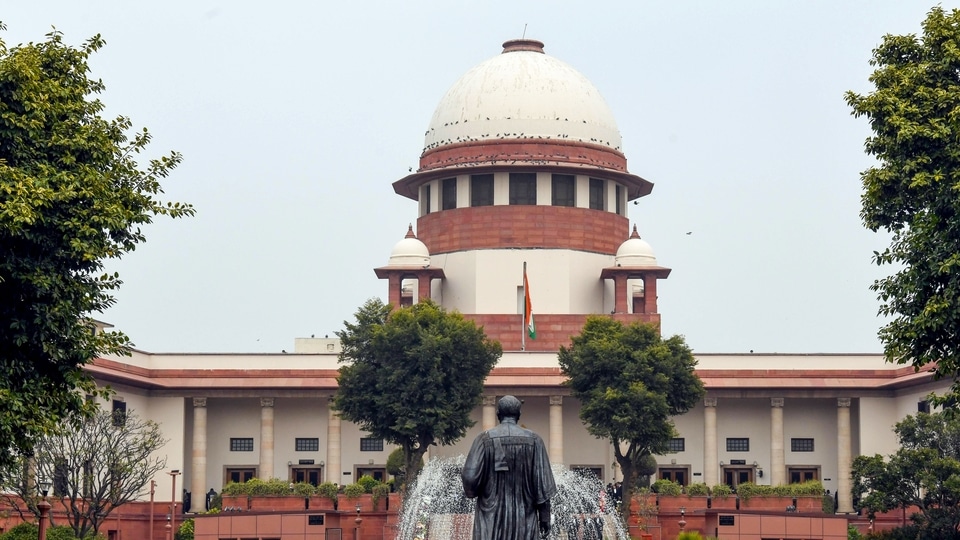
A bench comprising Chief Justice of India Surya Kant and justices Joymalya Bagchi and Vipul M Pancholi closed Writ Petition No. 13029/1985, noting that the proceedings had involved continuous mandamus for nearly 40 years, resulting in numerous directions on vehicular pollution, industrial emissions, waste management and other environmental issues.
To be sure, the bench directed the registry to register fresh suo motu proceedings captioned under “Issues of Air Pollution in NCR,” ensuring that the court’s oversight of pollution-control measures in the National Capital Region continues under a new set of hearings. Nonetheless, the procedural change caps a case that had set the paradigm for judicial intervention in environment issues in India, where the toughest of curbs have been ordered by court.

Over four decades, a series of applications tagged onto the petition reshaped the environmental governance of the national capital in particular. It was under this case that the Supreme Court in 1998 accepted the recommendations of the Bhure Lal Committee and ordered the conversion of the capital’s entire bus fleet to CNG — a direction that transformed Delhi’s public transport and became a global reference point for court-led clean-fuel transitions.
The case also led to the phasing out of leaded petrol across India’s metros in 1994, the constitution of the Environment Pollution (Prevention and Control) Authority in 1998, and the imposition of the environment compensation charge on commercial vehicles entering Delhi in 2015. As recently as last year, the court was adjudicating firecracker restrictions – especially its directions to use green firecrackers --- in the NCR under the same case number.
Also Read: SC accepts CAQM proposal to hike ECC, commercial vehicles to pay more to enter Delhi
On February 23, the court expressed concern that famous PILs from the 1980s — long since decided on their original causes — continued to appear as “pending” before the court due to the constant filing of fresh applications, creating a misleading impression before Parliament about the court’s pendency figures. “Let us give a fresh look at these matters instead of carrying the burden from the past,” the bench said at the time.
“So many commissions, court-monitored probes, and regulations have come into force. I hope the vigilance continues afterwards,” Mehta told HT on Thursday, hours after the top court order.
“The MC Mehta case set up a new area of jurisprudence in India and a new environmental framework. It became a catalyst for far-reaching changes and helped accelerate action at a time when policy-level action was not picking up momentum. Essentially, it laid the foundation of clean air in Delhi-NCR,” said Anumita Roy Chowdhury, executive director for research and advocacy at the Centre for Science and Environment.
On Thursday, the bench noted that all parties were on board with the decision to wrap up the writ petition and directed that no further interlocutory or miscellaneous applications will be accepted.
All pending interlocutory applications in the case will now be converted into separate writ petitions, to be categorised based on issues such as vehicular pollution, air quality, power plants and waste management.
During the hearing, the bench also voiced concern over the misuse of public interest litigation, remarking that some PILs appeared to originate from outside the country and were allegedly funded by external forces. The court observed that no new petitions should be accepted without the court’s permission in sensitive matters like air pollution.
The court also issued directions to strengthen compliance ahead of hearings. It directed CAQM to ensure that all its reports are made available to the parties in advance, while the governments of Delhi, Haryana, Uttar Pradesh and Rajasthan were instructed to file and circulate their compliance reports in a timely manner.
The 13029/1985 petition is one of three long-running MC Mehta cases before the Supreme Court.
The other two — WP(C) No. 13381/1984, relating to the Taj Trapezium Zone, and WP(C) No. 4677/1985, relating to Delhi’s Master Plan and the sealing of unauthorised constructions — are also being reorganised, with their interlocutory applications listed separately, but have not yet been formally disposed of.