E-Paper



Syndicate of IT officers with businessmen and hawala traders must be unearthed: SC
A bench, headed by justice Surya Kant, underlined that corruption poses a serious threat to society and must be dealt with iron hands.

 Prefer HTon Google


There appears to be a well-organised syndicate comprising officials of the Income Tax department, businessmen and hawala traders that requires to be probed uninterruptedly, the Supreme Court noted on Monday, as it denied pre-arrest bail to an additional commissioner of income tax posted in Gujarat’s Ahmedabad.
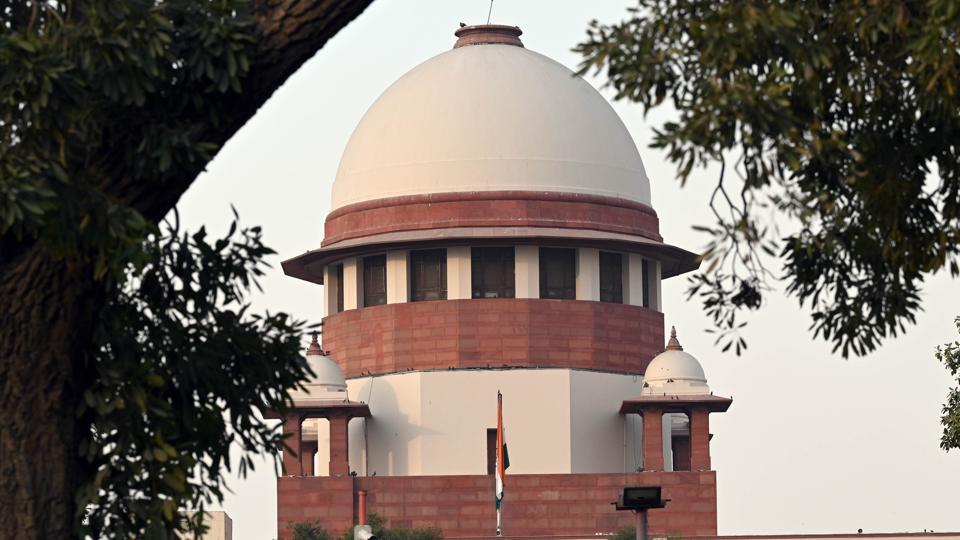
A bench, headed by justice Surya Kant, underlined that corruption poses a serious threat to society and must be dealt with iron hands. “It not only leads to abysmal loss to the public exchequer but also tramples good governance. The common man stands deprived of the benefits percolating under social welfare schemes and is the worst hit,” said the bench, asking the courts to remain “extra conscious” in matters involving corruption.
Setting aside the December 2022 order of the Gujarat high court granting protection from arrest to the income tax officer accused of demanding and accepting a bribe from a businessman, the top court noted that the high court erred in brushing aside the allegations lightly.
“There appears to be a well-organised syndicate comprising officers and officials of the Income Tax Department, businessmen and hawala traders, who are in tandem. Such a nexus needs to be unearthed through an unimpaired and unobstructed investigation,” said the bench, which also included justice JK Maheshwari.
The top court also clarified that there is no requirement of a prior sanction or approval under the Prevention of Corruption Act to conduct an investigation into any offence alleged to have been committed by a public servant in cases involving arrest of the person on the spot on the charges of accepting undue advantage.
“A prior approval or sanction to investigate such an officer in a trap case is likely to defeat the very purpose of trap and the investigation, which is not the underlying intention of the legislature. The investigation against Respondent No. 1 (officer), being accused of demanding a bribe, did not require any previous approval of the central government,” it added.
Allowing the appeal filed by the Central Bureau of Investigation (CBI) against the high court order, the apex court held that the courts must draw a delicate balance between liberty of an individual, as guaranteed under Article 21 of the Constitution, and the need for a fair and free investigation, which must be taken to its logical conclusion.”
It pointed out that though arrest has devastating social stigma, humiliation and other fearful consequences, when the court, on consideration of material information gathered by the investigating agency, is prima facie satisfied that there is something more than a mere needle of suspicion against the accused, it cannot jeopardise the investigation.
Satisfied with the presence of prima facie material against the officer concerned, the bench set aside the order granting pre-arrest bail, clearing the decks for CBI to make arrest.