
 E-Paper



Supreme Court grants Centre time to respond to plea on Hindus’ minority status
The Supreme Court on Monday said it will hear the contentious issue of granting minority status to Hindus in states where they are fewer in number on May 10.

 Prefer HTon Google


After the central government sought more time from the Supreme Court to file its response to a host of petitions that want a state to be considered as the basis for determining religious and linguistic minorities, the apex court said on Monday it will hear the contentious issue of granting minority status to Hindus in states where they are fewer in number on May 10.
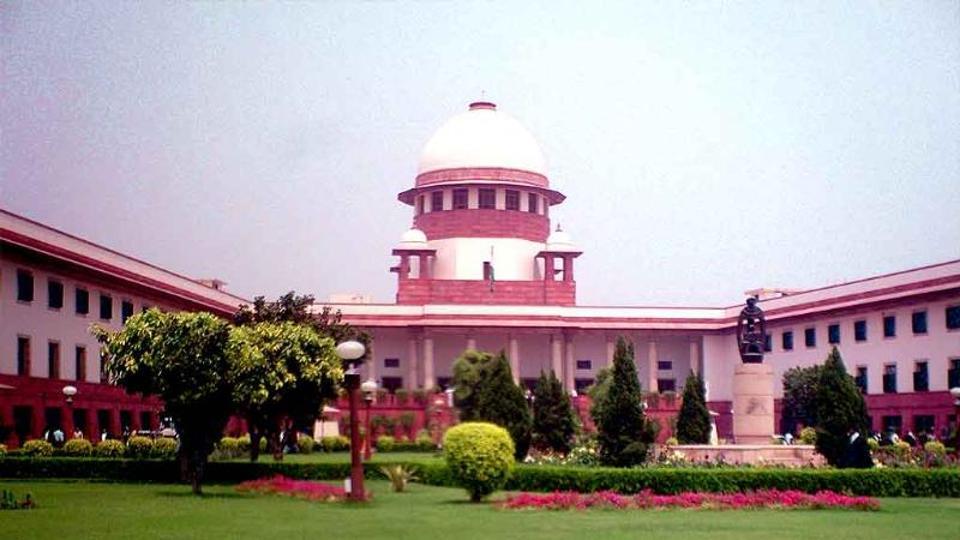
The court was hearing a public interest litigation (PIL) filed by advocate and Delhi Bharatiya Janata Party leader Ashwini Kumar Upadhyay seeking identification of religious minority communities at the state level “to ensure that only those religious and linguistic groups which are socially, economically, politically non-dominant and numerically inferior, can establish and administer educational institutions of their choice.”
As a similar issue was pending consideration before three other high courts, the top court had earlier allowed those matters to be transferred to this court from the respective high courts of Delhi, Gauhati and Meghalaya.
As the petition came up for hearing, solicitor general Tushar Mehta, appearing for the Centre, told the court that he was yet to go through the response submitted by the ministry of minority affairs on Sunday.
The bench of justices Sanjay Kishan Kaul and MM Sundresh allowed Mehta four weeks to file a comprehensive response on behalf of all concerned ministries on the issues raised in the petition.
Upadhyay’s petition challenged the validity of Section 2(f) of the National Commission for Minority Educational Institutions (NCMEI) Act, 2004, and raised an issue that if the central government could restrict minority benefits to the six religious minority communities, it should have a corresponding power to declare Hindus as minorities in states where they have significantly less population.
It pointed out that Hindus are merely 1% in Ladakh, 2.75% in Mizoram, 2.77% in Lakshadweep, 4% in Jammu and Kashmir, 8.74% in Nagaland, 11.52% in Meghalaya, 29% in Arunachal Pradesh, 38.49% in Punjab, and 41.29% in Manipur.
The response of the ministry of minority affairs filed on Sunday was widely reported in the media stating that while the central government has notified six minority communities at the national level, namely Christians, Sikhs, Muslims, Buddhists, Parsis and Jains, it was open for states and union territories to notify Hindus as a religious or linguistic minority where they are numerically in minority.
The minority affairs ministry said, “The state governments can also declare a religious or linguistic community as a ‘minority community’ within the state,” and gave examples of how the Maharashtra government notified Jews as a minority community in 2016 and the Karnataka government notified Urdu, Telugu, Tamil, Malayalam, Marathi, Tulu, Lamani, Hindi, Konkani and Gujarati languages as minority languages within the state.
The bench noted this aspect in its order and said, “The solicitor general submits that the stand of the Centre will be placed on record as he has not vetted the affidavit (by the union minority affairs ministry), even though it has appeared in newspapers.”
The bench granted four weeks to the Centre to file its response and set the matter for hearing on May 10.
Besides minority affairs, the petition has named three central ministries — law and justice, education and home affairs — as party to its petition, and it was possible that Mehta did not represent the minority affairs ministry, which filed the affidavit. In a lighter vein, Mehta told the court, “Some public interest litigations have this peculiarity that even before it reaches us, it reaches the media.”
Senior advocate Vikas Singh, appearing for Upadhyay, submitted that the old law determining minorities should go and a new law be brought in that allows states to identify the benefits accruing to minorities based on their number.
The petition argued that benefits available to the minorities to establish and run institutions are misused by communities that are in the majority. “The classification of religious minorities by the Centre at pan-India level has not only created a wave of inequality across different states, but also encouraged those who did not belong to that minority religion to convert themselves for social, political and economic benefits,” the petition said.


