E-Paper



Supreme Court raps ED, CBI for delay in probe against Reliance Communication, Anil Ambani: 'Very serious issue’
Court asked the agencies and the Centre to take all preventive steps to ensure that Anil Ambani does not leave the country.

 Prefer HTon Google


The Supreme Court on Wednesday came down heavily on the Central Bureau of Investigation (CBI) and the Enforcement Directorate (ED) for their delay in probing allegations of a massive bank fraud involving Reliance Communications and its former promoter Anil Ambani.
Also read: Ajit Doval told Marco Rubio India 'won't be bullied, will wait out Trump's term': Report
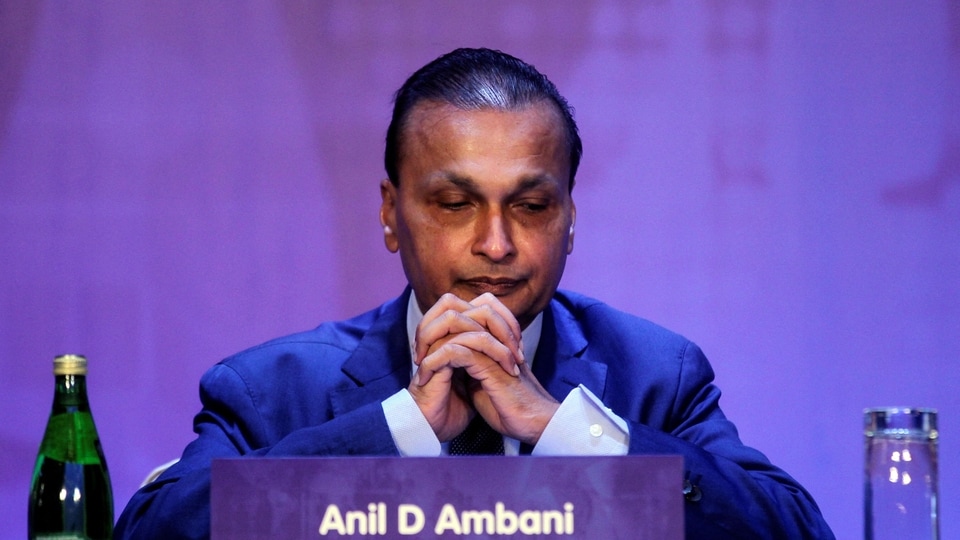
It asked the agencies and the Centre to take all preventive steps to ensure that Ambani does not leave the country as the court fast-tracks and monitors the investigation. Ambani, on his part, undertook not to leave India without the court’s nod and also offered to settle all dues on a consolidated basis following an independent assessment.
A bench, headed by Chief Justice of India Surya Kant, emphasised that the nature and scale of the alleged offences warranted a far more rigorous and comprehensive probe, including multiple preliminary enquiries (PEs) and regular cases (RCs), instead of a single FIR. “This is a very serious issue…What is the problem in registering different RCs for distinct offences? Today, we are not issuing any coercive order but we expect your agencies must act fairly, swiftly and without any fear or favour. Such a huge amount has been said to be siphoned…your agencies have to act… We still expect CBI and ED will do their job. If we find that they are avoiding or evading, we will take other measures,” the bench, also comprising justices Joymalya Bagchi and Vipul M Pancholi, observed, while noting that different banks, entities and transactions were involved.
The court termed the CBI’s procedural objections such as the requirement of sanction as “totally misconceived”, adding they could not be allowed to stall investigation where there was material indicating siphoning of funds and collusion.
The order came in a public interest litigation filed by retired bureaucrat EAS Sarma, seeking a court-monitored probe into alleged fraud running into tens of thousands of crores of rupees involving public sector banks and financial institutions.
During the hearing, Sarma’s counsel Prashant Bhushan pointed out that a forensic audit by Bank of Baroda had flagged irregularities as early as 2020, but complaints were lodged with CBI only in 2025. Assisted by advocates Pranav Sachdeva and Neha Rathi, Bhushan submitted that the first arrest was made only after the top court issued notice in the matter.
The bench expressed concern over the delay, saying both CBI and ED had “taken their own time in swinging into action” and that there could be no further delay. It directed the agencies to act “fairly, swiftly and without any fear or favour” given the magnitude of the alleged siphoning of public funds.
In its order, the court said the CBI’s approach of registering a single FIR did not appear to be in conformity with procedural law, as the complaints related to different transactions constituting separate offences. It stressed that the agency must also meticulously investigate the role of bank officials to ascertain whether loans were sanctioned in connivance with the borrower. “The argument on the need for sanction to prosecute is totally misconceived,” said the bench, directing CBI to examine institutional complicity and take the investigation to its logical conclusion.
The ED, in an affidavit placed before the court, disclosed that its investigation had so far revealed large-scale defaults by multiple Reliance Group entities. According to the agency, Reliance Home Finance Ltd (RHFL) defaulted on loans worth ₹7,523.46 crore taken from 33 banks and financial institutions, of which lenders could recover only ₹2,116.28 crore after resolution, leaving net defaults of ₹5,407.18 crore constituting alleged proceeds of crime under the Prevention of Money Laundering Act (PMLA).
Similarly, Reliance Commercial Finance Ltd (RCFL) defaulted on loans of ₹8,226.05 crore taken from 21 lenders, with recoveries of only ₹1,945.48 crore, resulting in alleged proceeds of crime amounting to ₹6,280.57 crore.
In the RCom case registered following a complaint by the State Bank of India, ED stated that RCom and its group companies — Reliance Telecom Ltd and Reliance Infratel Ltd, had taken loans from 13 foreign banks and institutional investors and 26 Indian banks and financial institutions, with outstanding dues totalling ₹40,185.55 crore, which also form the quantum of alleged proceeds of crime.
The ED informed the court that it has registered three ECIRs so far and recently arrested Punit Narendra Garg, former director of RCOM, who has been remanded to ED custody till February 7.
The bench advised the ED to constitute a special investigation team (SIT) of senior officers and pursue the probe to its logical end, while lamenting the “unexplained delay” on the agency’s part.
Also read: No school, gaming addiction, followed by suicide: Shocking facts in Ghaziabad minors' death case
Senior advocate Mukul Rohatgi, appearing for Anil Ambani proposed that a committee be formed under the court’s and government’s aegis to ascertain total dues and explore staggered repayment.
However, Solicitor General Tushar Mehta, representing CBI and ED, opposed any suggestion of compounding the offences, citing forensic audit findings indicating forgery and siphoning of funds, including instances where money borrowed from one bank was used to repay another.
The bench declined to constitute any committee, observing that such serious economic offences could not be condoned merely because repayment was offered. It also made strong observations on the misuse of insolvency proceedings, remarking that assets were often grossly undervalued during resolution and “manufactured auctions” resulted in negligible recoveries for lenders.
The court directed Reliance Group entities to file their affidavits within four weeks and asked both CBI and ED to file detailed status reports. The matter will be listed thereafter, with the bench making it clear it will continue to closely monitor the investigation.