The Supreme Court on Friday expressed strong reservations about shutting schools or shifting children to online education as Delhi’s air quality deteriorated to the ‘severe’ category, saying it would rather rely on expert recommendations underpinning the Graded Response Action Plan (GRAP) than anecdotal research or independent opinions.
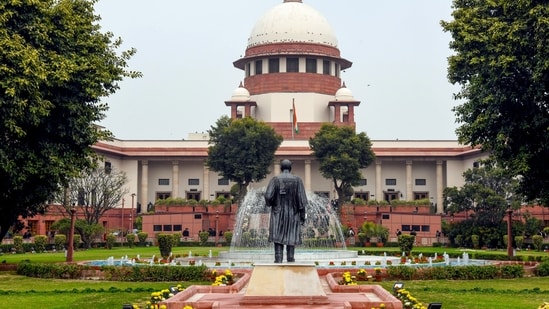
A bench comprising Chief Justice of India Surya Kant and justices Joymalya Bagchi and V. Mohana said it was reluctant to impose restrictions on children attending school, stressing that physical classrooms offered a better quality of education and that the consequences of moving to online learning, including unequal access, had to be considered.
“We are loathe to put restrictions on children going to school because it is one thing to advocate online access, but the access to online education and quality of imparting education is all a questionable issue,” observed the bench, adding that the quality of education in a classroom with physical interaction would certainly be better.
The bench further flagged the digital divide, cautioning that a blanket shift to online classes could deepen existing inequalities among children, particularly those who lack access to devices, reliable internet connectivity or an adequate learning environment at home. It said the move could further widen the gap between privileged and underprivileged students, effectively dividing them into the “haves and have-nots”.
“Like commerce and trade, education should also have free access. It is going to be minimal restrictions at our behest. We are not going to further divide them into haves and have-nots,” it observed.
{{/usCountry}}“Like commerce and trade, education should also have free access. It is going to be minimal restrictions at our behest. We are not going to further divide them into haves and have-nots,” it observed.
{{/usCountry}}The court also questioned whether there was credible medical research to support claims that younger children were more vulnerable to polluted air than older students, and whether the age-based classification of schoolchildren under the pollution-control measures needed reconsideration.
“Have you taken a paediatrician’s opinion? Any credible research?” the bench asked a counsel appearing in a suo motu case examining the regulatory framework governing air pollution in Delhi-NCR, pointing out that there were no medically established or corroborated opinions before it to determine whether the lungs of younger children were less equipped to deal with polluted air.
“We are final experts because we lend judicial support to the experts…we will go by experts,” it said, making clear that it would rely on the recommendations of the Commission for Air Quality Management (CAQM), which, it said, took into account the views of experts, including medical professionals.
The bench added that it was not interested in “anecdotal research” and would be persuaded only by well-researched, peer-reviewed studies that could justify a departure from the existing expert framework.
“Whatever GRAP says, or there are peer reviews, credible research papers, we are not going to go by any persuasive opinions,” it said.
Sharp deterioration in Delhi's air quality
The observations came against the backdrop of a sharp deterioration in Delhi's air quality. The city entered the ‘severe’ category, the worst grade on the government’s pollution scale, at 6am on Friday at the same 39 monitoring stations that were operational last Diwali, an HT analysis of Central Pollution Control Board (CPCB) data shows.
The official AQI, which averages readings over the preceding 24 hours, stood at 391 at 10am. But when individual hourly readings were assessed as though each hour's air quality had persisted for an entire day, all 59 monitoring stations in Delhi recorded ‘severe’ air quality every hour since 8pm on Thursday. The corresponding hourly index at 10am was 453. On the 39 stations that were operational last Diwali, the figure stood at 407, suggesting that the addition of 20 newer stations, several of which recorded comparatively lower readings, was pulling down the overall average.
The bench said the deterioration was particularly concerning because Delhi was likely to experience AQI levels above 300 from November onwards and for the next several months. “Poor” and “very poor” air quality, it observed, had almost become normal during this period, and the immediate challenge was to prevent the situation from slipping into the ‘severe’ and ‘severe plus’ categories.
The question of school closures has repeatedly arisen during previous pollution episodes in Delhi-NCR. Under the existing GRAP framework, hybrid classes are among the measures prescribed at higher pollution stages, rather than automatic school closures whenever air quality deteriorates. The CAQM's revised framework provides for hybrid classes at Stage III and further restrictions on educational institutions at Stage IV.
In November 2025, when GRAP Stage III was invoked, the Delhi government directed schools to conduct classes up to Class V in hybrid mode, allowing students and parents to choose between in-person and online education wherever feasible. When the situation worsened further in December, with Stage IV restrictions kicking in, hybrid classes were extended to students up to Class IX and XI. On December 15, the government went a step further by discontinuing in-person classes for Nursery to Class V, directing schools to conduct them online.