
 E-Paper



Supreme Court seeks Rajasthan’s response on CCTV compliance in police stations
Posting the matter for October 14, the court directed the response to be supported by an affidavit from Rajasthan’s director general of police

 Prefer HTon Google


New Delhi: The Supreme Court on Friday took stock of its 2021 directive mandating CCTV cameras in all police stations, starting with Rajasthan, and directed the state government to submit a comprehensive response to 12 specific queries within two weeks.
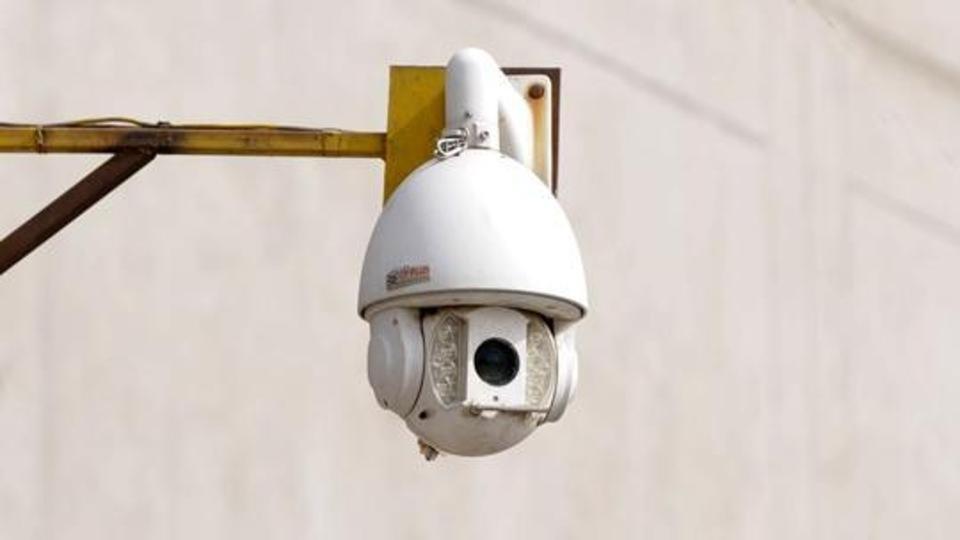
The order was passed by a bench of justices Vikram Nath and Sandeep Mehta during a suo motu proceeding, based on a media report highlighting the lack of functional CCTVs in police stations across Rajasthan. The report, published earlier this month, said that between January and August this year, 11 custodial deaths occurred in police stations under the Udaipur division, and in each case, police either claimed there was no CCTV footage or denied access on frivolous grounds.
“Apparently, the non-functioning of the CCTV cameras/non-preservation of the video recording and its data is in breach of the directions issued by this court in the case of Paramvir Singh Saini v. Baljit Singh (2021),” the bench said.
The 2021 case is still pending before the Supreme Court, and on September 22, a bench headed by Chief Justice of India Bhushan R Gavai directed it to be tagged with the suo motu matter being heard by Justices Vikram Nath and Sandeep Mehta. All states and Union territories (UTs) are parties to the case.
The bench was informed about the September 22 order by senior advocate Siddharth Dave, who is assisting the court as amicus curiae in the 2021 case. The court on Friday asked Dave to assist in the present matter as well and directed Rajasthan’s additional advocate general (AAG) Shiv Mangal Sharma to seek instructions on the 12 queries raised by the bench.
Posting the matter for October 14, the court directed the response to be supported by an affidavit from Rajasthan’s director general of police.
The questionnaire prepared by the court sought details about the number of police stations in each district, cameras installed in each police station with placement details, specifications of cameras such as resolution, night vision, field of view, audio capture, and tamper detection, the storage mechanism used for video data, including the duration for which the data is preserved, the frequency of maintenance work, and the time taken to repair and address any malfunction in the cameras.
The court also directed the state to provide technical details, including internet connectivity at police stations, integration with a central server, and creation of a centralised dashboard. It sought information on Standard Operating Procedures (SOPs) for training officers in accessing, reviewing, and retaining video footage, as well as the applicability of data protection laws and the judicial admissibility of such footage.
The court asked if there is a practice of regular audits to check whether the installed cameras are functional and, if so, sought complete statistics to be placed on record. Lastly, the court enquired whether the state has provisions for surprise inspections and forensic validation of tamper-proofing.
While taking up the suo motu matter on September 12, the court had indicated that, although the directions in the 2021 judgment are comprehensive, there is a need for an oversight mechanism to ensure CCTVs installed at police stations are not manually switched off.
The court mooted the idea of having a centralised control room that can alert authorities each time there is any tampering or manual intervention to switch it off.
The Paramvir Saini judgment directed CCTVs to be installed at all entry and exit points, main gate of the police station, all lock-ups, all corridors, lobby/reception area, all verandas/outhouses, police inspector’s room, sub-inspector’s room, areas outside the lock-up room, station hall, in front of the police station compound; outside (not inside) washrooms/toilets, duty officer’s room, and back area of the police station.


