
 E-Paper



Supreme Court seeks response from 17 states/UTs that will get exclusive NIA courts
The court noted that t judicial officers and staff for these courts must be provided by the respective states/union territories

 Prefer HTon Google


The Supreme Court on Tuesday sought responses from 17 states and union territories identified for setting up exclusive courts to try cases under the National Investigation Agency (NIA) Act.
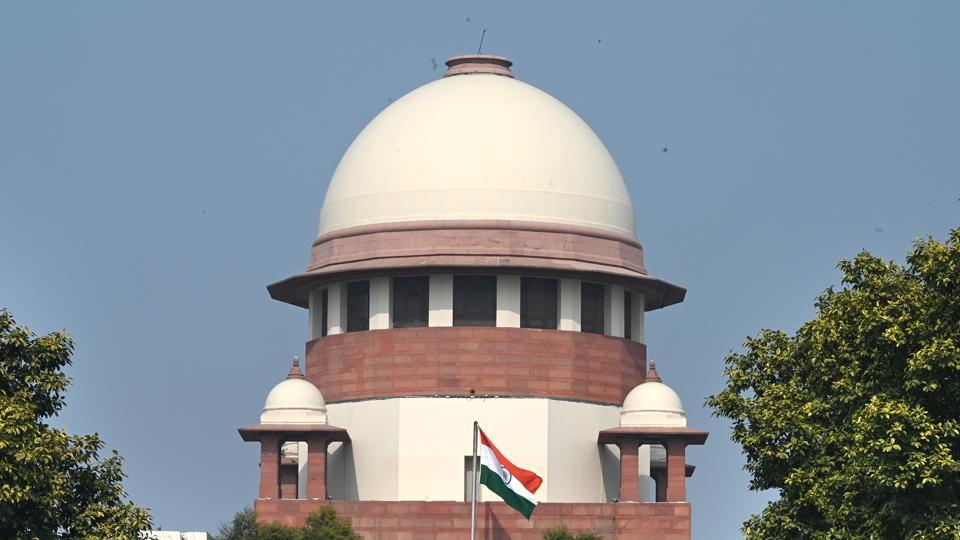
The order was passed by a bench headed by Chief Justice of India (CJI) Surya Kant after the Centre informed the court that, following its nudge, the Union government had granted in-principle approval for a budgetary allocation of ₹1 crore each to meet the recurring and non-recurring expenditures for these courts. These states/UTs were identified based on the minimum threshold of 10 or more pending NIA Act trials.
Noting that judicial officers and staff for these courts must be provided by the respective states/UTs, the bench, also comprising justices Joymalya Bagchi and NV Anjaria, said, “Let notice be issued to the 17 states/UTs where over 10 cases under NIA Act are pending.”
These states/UTs include Delhi (59 cases), UT of Jammu & Kashmir (38), Kerala (33), Assam (33), Gujarat (33), West Bengal (32), Punjab (32), Jharkhand (28), Karnataka (27), Tamil Nadu (23), Telangana (22), Maharashtra (21), Chhattisgarh (18), Bihar (17), Rajasthan (12), Andhra Pradesh (11), and Manipur (10).
Posting the matter for hearing after two weeks, the bench directed the concerned advocate generals to remain present during the next hearing either physically or virtually.
The court passed the order in a suo motu proceeding relating to the setting up of special NIA courts.
Additional Solicitor General (ASG) Aishwarya Bhati, appearing for the Centre, informed the bench that consultations have begun with the concerned states/UTs and respective high courts. In some cases, consent from the high courts has been received, while responses from the concerned governments are awaited. These courts are meant to exclusively hear NIA cases.
The bench asked Bhati to consider holding another round of meetings to ensure that, where the volume of cases is high, proposals are made to set up more than one NIA court to ensure speedy disposal. It cited Assam as an example, observing that one court may not be sufficient to handle 33 cases on a day-to-day basis.
“This is a very important step. On one hand, speedy trial of NIA cases will ensure witness protection, as it is linked to a fair trial. More importantly, it concerns the liberty of those arrested in these cases. For how many years can we keep them inside?” the bench observed.
Regarding Delhi, ASG SD Sanjay informed the court that 16 special courts are being set up at Rouse Avenue Courts to exclusively try cases under special statutes such as the NIA Act, UAPA and NDPS Act, and are expected to be ready by April this year.
As the bulk of NIA cases are in Delhi, the court emphasised the need for “rationing” cases to ensure the special courts have sufficient matters in hand. “You may see that ratio of allocation of cases is such that the next date in the NIA matters goes to next week only,” the bench remarked.
The court noted that in criminal trials, the next hearing often comes after two to three months. “Trial judges are under a lot of pressure as they handle cases under several statutes. The mandate of these exclusive NIA courts must be to take up cases on a weekly basis. If a witness is produced for examination, the prosecution must be very vigilant.”
ASG Sanjay said that if cases are taken up weekly, trials will be expedited and delay may no longer remain a ground for granting bail to an accused in NIA cases, which involve the sovereignty and security of the country.
Bhati said infrastructure remains the main challenge in Delhi, referring to the Delhi High Court’s in-principle approval for 16 additional courtrooms. The High Court assured that there are sufficient Delhi Higher Judicial Service (DJHS) officers who can be spared to preside over these courts.
As construction of these courtrooms is expected to take another two months, the court posted the matter regarding the 16 courts for hearing after three weeks to review progress.


