
Tamil Nadu governor Rajendra Arlekar on Thursday wrote to chief minister C Joseph Vijay, urging his intervention in filling vacant vice-chancellor posts at state universities and expediting pending convocations.
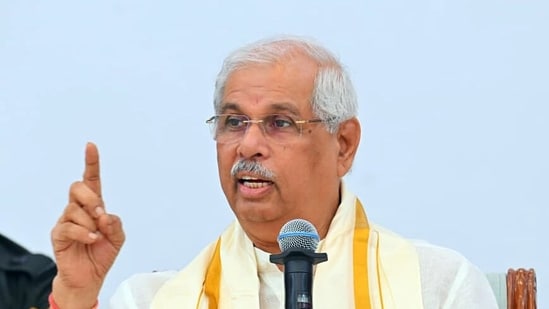
In his letter, Arlekar noted that these delays were hampering day-to-day administration, and said it was important to put in place suitable arrangements for the appointment of full time vice-chancellors.
The governor said this must be done in accordance with the University Acts and UGC regulations to ensure effective administration and continuity of academic activities.
Also Read | ‘Sincerely apologise’: Tamil Nadu govt to Supreme Court on temple lamp row
Governor highlights decision-making committees, their composition
Arlekar, in his letter, said that at present, administrative decisions relating to the universities were taken through a ‘convener committee’ constituted by the government. However, this, the governor claimed, was not found to be “effective” in addressing the day-to-day administrative and academic requirements of individual universities, which necessitate decisions at the institutional level.
Arlekar also suggested that a university-wise schedule may be drawn up to conduct all pending convocations at the earliest, where legally permissible so that students are not disadvantaged.
{{/usCountry}}Arlekar also suggested that a university-wise schedule may be drawn up to conduct all pending convocations at the earliest, where legally permissible so that students are not disadvantaged.
{{/usCountry}}Also Read | Tamil Nadu governor asks CM Vijay to explain why temple lamp wasn’t lit at SC-ordered site
He also pointed out the ‘search-cum-selection-committees’, saying the principal issue relates to their composition, particularly the inclusion of a nominee of the chairman of the University Grants Commission (UGC) under regulation 7.3 (ii) of the UGC Regulations, 2018.
Arlekar suggested a change to the committee, saying it could comprise one nominee of the chancellor, one nominee of the university syndicate, one nominee of the chairman, UGC and one nominee of the state government, subject to applicable statutory provisions and judicial directions. He said this would resolve the matter through mutual consultation, and establish a transparent and merit-based selection mechanism.
On selection and recommendation, the governor said the committee should initiate the process preferably six months before the anticipated vacancy, advertise the post within 15 days of its constitution and complete scrutiny and interviews within two months of advertisement. Arlekar said that more importantly, the committee should unanimously shortlist three eligible candidates and rank them in order of preference.
Expressing confidence that an early and sustainable solution could be achieved through mutual consultation and cooperation, Arlekar sought Vijay's personal intervention to facilitate the proposed mechanism and expedite the pending convocations. He said this would be in the larger interest of universities and the thousands of students awaiting their degrees.