Judicial custody of Tamil Nadu minister V Senthil Balaji, which ended on June 28, has been extended until July 12, people aware of the matter said on Wednesday.
The Enforcement Directorate (ED), who arrested Balaji on June 14, produced him before the Chennai principal sessions judge, S Alli, via video conference on Wednesday since the minister is still in a private hospital after undergoing heart surgery.
The minister has been hospitalised since his arrest under the Prevention of Money Laundering Act (PMLA) in a case which dates back to 2014 when he was transport minister under the previous All India Anna Dravida Munnetra Kazhagam (AIADMK) regime. He joined the Dravida Munnetra Kazhagam (DMK) in 2018.
“He (minister) told the judge that he is still in pain. His judicial custody has been extended by another two weeks,” said one of his lawyers, who did not wish to be named.
Judge Alli had on June 14 visited Balaji in the Omandurar government medical college and remanded him to judicial custody until June 28 but allowed him to stay in the hospital. The next day, she allowed ED eight days of custodial interrogation but allowed the federal agency to investigate the minister only within the hospital premises.
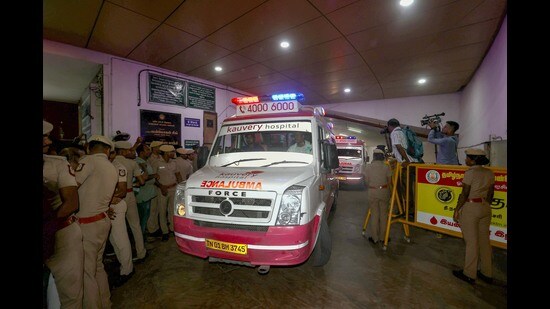
Following a nod from the Madras high court, Balaji was shifted to his choice of Kauvery Hospital where he underwent a beating heart coronary artery bypass surgery on June 21.
{{/usCountry}}Following a nod from the Madras high court, Balaji was shifted to his choice of Kauvery Hospital where he underwent a beating heart coronary artery bypass surgery on June 21.
{{/usCountry}}The ED has told the sessions court that they have not been able to question the arrested minister due to his health condition and hospital restrictions.
The extension of judicial custody comes a day after the Madras high court reserved its verdict in a case where the minister’s wife, S Megala, sought to declare his arrest as illegal.
The ED, represented by Solicitor General Tushar Mehta, argued on Tuesday that if the agency believed a person is punishable under PMLA, they had the authority to arrest the person.