
 E-Paper



Temp inches towards 40°C; IMD says brace for heatwave
The air quality in the city sharply deteriorated, from the “moderate” zone to the “poor” category.

 Prefer HTon Google


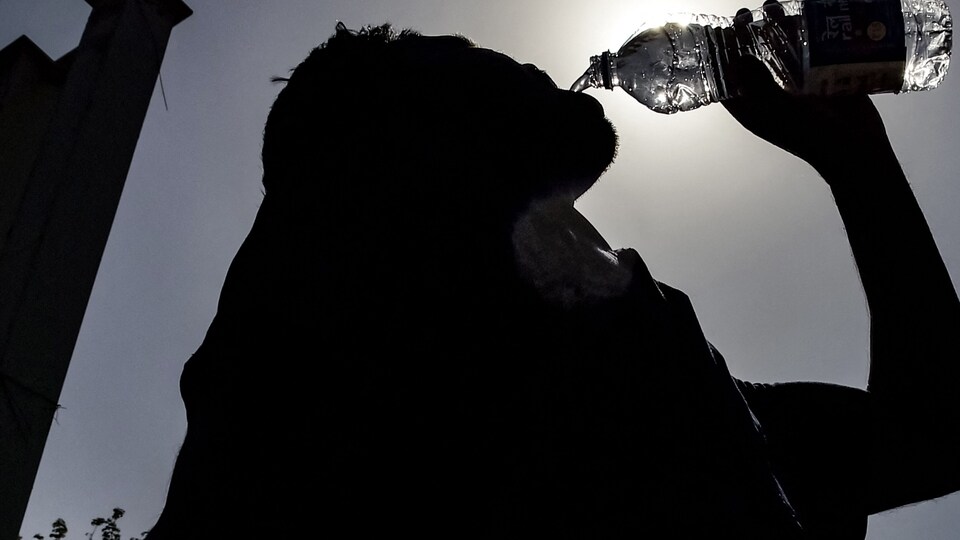
The Capital is set to sizzle this week as a combination of clear skies and warm, southeasterly winds are predicted to push the mercury past the 40-degree mark, India Meteorological Department (IMD) officials said on Sunday, as they issued a yellow alert, warning of heatwave conditions from Monday through Wednesday.
Meanwhile, the air quality in the city sharply deteriorated, from the “moderate” zone to the “poor” category.
The Met declares a heatwave when the maximum temperature is at least 40 degrees Celsius (°C), and is also 4.5°C or more above normal. Alternatively, any day when the maximum crosses 45°C or higher also qualifies as a heatwave. A “severe heatwave” is one where the maximum is 6.5°C above normal.
According to IMD forecasts, the maximum will likely hover between 40-42°C this week.
“With clear skies expected in the region, daytime temperatures on the rise. Conditions are conducive for a heatwave across the city,” an IMD official said.
On Sunday, Safdarjung — Delhi’s official weather station — recorded a maximum of 38.2°C, which was 3°C above normal. The day’s high was 35.7°C a day earlier.
The temperature in no part of the city touched the 40-degree mark — the warmest location of Delhi was the Ridge station in north Delhi, where the maximum was 39.3°C.
The highest maximum recorded at Safdarjung so far this season was 39°C on April 3.
The minimum at Safdarjung, meanwhile, settled at 18.5°C on Sunday — 2°C below the normal. It was 17.5°C a day earlier.
According to IMD forecasts, nights are set to get warmer too, with the minimum temperature likely to hover between 20-22°C on Monday, and between 21-23°C on Tuesday.
Mahesh Palawat, vice president of Meteorology at Skymet, said, “Some relief may be seen after April 10, when cloud cover under the influence of a western disturbance could bring down the mercury.”
Historically, the bulk of Delhi’s heatwave days fall between mid-April and early June. IMD records show no heatwave at Safdarjung in April last year, although five such days were logged in May.
Meanwhile, April 2023 too remained heatwave-free, however, Delhi residents endured nine hot days in April 2022, according to data.
Historical data also shows the maximum has crossed 40°C in every April since 2012, when the highest maximum in the month was only 38.7°C.
Last April, the highest maximum was 40.5°C (April 5). In 2023, it was 40.6°C (April 18) and 43.5°C in 2022 (April 29 and 30). The all-time high for April is 45.6°C, which came on April 29, 1941, IMD data showed.
AQI deteriorates as temp starts rising
The Capital’s air quality deteriorated on Sunday, with the city’s 24-hour average air quality index (AQI) reading 209 (poor) at 4pm on Sunday, when the Central Pollution Control Board (CPCB) releases its daily national bulletin. This was a sharp spike from Saturday’s reading of 163 (moderate) at the same time.
Forecasts by the Air Quality Early Warning System for Delhi (EWS) under the Ministry of Earth Sciences show the AQI could remain “poor” until April 8, before improving to “moderate” levels on April 9.
CPCB classifies AQI between 0 and 50 as “good”, between 51 and 100 as “satisfactory”, between 101 and 200 as “moderate”, between 201 and 300 as “poor”, between 301 and 400 as “very poor”, and over 400 as “severe”.



