
 E-Paper



There’s a limit to which you can target judges: Justice Chandrachud
The PIL was expected to be heard on July 15 by a bench headed by justice Chandrachud, but the hearing could not take place since the judge was down with Covid on that day.

 Prefer HTon Google


There is a limit to which one can target judges, said Supreme Court judge Dhananjaya Y Chandrachud on Thursday, taking umbrage at a recent trend of unfounded attacks on the judiciary.
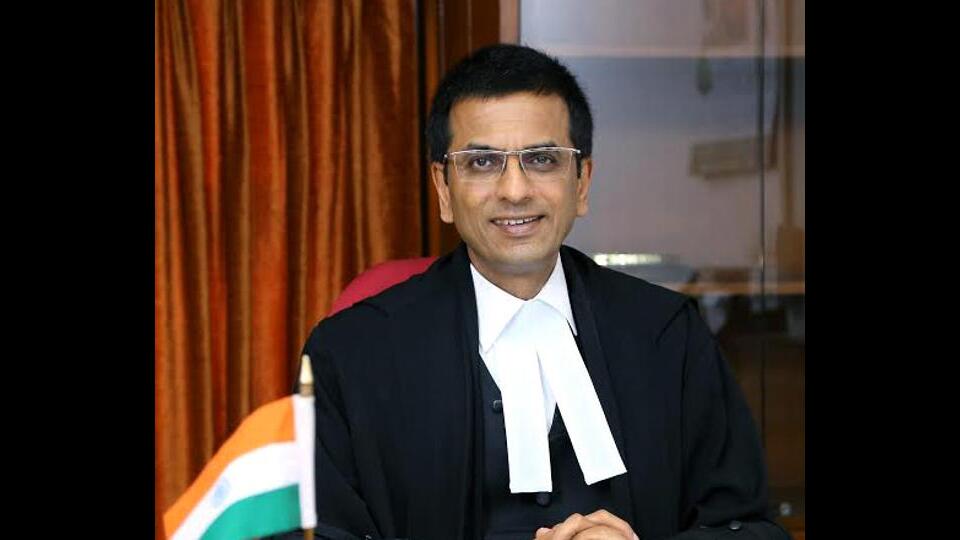
“There was a news item that this court is delaying the matter...There is a limit to which you can target judges,” an anguished justice Chandrachud retorted after a lawyer requested for an early hearing of a public interest litigation (PIL) claiming a spurt in violence against the Christian community.
The PIL was expected to be heard on July 15 by a bench headed by justice Chandrachud, but the hearing could not take place since the judge was down with Covid on that day. However, some web portals carried the news stories with headline: “India’s top court delays hearing anti-Christian violence plea”.
On Thursday, a lawyer sought urgent hearing of the petition filed by a Christian bishop, who has demanded a special investigation team (SIT) to inquire into alleged hate crimes directed against Christians in the country.
But justice Chandrachud was miffed. “I read news item that the Supreme Court is delaying the Christian violence matter. I was down with Covid, so the matter could not be taken up. Give us a break!” retorted the judge.
Justice Chandrachud added that there are several judges in the Supreme Court who have medical issues at the moment. “And then such news items are published...Who is publishing such news?” he asked the lawyer. Subsequently, the judge agreed to list the matter for hearing: “Alright, we will list it. Otherwise, there will be another news item tomorrow.”
The senior Supreme Court judge’s anguish resonated the views expressed by two other judges of the top court recently.
Last week, Chief Justice of India (CJI) NV Ramana rued that media channels are running “kangaroo courts” on issues of complicated judicial questions and their “ill-informed and agenda-driven debates” are hurting India’s democracy.
Delivering a lecture at Ranchi’s National University of Study & Research in Law, the CJI said doing justice is “becoming increasingly challenging” and this is now complicated further by “concerted campaigns in media, particularly on social media” against judges. “Another aspect which affects the fair functioning and independence of judiciary is the rising number of media trials,” he added.
CJI Ramana urged electronic and social media to “self-regulate”. “I urge upon the media, particularly the electronic and social media, to behave responsibly. You are as important a stakeholder as we are,” justice Ramana said.
Justice Ramana’s comments came days after his Supreme Court colleague, justice JB Pardiwala, called for a legal framework to regulate social media in order to stop “agenda-driven attacks on judges” and efforts to influence the outcome of sensitive cases.
“Personal attack on judges for their judgements lead to a dangerous scenario where the judges have to think about what the media thinks, rather than what the law actually says. This puts the rule of law on the burner,” said justice Pardiwala, as he delivered an address at the 2nd Justice HR Khanna Memorial Symposium on July 4.
The constitutional courts, the judge said, have always accepted informed dissents and constructive criticisms but debarred personalised agenda-driven attacks on the judges while ignoring the sanctity of respect for the courts.
Justice Pardiwala was the subject of criticism on social media from users following the terse comments that a bench on which he sat along with justice Surya Kant made on July 1 in the context of suspended BJP spokesperson Nupur Sharma. The bench observed that Sharma, who made objectionable comments against Prophet Mohammed, was “single-handedly responsible for putting the entire nation on fire”. Later, on July 19, in an apparent rethink, the same bench protected Sharma from arrest in connection with criminal cases lodged against her for her controversial comments.
Senior advocate Rakesh Dwivedi said, “Judges are absolutely right in saying they are being targeted. Each person has a different perception about urgency of a case being heard. But these are matters that lie within the discretion of judges. Whether print, electronic or social media, they seek to control this discretion. This creates undue pressure on judges and generates unnecessary lack of credibility in the institution. These comments are contemptuous remarks but my personal view is social media is best to be ignored.”



