It is condemnable to portray the Tamil Nadu government as “anti-Hindu”, the state director general of police (DGP) told the Supreme Court on Monday, adding chief minister MK Stalin never gave any instruction to restrict the live-streaming of the Ram Mandir Pran Pratishtha (consecration) ceremony or performing related religious activities on January 22.
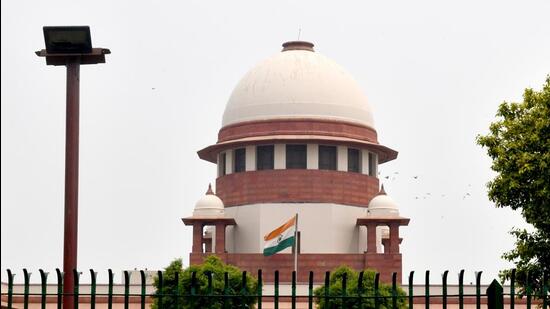
Submitting an affidavit in the top court, the DGP maintained that a total of 252 events, both indoor and outdoor, were held in Tamil Nadu on January 22 and that permission for only 36 others were rejected.
“The petitioner has portrayed the Tamil Nadu government as an anti-Hindu government, which is totally false and condemnable,” said the affidavit, submitted in response to a petition filed by Bharatiya Janata Party (BJP)’s state unit secretary Vinoj P Selvam.
Claiming that the petition is “politically motivated” and has sought to defame the CM, the DGP added: “The allegations that the chief minister had orally instructed not to allow any ceremony or function including the annadhanam, organising bhajans about Prabhu Ram, on the auspicious occasion of January 22, the day of pran pratishta of Ram Janmabhoomi, are totally baseless and false.”
The DGP’s affidavit, however, records that of 288 requests received for the conduct of religious activities, only four were initially allowed. 146 applications were rejected, and 136 others were kept pending for verification.
{{/usCountry}}The DGP’s affidavit, however, records that of 288 requests received for the conduct of religious activities, only four were initially allowed. 146 applications were rejected, and 136 others were kept pending for verification.
{{/usCountry}}But after the Madras high court directed the police to regulate their conduct to ensure there was no hindrance to public movement, the police allowed 248 more events, taking the tally to 252.
On January 22, both the Supreme Court and the Madras high court had stepped in following the complaints of restrictions against the live-telecast of the consecration ceremony and religious events to mark the occasion.
On the day, a Supreme Court bench of justices Sanjiv Khanna and Dipankar Datta pulled up the Tamil Nadu government for general orders reportedly issued by the state police to restrict the religious activities, calling these orders “atrocious” and directing the state not to summarily deny such permissions. It added that that the state government must pass speaking orders whenever such requests are made and that any oral or general orders purportedly issued by police cannot be acted upon.
The matter came up for hearing on Monday again, but it was adjourned for 15 days to enable the state of Tamil Nadu 15 to separately file a counter affidavit. During ten brief hearing, Tamil Nadu government’s additional advocate general Amit Anand Tiwari submitted that the case was already pending in the Madras high court and that the petitioner should be asked to go there.
Senior advocate Dama Seshadiri Naidu, representing Vinoj, requested for permission to file a reponse to the state’s counter-affidavit but the bench responded: “The event (pran pratishta) is already over...do not push it further. The order that was required, we already passed it on the last date.”