
 E-Paper





Follow the latest breaking news, major developments and agenda-setting stories from India and around the world with the newsdesk at Hindustan Times. Operating round the clock, the desk brings together experienced editors, reporters and correspondents to deliver fast, accurate and contextual reporting across subjects that influence public policy, governance, business, society and international affairs. The HT News Desk covers politics, elections, government policies, the economy, business and markets, science and technology, the environment, law and order, infrastructure, education, climate issues and geopolitics, while closely tracking developments across states, institutions and global capitals. The team also leads coverage of major breaking news events, policy announcements, court proceedings, natural disasters, public emergencies and significant international developments. Reports published by the newsdesk are based on information gathered from reporters on the ground, official statements, government agencies, court records, regulatory filings, recognised institutions and other authoritative sources. Stories undergo editorial scrutiny and verification processes to ensure accuracy, fairness and relevance, and are updated as events evolve and additional information becomes available. Whether covering a key political decision in New Delhi, an economic policy shift affecting millions, a landmark court ruling or a major global event, the HT News Desk aims to provide readers with reliable, fact-based journalism that delivers not only the latest developments but also the context and analysis needed to understand their wider implications.
‘Transformative’: Leaders, academicians welcome National Education Policy
NEP 2020: The National Education Policy is based on the recommendations of a committee chaired by former Isro chief K Kasturirangan.


The new National Education Policy (NEP), approved by the government, has been welcomed by ministers, other political leaders and academicians. They welcome the transformative restructuring in the education sector and say that the NEP will bring new opportunities for students.
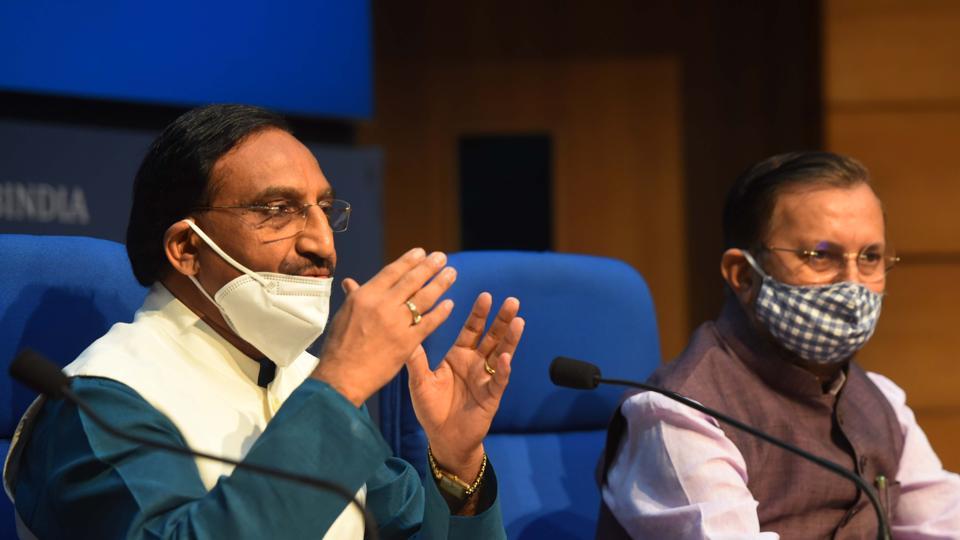
“Under National Education Policy 2020, cash-rich content will be reduced to its core essentials, and make space for critical thinking, holistic, enquiry-based, discovery-based, discussion-based, and analysis-based learning,” said Union HRD minister Ramesh Pohkriyal Nishank. The NEP also renamed the HRD (human resource development) ministry as the education ministry.
“Welcome PM @NarendraModi ji’s decision to approve National Education Policy, paving way for vibrant, accessible, equitable & quality education. Ensuring a bright future for leaders of tomorrow, #NEP2020 encourages & nurtures each child’s unique talent,” tweeted Union minister Piyush Goyal.
Union minister Smriti Irani, who handled the HRD portfolio in BJP government’s previous tenure, called the NEP “a transformative restructuring of education in India”.
“Grateful to PM @narendramodi Ji & Cabinet for approving National Education Policy 2020 - a transformative restructuring of Education in India encompassing every stage of learning from early education to higher education with greater emphasis on technology & digitisation,” she tweeted.
Former Andhra Pradesh chief minister and Telugu Desam Party (TDP) leader N Chandrababu Naidu hailed the emphasis on mother tongue or regional language as medium of instruction in the new policy.
“I welcome the approval of National Education Policy 2020 by the Union Cabinet chaired by @narendramodi Ji. I am sure that this reform will boost the education sector and pave way for our youth to compete with the best from across the world,” he said on Twitter.
Also Read | Over 2 crore children will be brought back to schools, says HRD secretary Amit Khare
“The policy emphasizes mother tongue/local language/regional language as the medium of instruction until Grade 5 which is certainly a welcome move. This is crucial for children to develop critical thinking & literacy skills leading to better academic performance,” Naidu further tweeted.
Jamia Millia Islamia Vice-Chancellor Professor Najma Akhtar said the students will be able to pursue education with greater flexibility in a seamless learning-environment.
“The NEP is groundbreaking! The higher education in India will now be holistic and multidisciplinary with a shared focus on Science, Arts and Humanities,” said Akhtar.
Also Read | Highlights of National Education Policy 2020
The policy is based on the recommendations of a committee chaired by former Isro chief K Kasturirangan. The government said that it was after 34 years that India’s education policy was being overhauled. While the last policy was announced in 1992, it was essentially a rehash of a 1986 one.


