E-Paper



‘Travesty of justice’: SC laments delay in enforcing rulings
An execution petition is a legal plea filed by a decree-holder seeking the court’s help to enforce or implement a judgment

 Prefer HTon Google


In a stark reminder of the chronic delays in enforcing court decrees, the Supreme Court has revealed that over 882,000 execution petitions remain pending across district courts in the country, lamenting that such staggering pendency makes the very purpose of a court decree meaningless and “a travesty of justice”.
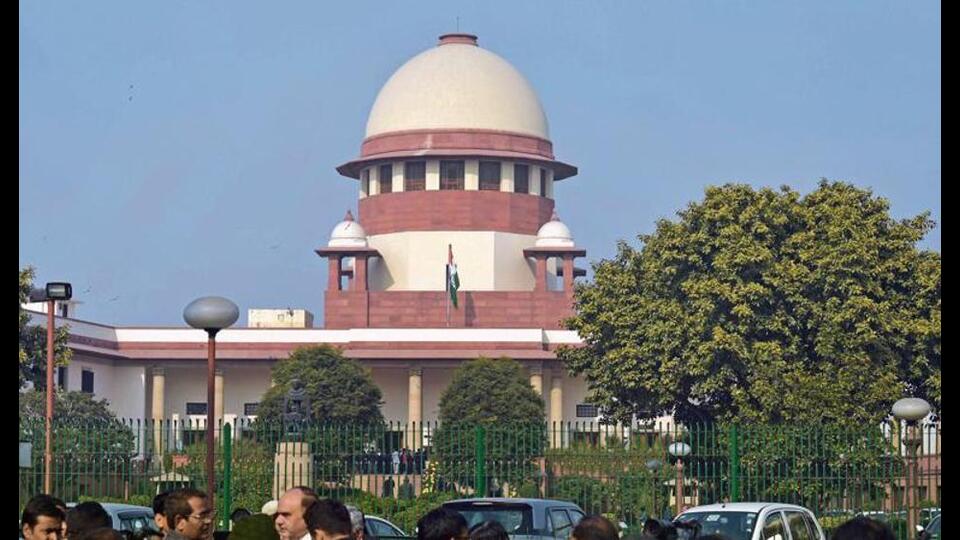
A bench of justices JB Pardiwala and Pankaj Mithal, which is monitoring compliance of its March 6, 2025 directions to expedite execution proceedings, said the data received from all high courts paints a deeply worrying picture of systemic delay and indifference at the district judiciary level.
“The statistics we have received are highly disappointing. The figures of pendency of the execution petitions across the country are alarming,” observed the bench, noting that the total number of pending execution petitions stands at 882,578.
An execution petition is a legal plea filed by a decree-holder seeking the court’s help to enforce or implement a judgment –– for instance, to recover money, take possession of property, or compel compliance with a court order that has already been passed.
According to data compiled from all high courts, the district judiciary in Maharashtra accounts for nearly 39% of the total pendency, with 341,000 execution petitions still awaiting disposal. It is followed by the Tamil Nadu (86,148 cases or roughly 10%), Kerala (82,997 cases, around 9%), Andhra Pradesh (68,137 cases, about 8%), and Madhya Pradesh (52,129 cases, about 6%).
Together, these four high courts account for more than two-thirds of the total pendency in the country.
Other high courts such as Delhi (30,788 cases), Telangana (29,868), and Rajasthan (22,449) also reported significant backlogs, underscoring a widespread problem of delay in enforcing decrees that have already been adjudicated.
At the other end of the scale, smaller states reported minimal pendency –– Sikkim (61 cases), Meghalaya (60), and Manipur (556), representing less than 0.1% of the national total.
The statistics underscore that the gap between decree and enforcement remains one of the weakest links in India’s justice delivery system where even after a decree is won, the litigant may have to wait years, or decades, for actual enforcement.
Amid a grim overall picture, the Supreme Court also acknowledged that its earlier directions in March 2025 that required high courts to oversee the disposal of execution petitions within six months had led to some movement. Data submitted by the high court registrars general showed that over 338,000 execution petitions were disposed of by district courts in the past six months.
Courts in Maharashtra cleared 73,775 cases since the top court’s March order while courts in Punjab and Haryana disposed of more than 68,000 cases. Courts in Kerala, Rajasthan and Tamil Nadu also decided more than 25,000 cases each since March.
The court, in its order on October 16, also recorded its displeasure with the Karnataka high court, which failed to furnish any data on pendency or disposal of execution petitions despite earlier directions. The bench directed the registrar general of the Karnataka high court to explain within two weeks why the data was not submitted.
The bench reiterated its concern that decrees passed after years of litigation lose meaning if their enforcement itself takes several more years. “After the decree is passed, if it is going to take years and years to execute the decree, then it makes no sense and would be nothing short of travesty of justice,” said the court.
It directed all high courts to evolve clear mechanisms to ensure accountability of judicial officers handling execution petitions and to report concrete progress every six months.
The bench has now sought fresh status reports by April 10, 2026, including detailed data on execution petitions pending and disposed of in both the district judiciary and the original sides of high courts such as Bombay, Calcutta, Delhi, and Madras.
The order came during the monitoring of the Periyammal (Dead) through LRs Vs V Rajamani & Anr case, where the top court had in March emphasised that decrees must be enforced promptly for justice to be “complete and effective”.
In this case, a litigant had to wait for almost 39 years to get possession of a property decreed in his favour way back in 1986, prompting the court to direct all high courts to identify such cases and ensure cases pending for execution of decree are decided within six months. “It is said that the woes for the litigants in this country start once they are able to obtain a decree in their favour and are unable to execute and reap its fruits for years together,” the court had then lamented.