
 E-Paper



Valmikis, Gorkhas, West Pakistani refugees make debut in Jammu and Kashmir assembly election with their votes
In 2020, Valmikis along with West Pakistan refugees and Gurkha community participated in the District Development Council (DDC) elections for the first time.

 Prefer HTon Google


“Historic moment” resonates as members of the Valmiki community, West Pakistani refugees and Gorkhas settled in various parts of Jammu region exercised their franchise for the first time in the Jammu and Kashmir assembly election 2024, having long been denied the right to vote.
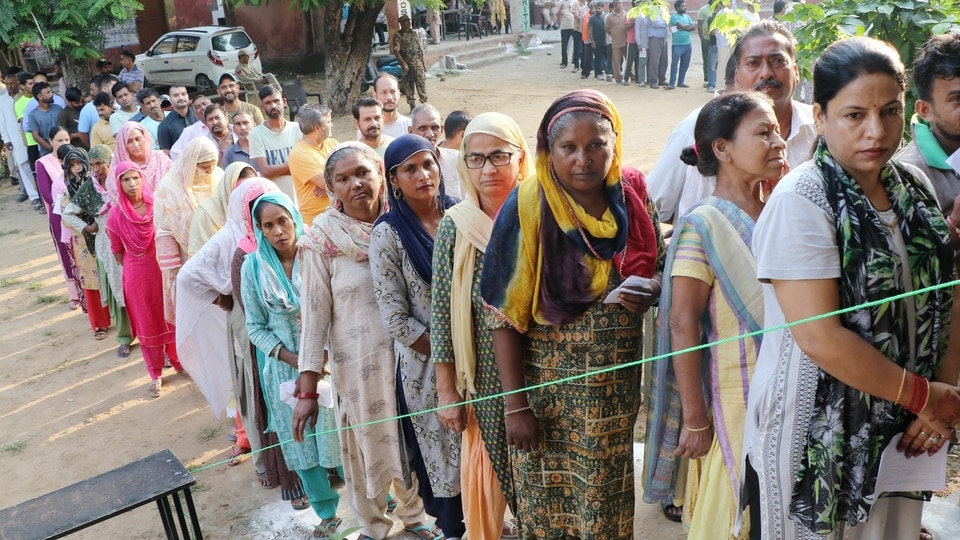
Spanning various areas of Jammu, Samba, and Kathua districts, members of these three communities, comprising over 1.5 lakh people, are participating in the electoral process to elect MLAs.
Historically, West Pakistani refugees—predominantly Hindus and Sikhs who migrated from Pakistan in 1947—were restricted to voting only in Lok Sabha elections.
Follow Jammu and Kashmir election Live updates
However, recent changes in their status, following the 2019 abrogation of Article 370 have paved the way for greater participation in the democratic process.
The Valmikis were initially brought to Jammu and Kashmir in 1957 from Punjab's Gurdaspur district for sanitation work under a state government initiative.
“I am a first-time voter at the age of 45. We are thrilled and filled with enthusiasm to participate in the assembly elections for the first time. It is like a big festival for us,” said Gharu Bhati, who voted at a polling station in Jammu.
Bhati, who has spearheaded efforts for over 15 years to secure citizenship rights for his community, remarked that the occasion is a festival for the entire Valmiki community.
He said the presence of voters ranging from 18 to 80 years old and reflected on the fact that two generations before them were denied this right.
In 2020, Valmikis along with West Pakistan refugees and Gurkha communities participated in the District Development Council (DDC) elections for the first time.
Also read: ‘Teach a lesson to those who…’: Mallikarjun Kharge to voters as Jammu and Kashmir goes to polls in Phase 3
The revocation of Article 370 has also enabled the communities to buy land, apply for jobs and participate in elections in Jammu and Kashmir. This change also allows the Valmiki community to explore alternative livelihoods.
“Today, we are voting. Tomorrow we will represent our people. This marks the beginning of a new era in our lives. We will bring our issues to the assembly. Imagine, a member of our community, who once only saw scavenging as their fate can now aspire to be an MLA or even a minister,” Bhati said.
The Gorkha community in Gorkha Nagar of Jammu is also brimming with excitement as they exercise their franchise in the assembly elections for the first time.
Their ancestors migrated from Nepal decades ago to serve with the former Dogra Army and many families still have war veterans among them.
Read more: Who is Mushtaq Bukhari? BJP compares him to Mahatma Gandhi and Nelson Mandela
Over 2,000 Gorkha community members reside in this tightly-knit colony, characterized by closely spaced houses and narrow lanes.
Karuna Chhetri, president of the All J&K Gorkha Sabha said, “We thank Prime Minister Narendra Modi and home minister Amit Shah for transforming our fortunes here. Thanks to their bold decision to revoke Article 370. We are now citizens of Jammu and Kashmir and have been granted all rights.”
With PTI inputs


