New Delhi: Tomorrow is the first anniversary of the October 7 massacre by Hamas terrorists in South Israel using medieval weapons of rape, arson, torture, burning, abduction and killing. Some 1200, the majority of them civilians or non-combatants, were killed, and 251 were taken hostage by the Iran-sponsored Sunni Hamas group on that day. The day dealt a heavy blow to the hubris of Israeli intelligence agencies, who just did not read the tell-tale signs given by the female observer unit at Nahal Oz and did not take counter-action. It is a sordid tale of how the incompetence of intelligence agencies, facing live situations daily on Israel’s borders, forced the Jewish nation to react and led to the huge loss of lives of innocents in Gaza and Lebanon. This is not to say that Hamas started the terror offensive and ended up paying a very heavy price. The same goes for Hezbollah and the time for calling out Iran has come.
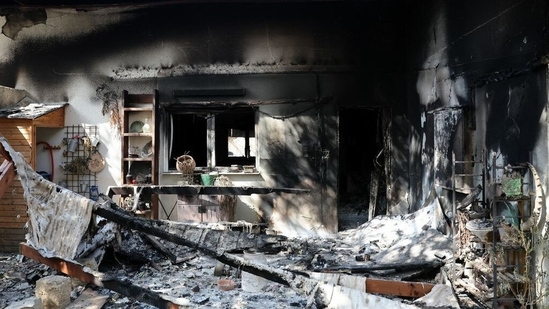
While Israeli leadership has promised an inquiry into the intelligence and military failures after the war is over, October 7 is one nightmare that the Jewish nation will not be able to forget ever. The massacre is also an eye-opener for Indian intelligence agencies as the nation is constantly under threat from Islamists based in Pakistan as well as extremists within the country. On top of this India faces a sizable Communist dictatorship in the north, insurgents from Myanmar and now the threat is coming from extremists in Bangladesh, who have already bared their teeth against Hindu minorities within the country post-Sheikh Hasina removal.
Also read: View: Will Israel reshape Middle East by attacking Iran ?
The Narendra Modi government retaliated against Pakistan-based jihadists in Occupied Kashmir in 2016 after the Uri terror strike and Balakote after the 2019 Pulwama strike, the question that needs to be examined by national security planners is: Did they have prior intelligence? There is a huge difference between picking up a trend and having actionable intelligence. India knew that Sheikh Hasina was getting unpopular with the public and the radical youth, but did we have actionable intelligence to alert the Bangladesh leader? Did we have prior intelligence on PLA transgressions into Galwan, Khugrang River and Pangong Tso in May 2020?
Also read: Middle East conflict: 18 killed in apparent Israeli strike in Gaza mosque
{{/usCountry}}The Narendra Modi government retaliated against Pakistan-based jihadists in Occupied Kashmir in 2016 after the Uri terror strike and Balakote after the 2019 Pulwama strike, the question that needs to be examined by national security planners is: Did they have prior intelligence? There is a huge difference between picking up a trend and having actionable intelligence. India knew that Sheikh Hasina was getting unpopular with the public and the radical youth, but did we have actionable intelligence to alert the Bangladesh leader? Did we have prior intelligence on PLA transgressions into Galwan, Khugrang River and Pangong Tso in May 2020?
Also read: Middle East conflict: 18 killed in apparent Israeli strike in Gaza mosque
{{/usCountry}}Even though national security gets top priority in the Modi government with Home Minister Amit Shah's hands on the job, it is time that agencies were made accountable for their failures despite the job being very tough and tedious. The Indian intelligence failed to pick up the Chinese building the road through Aksai Chin in the 1950s and its chief also convinced the political leadership that the Communist China would never attack in 1962. The intelligence did not pick Pakistan, raising a second armoured division in the 1965 war and the country could not leverage its massive victory against Pakistan in 1971. Intelligence was not actionable in the run-up to the 1999 Kargil war and the entire period of 2000-2013 was a string of terrorist attacks by Pakistan-based terror groups as well as sponsored Indian Mujahideen groups with agencies fumbling to either predict an attack or prevent it. It was during this decade that more than 1000 innocent lives were blown to bits by Pakistan-based and sponsored groups but the leadership decided to play politics with terror.
If India aspires to be a global power, then it has to invest both in terms of men and material in its intelligence agencies so that the best minds and best technology are put to work with cyber war, the new weapon of terrorists. The political leadership needs to know first-hand what India’s adversaries are up to rather than get inputs by reading newspapers and sundry websites. The focus should be as much on operations as on analysis to get the complete picture. An aspiring power cannot rely on hand-me-down intelligence from associates as critical intelligence is never shared until it is of shared interest. Intelligence work is not policing and the two cannot be interchanged. It is akin to picking a needle in the haystack and then forwarding the analysis for political leadership to make proper decisions. It is not about writing good reports in grammatically correct Queen’s English but passing on operational intelligence for pre-emption of any challenge to national security.
Also read: Israel expands bombardment, strikes south Beirut; over 400 Hezbollah fighters killed so far | 10 points
With terror kingpins like Hafiz Saeed of Lashkar-e-Tayyeba and Masood Azhar still alive and the Dawood Ibrahim criminal syndicate present all over India, the threat of a large-scale terror strike in the Indian hinterland is always there. The problem has become more complicated as Bangladesh-based jihadist groups are now being portrayed as nationalists by the interim government. And to top it all the porous border with Nepal has always been an ingress route for anti-India extremists.
A year after October 7, the Israeli agencies have redeemed themselves a little by annihilating the Hamas and Hezbollah leadership, but the war is still not over as long as the mother of terror proxies, Iran, can export terror to Jerusalem. For a rising India, the challenge to national security will increase by the day as adversaries like China want India only to be a sub-continental power and Pakistan in the current state is an enemy in perpetuity. It is only a matter of time before the West will also start getting threatened by Indian rise. Is the Indian intelligence mentally, physically and materially prepared to rise to the challenges ahead?