Century up, celebrations over, Vijay is already back at the crease. The Tamil Nadu CM's days after completing 100 days have been a whirlwind of announcements, political sparring and one particularly swift U-turn.
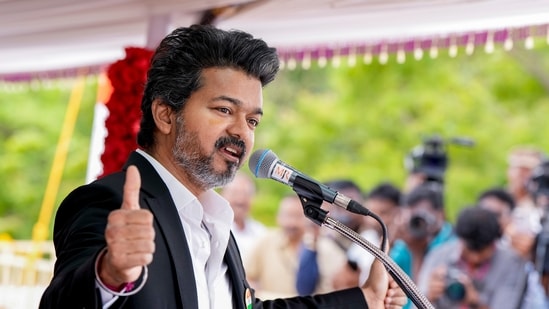
From raising Aavin's milk procurement price and expanding maternity leave to announcing vehicles and allowances for MLAs and threatening to open “corruption files” against the previous DMK government, Vijay's post-century phase has been anything but quiet.
If his first 100 days were about establishing the new TVK government, the days immediately after have offered a glimpse of a more assertive Vijay, willing to spend, reverse course and draw political battle lines.
A flurry of decisions after the century
Deep Dive
What new policies did Tamil Nadu CM Vijay announce for MLAs?
Why did CM Vijay raise the Aavin milk procurement price?
How does the expansion of maternity leave affect women government employees in Tamil Nadu?
One of the biggest bursts of announcements came in the Assembly, where Vijay unveiled measures covering milk producers, legislators, healthcare and women government employees.
The government raised Aavin's milk procurement price from ₹38 to ₹41 per litre, benefiting more than 3.16 lakh milk producers. The move will cost the state an additional ₹30 crore a month.
Vijay also announced that all MLAs would get government vehicles and a ₹1 lakh monthly package, comprising ₹75,000 towards fuel, maintenance and driver expenses and ₹25,000 for an assistant for office work. The government said the move was intended to help legislators travel through their constituencies and take up development work.
{{/usCountry}}Vijay also announced that all MLAs would get government vehicles and a ₹1 lakh monthly package, comprising ₹75,000 towards fuel, maintenance and driver expenses and ₹25,000 for an assistant for office work. The government said the move was intended to help legislators travel through their constituencies and take up development work.
{{/usCountry}}The decision has already triggered criticism from the DMK, which argued that MLAs who already own vehicles should be excluded from the scheme.
Alongside the political and administrative announcements came a significant expansion of healthcare cover. The state's chief minister's Comprehensive Health Insurance Scheme was expanded from ₹5 lakh to ₹25 lakh a year.
One year of maternity leave for a third child
The government also announced a major change to maternity leave for women government employees.
The maternity leave available for a third child will be increased from 12 weeks to 365 days. Until now, women government employees with fewer than two children were eligible for one year of maternity leave, while those with two or more children could get up to 12 weeks.
The decision puts women's welfare and empowerment alongside the government's recent welfare announcements and marks another expansion of benefits under the new administration.
From order to U-turn in minutes
The hectic pace was also accompanied by an administrative embarrassment. Tamil Nadu's College Education Department issued an order asking officials to take coordinated action to prevent students and youth from government arts and science colleges from joining protests organised by Left parties and the Tamil Nadu Cockroach Janata Party.
The directive described the matter as “very urgent” and asked officials to coordinate with other departments and district administrations.
Then came the reversal.
The order was withdrawn within minutes, with the department rolling back its communication to college principals.
Vijay flashes the corruption files
If the student-protest order produced a quick retreat, Vijay's confrontation with the DMK went in the opposite direction.
The Assembly witnessed heated exchanges over alleged irregularities in a ₹5.54-crore tender linked to the proposed relocation of the chief minister's office. The issue was followed by another clash over alleged discrepancies in road-laying works.
Vijay responded with a warning that he had files relating to alleged corruption during the previous DMK regime.
“I will reveal the corruption files from the previous DMK regime at an appropriate time. I have two files on my desk. Don't force me to do it now,” he said.
The warning came after public works minister Aadhav Arjuna said the government would soon release a detailed White Paper, signalling that the TVK government's battle with its predecessor could become a defining feature of the next phase of its tenure.
A 4am CM?
The frantic pace of government business has also fed into the image Vijay's ministers are building around him.
Aadhav Arjuna has described Vijay as a “political monk”, saying the chief minister works for 18 to 20 hours a day and can begin calling ministers at 4am for updates on their departments.
According to Arjuna, Vijay spends much of his time at the Secretariat, asking what needs to be done next and looking for problems across departments, particularly corruption and financial leakages.
The description fits neatly with the government's attempt to present Vijay as a hands-on administrator rather than simply an actor-turned-politician occupying the chief minister's chair.
The first 100 days: Welfare, promises and plenty of questions
Vijay's first 100 days were dominated by a substantial welfare push. On his first day in office, he signed orders for 200 units of free electricity for eligible households, a dedicated women's safety force and anti-narcotics task forces.
The government subsequently announced a ₹6,220-crore cooperative farm-loan waiver, expanded the school breakfast programme, allocated funds for laptops for college students and rolled out welfare measures for women and newborns. It also announced the closure of 717 TASMAC liquor shops located near educational institutions, places of worship and transport points.
But the first century was not without turbulence. The government faced questions over the implementation of election promises, the Cauvery water dispute, law and order, the state's finances and allegations of corruption. The opposition also accused Vijay's government of putting its “stickers” on schemes introduced by the previous DMK administration.
The Karur stampede case, which dates to a TVK rally addressed by Vijay before he became chief minister, remained another major issue. Political clashes with the DMK also intensified, including over the Udhayanidhi Stalin-Trisha controversy.
The government's 100-day report, “100 Days of Governance – A Government for Generations”, presented the period as one of welfare expansion and administrative change. But the challenges facing the government suggest that the next phase will be judged less by the number of announcements and more by their implementation, finances and political consequences.