The Election Commission of India (ECI) on Monday told the Supreme Court that 1.61 million appeals challenging the inclusion of voters in West Bengal’s electoral rolls after the special intensive revision (SIR) were filed by officers of the state chief electoral officer’s (CEO’s) office in their statutory capacity, and that these matters were not brought to the Commission.
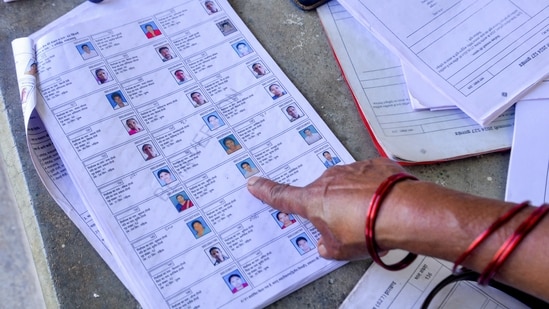
In an affidavit filed on Monday, the poll panel cited the Supreme Court’s April 1 and April 6 orders to defend the filing of the appeals, saying electoral authorities were entitled to challenge inclusions under the Representation of the People Act, 1950. The submission is significant because a petition questioning 14 alleged unilateral decisions in the SIR exercise has specifically asked who authorised the filing of these appeals in the ECI’s name.
The affidavit, filed by deputy election commissioner Bhanu Prakash Yeturu on behalf of the ECI, Chief Election Commissioner Gyanesh Kumar and Election Commissioners Sukhbir Singh Sandhu and Vivek Joshi, said the poll panel had received a communication from the office of the West Bengal CEO on October 22 explaining that the appeals were filed by its officers in their capacity as authorities under the law.
“As per provisions of the RP Act, the CEO / DEO / ERO / AERO are the authorities in respect of electoral rolls,” said the affidavit, referring to the chief electoral officer, district election officer, electoral registration officer and assistant electoral registration officer. “The officers had the authority to file the Appeals as per the orders of this Hon’ble Court and these matters were not brought to the Commission,” it added.
{{/usCountry}}“As per provisions of the RP Act, the CEO / DEO / ERO / AERO are the authorities in respect of electoral rolls,” said the affidavit, referring to the chief electoral officer, district election officer, electoral registration officer and assistant electoral registration officer. “The officers had the authority to file the Appeals as per the orders of this Hon’ble Court and these matters were not brought to the Commission,” it added.
{{/usCountry}}Also Read | All SIR decisions unanimous, Form 6 not amended: Election Commission to Supreme Court
Questions over authorization
The submission addresses one part of a wider dispute over the manner in which decisions concerning the SIR were taken and implemented. The petition filed by Rakesh Kumar Singh has questioned whether decisions vested in ECI as a multi-member body could be taken unilaterally by the CEC. It has sought the production of original files, authorisations and decision-making records, besides suspension of Kumar pending adjudication of the allegations.
The petition relies on an August 12, 2026 noting attributed to Sandhu that questioned the authority behind the appeals: “Who was authorised to file these appeals on behalf of ECI, and by whom?”
The affidavit does not, in the extract addressing these appeals, identify an individual who authorised the filing.
Supreme Court orders on appeals
The Commission has relied on the top court’s orders in Mostari Banu Vs Election Commission of India, passed on April 1 and April 6, 2026. The case arose from the SIR exercise in West Bengal, where the court had appointed judicial officers to adjudicate claims and objections before appellate tribunals were set up to hear challenges to their decisions.
The April 1 order recorded the ECI counsel’s submission that the tribunals would have access to the relevant records in appeals both by voters challenging their exclusion and by ECI authorities aggrieved by the inclusion of certain names. The court also directed the tribunals to examine the complete records, including the reasons given by the judicial officers, and permitted them to evolve procedures consistent with natural justice and a fair hearing.
Also Read | Details of software used in SIR exempt from RTI, Election Commission cites 'trade secrets'
On April 6, the court reiterated that appeals could be brought not only by persons whose names had been excluded but also by “such objectors/authorities of the ECI, who might be aggrieved by the inclusion of certain names in the voter list”.
Tribunal backlog and priorities
ECI’s reliance on these orders comes amid growing concern over the mounting backlog before the tribunals and the competing claims on their time. In September, the poll panel informed the Supreme Court that about 3.83 million appeals had been filed against inclusion or exclusion of names in Bengal’s rolls, of which more than 3.7 million remained pending. Of these, around 2.22 million were filed by voters whose names had been deleted and who were seeking their restoration, while approximately 1.61 million challenged the inclusion of names.
With 19 appellate tribunals constituted to handle the cases, ECI has proposed increasing their number to 42, corresponding to the state’s 42 parliamentary constituencies, to expedite disposal.
With 19 appellate tribunals constituted to handle the cases, the ECI has proposed increasing their number to 42, corresponding to the state’s 42 parliamentary constituencies, to expedite disposal.
Also Read | ECI suspends six officers in UP, orders action against 21 others over MLC poll lapses
The scale of the backlog has, however, triggered a separate question: whether appeals seeking to remove voters whose names were included should be heard before, or take precedence over, appeals by people already deleted from the rolls and seeking restoration.
Several petitioners before the Supreme Court have pressed for priority to be given to excluded voters, arguing that deletion immediately affects an individual’s ability to exercise the right to vote, whereas a challenge to another person’s inclusion does not have the same immediate consequence for that individual. The court has been urged to ensure that the appeals of deleted voters are decided in time for them to participate in upcoming local-body elections.
During proceedings earlier this month, a bench led by Chief Justice of India Surya Kant, indicated that tribunals could be asked to prioritise appeals by voters seeking inclusion over those seeking deletion. The issue has become particularly urgent in view of the large number of appeals awaiting adjudication and the limited number disposed of so far.