
 E-Paper



Who should control bureaucrats in Delhi, SC refers matter to constitution bench
A bench headed by Chief Justice of India NV Ramana clarified the five-judge bench shall adjudicate the limited issue relating to ‘Services’ in Delhi

 Prefer HTon Google


NEW DELHI: The Supreme Court on Friday referred to a Constitution Bench the matter related to the tussle between the Centre and the Delhi government over the control of bureaucrats in the national capital.
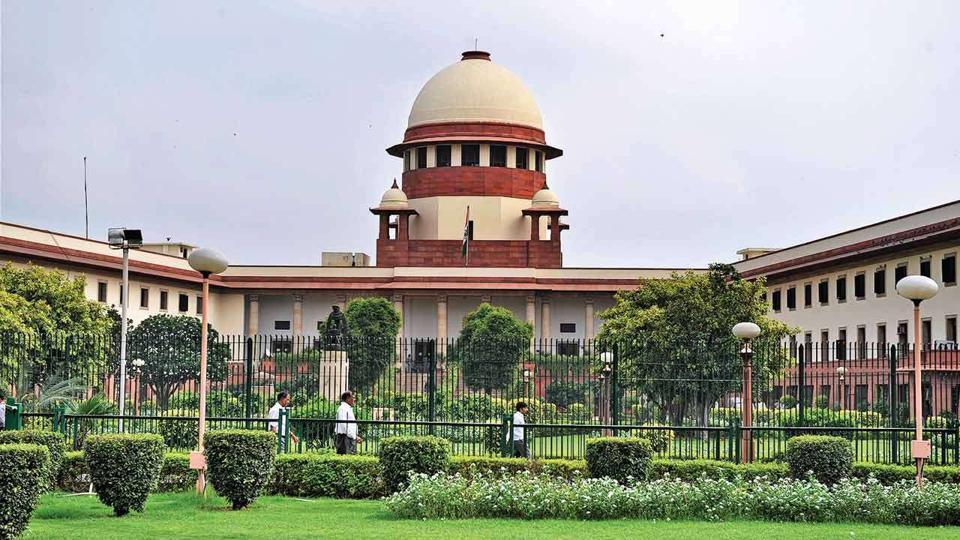
A bench headed by Chief Justice of India NV Ramana clarified that the five-judge bench shall adjudicate the limited issue relating to ‘Services’ in Delhi and that no other substantial issue on interpretation of Article 239AA shall be adjudicated afresh. Article 239AA delineates the legislative and executive powers of the Delhi government while clarifying that three subjects, namely land, police and public order, shall remain under the exclusive domain of the Centre in the capital.
The bench, which also included justices Surya Kant and Hima Kohli, said that the matter shall be heard next on May 11.
The Centre pleaded for a fresh adjudication by a Constitution Bench to set the boundaries of the Aam Aadmi Party (AAP) government in Delhi in transferring and appointing bureaucrats.
According to the Centre’s submissions, there can be more than the three subjects specifically mentioned under subsection 3 of Article 239AA on which the Delhi government is restricted from passing a law, and this aspect should be clarified further by another five-judge bench.
The Delhi government opposed the Centre’s views, seeking a quick decision on whether or not it has the executive power to transfer and appoint bureaucrats.
A Constitution Bench in July 2018 held that the executive power of the Union government in respect of the National Capital Territory of Delhi is confined to land, police and public order under subsection 3 of Article 239AA.
However, solicitor general Tushar Mehta and additional solicitor general Sanjay Jain, appearing for the Union government, made the fine point during the proceedings last month that the 2018 judgment has not specifically held that the Delhi government is empowered to make laws on all subjects other than land, police, and public order.
Senior advocate Abhishek Manu Singhvi, appearing for the AAP government, countered this submission, arguing the 2018 verdict is unequivocal in demarcating the powers of the Delhi government and that the submissions by the Centre are aimed at eroding the federal structure. Singhvi added that accepting the Centre’s submissions would render the Delhi legislative assembly meaningless.



