India’s Prime Minister is winning accolades abroad, the country’s decades-long nuclear outlier status might be about to end and a good monsoon is likely to boost the economy. But everyone is talking about a Bollywood movie.
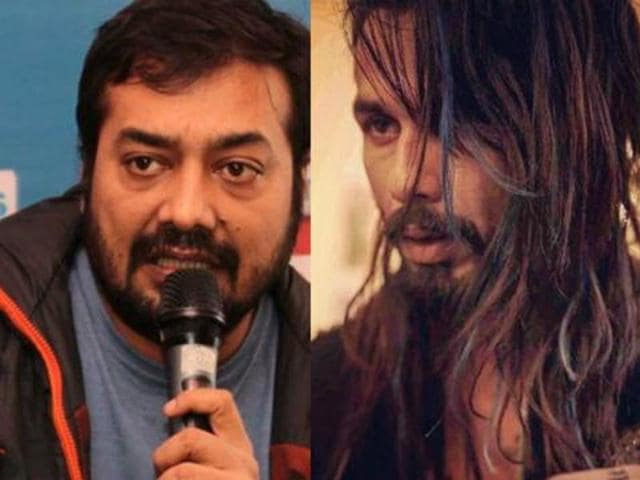
The controversy surrounding Udta Punjab has dominated headlines since it was first leaked that the censor board was seeking multiple cuts in the film that revolves around the northern state’s drug problem.
In the days that have followed, many Bollywood stars have thrown their weight behind the makers of the film, the high court has got involved and the censor board appears to be losing the public perception game.
But two things are clear from the row that has even prompted finance minister Arun Jaitley to promise radical changes in the certification process.
One, over two years after PM Narendra Modi’s minimum government, maximum governance pledge, many things in India are still relics of the socialist-era bureaucratic red tape.
Read: Artists, industry veterans to ‘Udta Punjab’s’ defence
The row around Udta Punjab and the censor board’s claims of the movie defaming Punjabis is reminiscent of the bans on movies such as Aandhi and Bandit Queen.
{{/usCountry}}The row around Udta Punjab and the censor board’s claims of the movie defaming Punjabis is reminiscent of the bans on movies such as Aandhi and Bandit Queen.
{{/usCountry}}Such movies ran into trouble either for their violent content and expletives (Bandit Queen), alleged poor portrayal of powerful politicians (Aandhi) or blasphemous relationships (Fire).
One of the cornerstones of Modi’s electoral campaign that captivated the youth was a clean break from such arbitrary decision making, often at the behest of political masters.
The pledge of minimum government promised the administration will withdraw from private lives and keep itself occupied in critical areas of public policy and governance.
Read: Udta Punjab did not seem to be glorifying use of drugs: Bombay HC
But the experience of the last two years has indicated the government increasingly intruding into matters of food, and now culture.
In television interviews, censor board chief Pahlaj Nihalani said he is proud to be a “chamcha” of the prime minister and has asked for “MP”, “MLA”, “election” to be deleted – surely this is the kind of behavior a modern minimal government doesn’t want projected?
The second inference from the Udta Punjab row is that the authorities are still painfully warped in a pre-internet age where the power to disseminate information was centralized.
The power of the web may be exploited by the PM and his ministers but evidently the censor board thinks a thousand uncut versions of Udta Punjab won’t flood YouTube the moment the movie is sniped.
The social media era has democratized information sharing even erstwhile powerful media organisations – accustomed to making decisions about what gets read – have bowed to the reach of the internet. The decision is no longer about what people read but where they read it.
In such a milieu, it is foolhardy for Nihalani to think any cuts on Udta Punjab won’t be vigorously contested or leaked online. Congress’ Amarinder Singh has already declared he will release uncut prints of the film – he may be the first of a few thousand YouTube videos and torrent links that will ensure no expletive will get bleeped.
The censor board probably understands this. Its arguments in the Bombay high court increasingly pivoted on how vulgar the scenes were, how offensive the songs and how defamatory the dialogues.
Read: How high is Punjab? No one really knows
But thanks to the board’s efforts, tens of thousands of people now know the dialogues and details of every expletive the authorities wanted to bleep out – they may even become hip in a few months.
Clearly, little has been learnt from the botched censorship experiences in the past. Fire was first withdrawn and later re-released without cuts – and went on to become a landmark film in portraying lesbian relationships. The makers of last year’s Angry Indian Goddesses prompting released online every scene sniped by the board.
More famously, the audience of the controversial documentary, India’s Daughter, must have mushroomed manifold after the government banned it – ensuring everyone watched it when it was leaked online.
It is increasingly evident that any effort to choke movies almost inevitably results in ballooning interest. In that sense, the censor board has already lost the battle. In whichever form Udta Punjab releases, thousands will flock to the theatres and an equal number will watch it online. Moreover, what might have been a forgettable film will be guaranteed a place in posterity.
(The author tweets at @dhrubo127. Views expressed are personal)