
 E-Paper



Why is the Tata-Airbus C-295 project important for Indian defence manufacturing?
The C-295 project has also been cleared by the CCS of the NDA government but for the first time a private partner has been chosen by the original equipment supplier for manufacturing two-thirds of the contracted order in India not a defence PSU.

 Prefer HTon Google


The Airbus-Tata joint venture to manufacture C-295 medium-lift transport aircraft in Vadodara in Gujarat through the strategic partnership route is the first among many steps that India needs to take before “Atamanirbhar Bharat” campaign of Prime Minister Narendra Modi becomes a serious catalyst for military-industrialisation of the country.
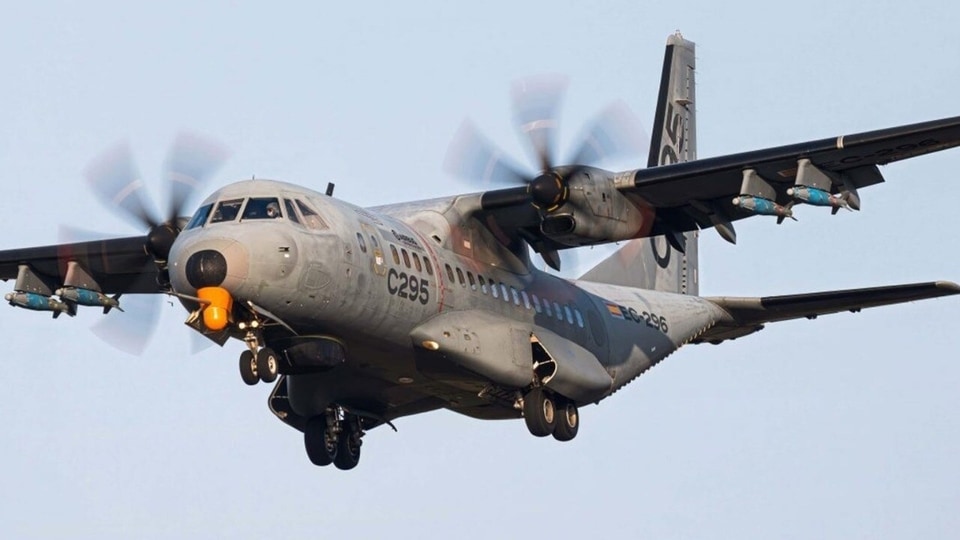
The C-295 project is a far cry from the 1990s when decision was taken to assemble Su-30 MKI fighters by defence PSU Hindustan Aeronautics Limited (HAL) after purchasing the initial lot from Russia post clearance of the Cabinet Committee on Security (CCS) by the then United Front government.
The C-295 project has also been cleared by the CCS of the NDA government but for the first time a private partner has been chosen by the original equipment supplier for manufacturing two-thirds of the contracted order in India not a defence PSU.
While 40 C-295 aircraft will be assembled in India, the remaining 16 of the total ₹22,000 crore order will be flown from Spain. The Gujarat manufacturing will also create domestic supply chain of MSMEs to provide key parts for making the C-295 aircraft. But this is only the first important step towards true “Atamanirbhar Bharat.”
PM Modi will be able to develop large scale military-industrial complex in the country provided steps are taken to indigenously set up design, development, testing and certification facilities for capital platforms like armed drones, fighters, tanks, and submarines by involving the key players in private defence sector.
This accompanied by industrial units manufacturing critical parts like infra-red seekers (needed for anti-tank missiles), inertial navigation system (for missiles and fighters) and hot engine technologies, will ensure that India does not have to depend on any third country for its military requirements. This will also allow India can export to other countries in the world without being bound by any technology transfer restriction or licenses.
While to date India depends on the Defence Research and Development Organization (DRDO) to design, develop, test, and certify any hardware platform, it is time that independent facilities are build where military products design and developed by the private sector are tested and certified to meet global requirements.
It is most important to involve private sector in hardware development as neither the defence PSUs nor the DRDO have been able to meet required deadlines or accountability. Fact is that the Su-30 MKI assembled/ manufactured by the HAL is more expensive than the one directly imported from Russia due to inherent inefficiencies in the PSU with long man hours and comparative low productivity.
The delays in the design and development of the shoulder fired anti-tank guided missile (ATGM) system and the medium altitude long endurance unmanned aerial vehicle by the DRDO makes a fit case for private sector involvement in weapons manufacturing in India.
While the proposed India-US venture to manufacture Javelin ATGM fell through in the past decade due to American license restrictions to transfer heat seeker technology to India, the decision to domestically manufacture Israeli Spike ATGM fell through as the DRDO told the government in writing that it already had the technology.
Fact is that the DRDO still not has fully developed the shoulder fired version of ATGM and India had to rush to Israel to buy Spike ATGM from Israel at hiked rates when Chinese PLA transgressed into East Ladakh in May 2020 with tanks, missiles and rocket regiments deployed in occupied Aksai Chin areas.
Rather than go for outright purchase of hardware in critical areas like submarines and fighters, India needs to go into joint development with the original equipment manufacturer so that it acquires the specialized skills for weapons design and development.
If India had jointly designed and developed Scorpene submarines with French Naval Systems as was offered in past decades, it would now have the talent, capability, and machine tooling skills to produce more such platforms and save precious foreign exchange spent on direct acquisition.
With the global supply chains still to recover from Covid pandemic and uncertainty further compounded by Russia’s Ukraine war and Chinese belligerence in Indo-Pacific and East Ladakh, India needs a military-industrial complex to bolster its strategic autonomy.
Despite both Russia and US both selling to Pakistan, India has no options but to purchase platforms, common with the adversary, from these two countries. The C-295 project is the right beginning.


