
 E-Paper



Number Theory: Why this monsoon is vital for India, and the world
Thanks to the onset of a premature heat wave, rabi season agricultural production, especially that of wheat is expected to be significantly lower in India.

 Prefer HTon Google


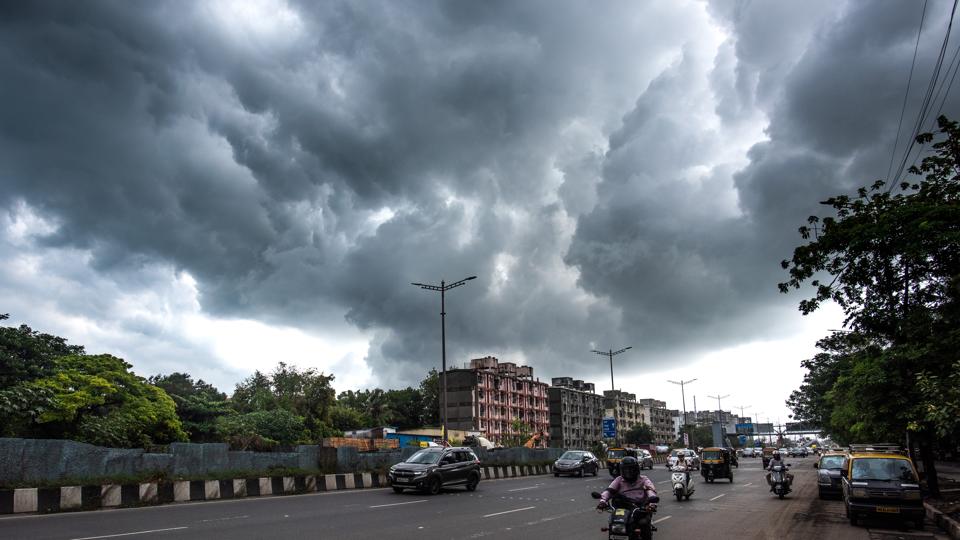
June 1 marks the beginning of the official monsoon season in India. Apart from bringing relief from the heat, the south-west or summer monsoon is also crucial for agricultural production in the country. According to the Indian Metrological Department’s (IMD) gridded dataset, India has received 48.04mm rainfall from June 1 to June 15, the 37th lowest since 1901. This is a 24% deficit from the 63mm rainfall India received on average in the same 15 days in the 1961-2010 period. To be sure, there is still a lot of time left for monsoon rainfall to catch up. What can be said with a reasonable degree of the confidence though is the fact that while all monsoons are important for India, this year’s monsoon rains could be a game changer for economy in more ways than one. Here are four charts which explain this in detail.
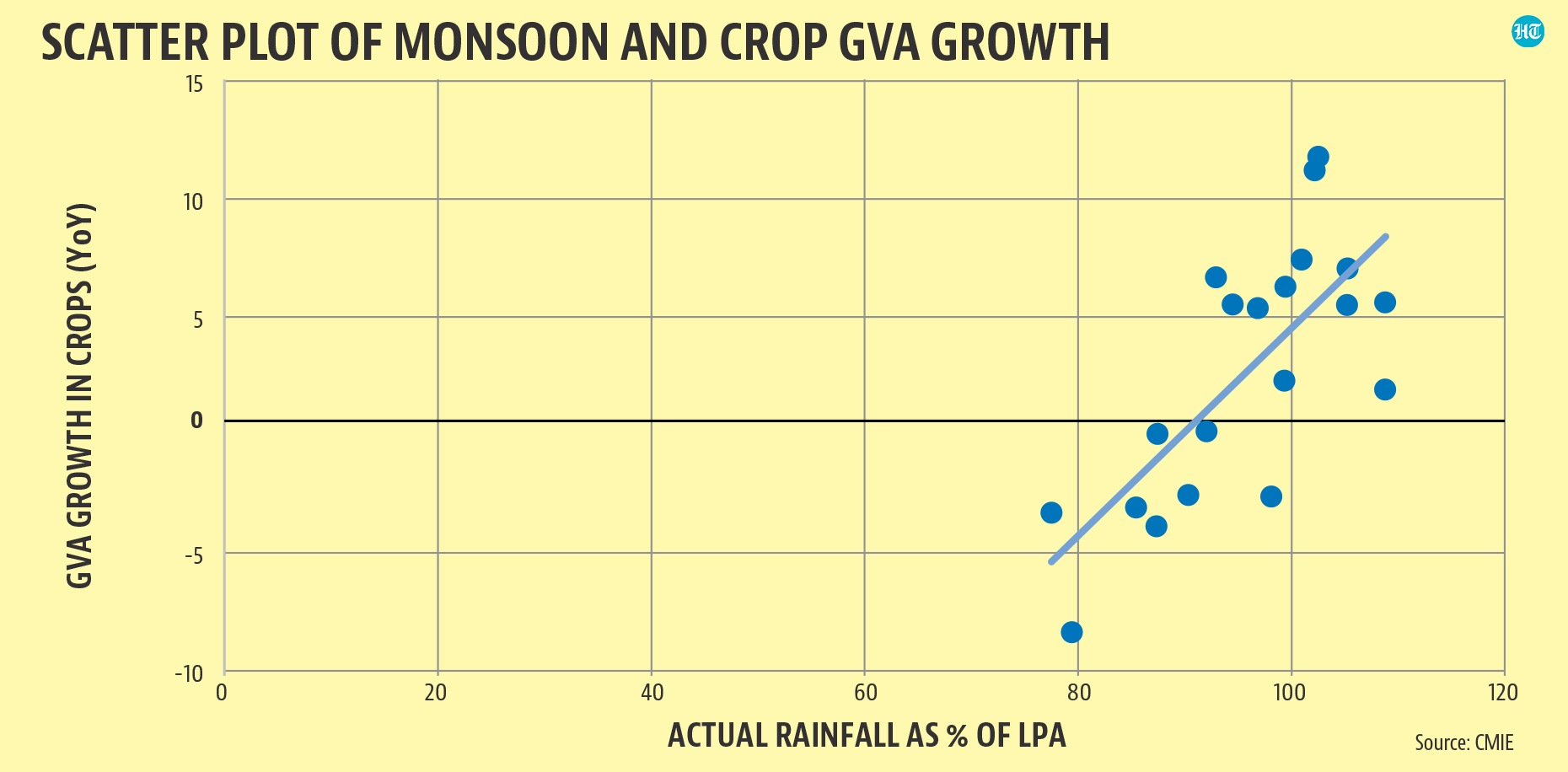
Monsoon performance has a strong positive correlation with crop performance in India
While the connection between monsoon rains and the kharif season crops in India is pretty obvious – in another couple of weeks, we will be tracking sowing progress and rainfall performance together – it matters for the rabi season performance as well. This happens through factors such as water levels in reservoirs and moisture content in the soil. Simply speaking, a bad monsoon means a bad crop, which in extreme conditions can even mean a contraction in agricultural production. A comparison of gross value added for the crop sub-group of agricultural and allied activities clearly shows this relationship. Every time crop production has suffered a contraction in India, monsoon rainfall has been lower than the Long Period Average (LPA). Even otherwise, crop production growth and monsoon performance show a strong correlation.
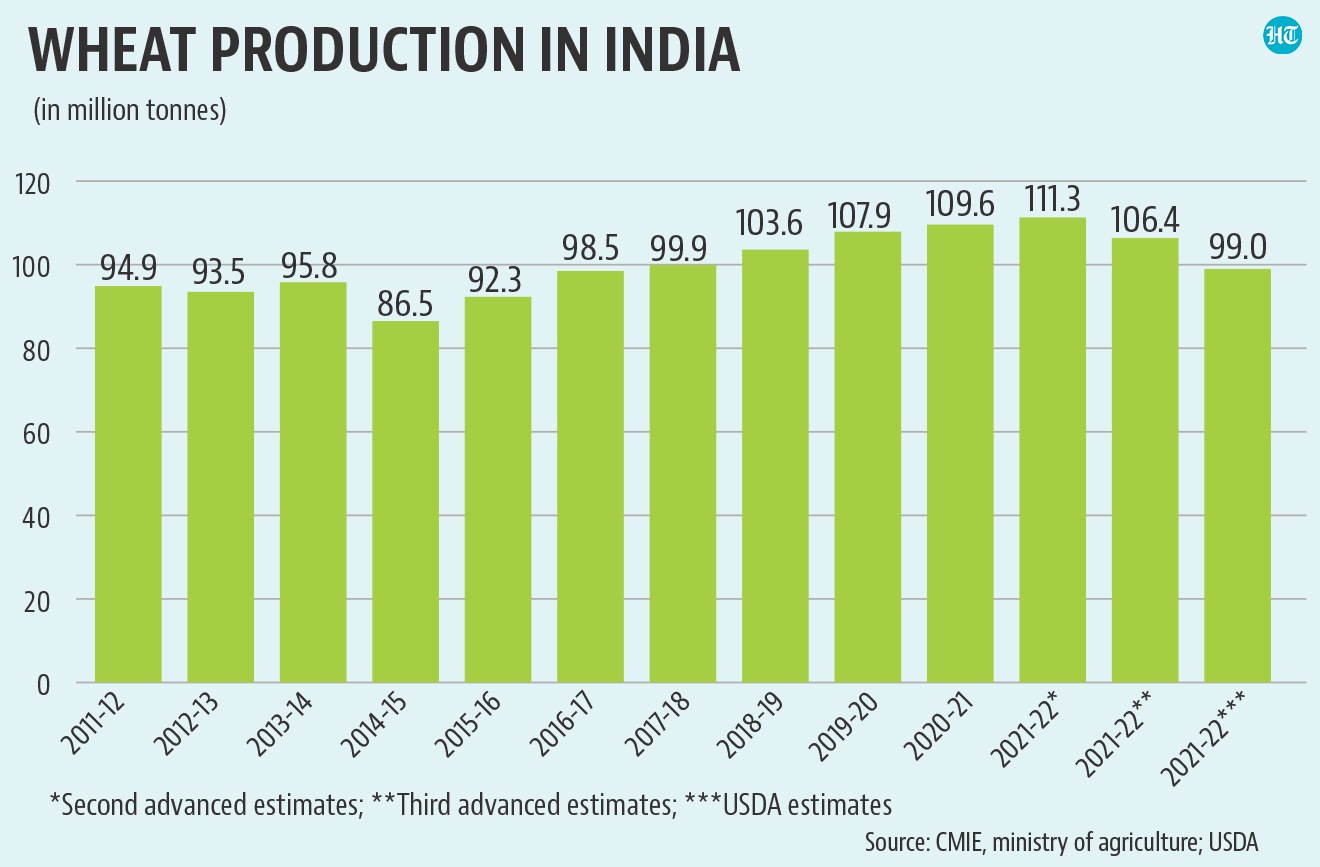
India is entering this kharif season with a sub-par rabi season
Thanks to the onset of a premature heat wave, rabi season agricultural production, especially that of wheat is expected to be significantly lower in India. According to the second advance estimates released by the ministry of agriculture on February 16, 2021-22 wheat production in the country was expected to be 111.3 million tonnes. This number has been brought down to 106.4 million tonnes according to the third advance estimates released on May 19. External estimates fear an even bigger shortfall. For example, a May 25 report by the United States Department of Agriculture (USDA) expects India’s 2021-22 wheat production to be just 99 million tonnes down from its earlier estimate of 110 million tonnes (https://bit.ly/3tGV9Zo). Any adverse shock to rice output, which is the main kharif season crop in India will further aggravate food grain supply and the inflation situation in the country.
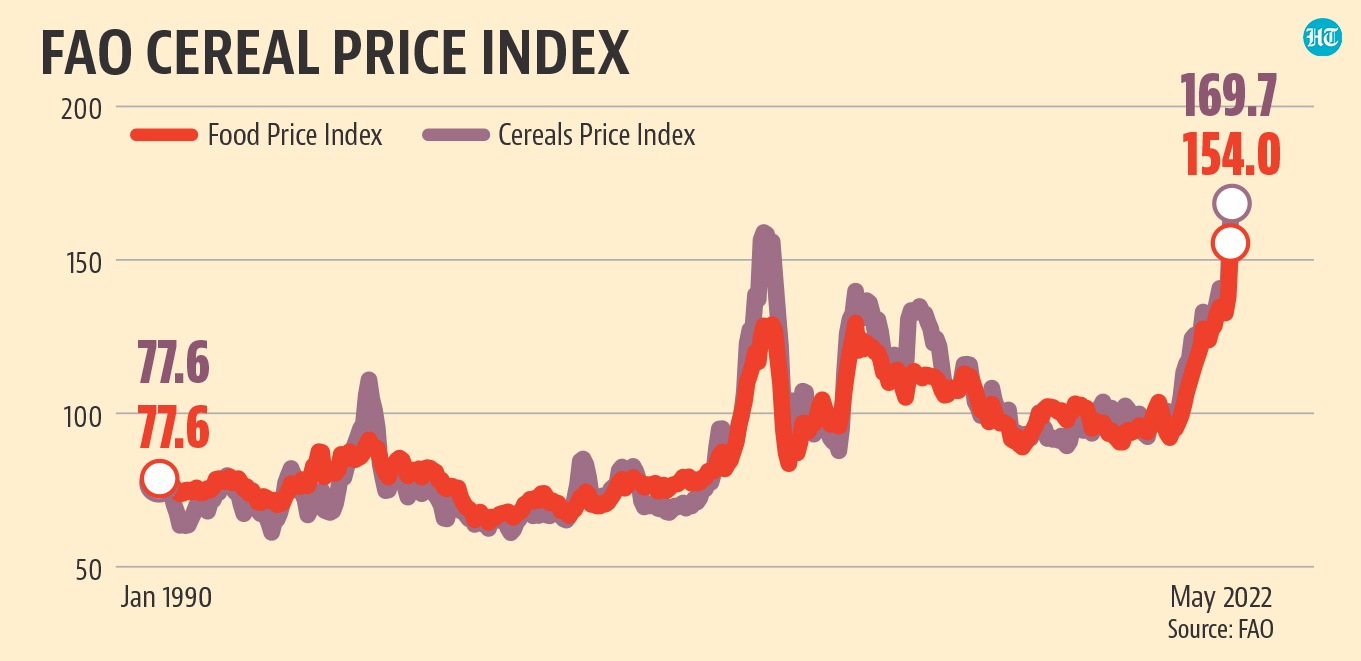
Global food prices are at their highest levels at the moment
Another reason why the performance of the monsoon is extremely crucial is the situation in international food markets. Thanks to the geopolitical shock due to the Russia-Ukraine war, global food prices, as per the Food and Agricultural Organisation’s Food Price Index are at an all-time high. While the headline Food Price Index fell marginally to 154 in May from highest ever level of 154.9 in April, its cereal sub-component climbed the highest ever value of 169.7 in May.
Global food grain prices could climb further if India’s rice crop suffers
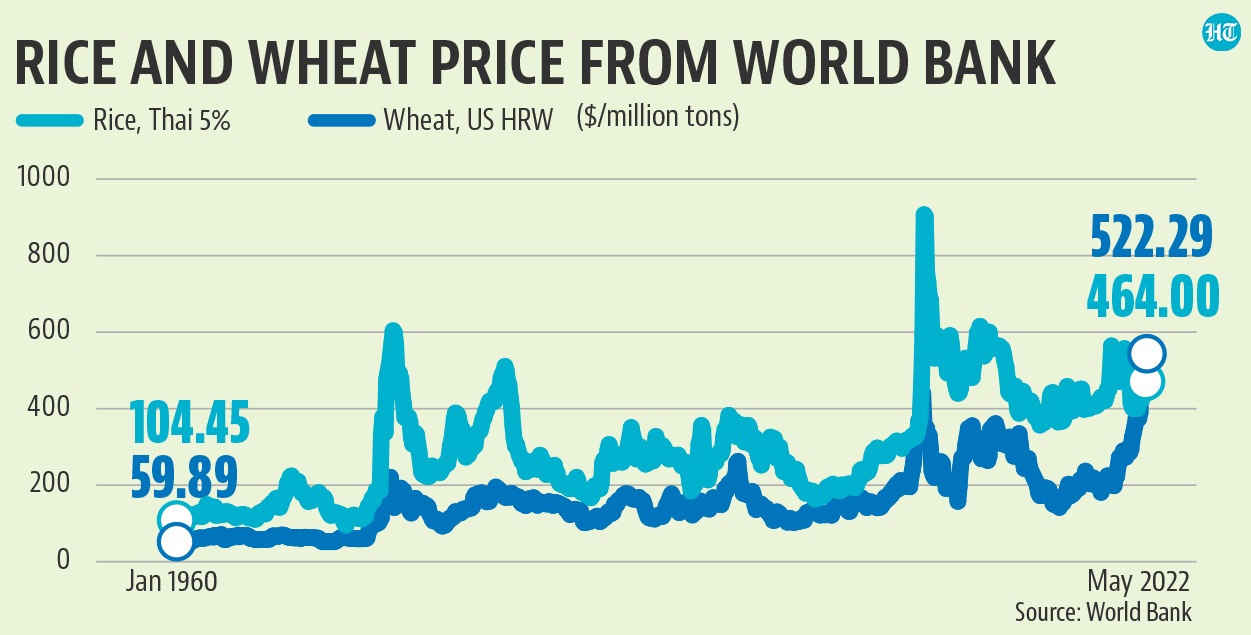
World Bank data on prices of rice and wheat shows that while the latter is at an all-time high, rice prices are nowhere near their historic peaks. This means that a surge in rice prices could generate further tailwinds for global food prices. As per data from Organisation for Economic Cooperation and Development (OECD), India was the largest exporter of rice in the world in 2020. This means that any adverse shock to India’s rice production – this is bound to lead to export restrictions – in an already tight global food market will only add to the price pressures.
Agricultural performance will also matter for domestic demand and growth
While the overall economy has crossed pre-pandemic levels as per the 2021-22 GDP numbers, there are adequate signs that the nature of recovery is still unequal. This fact is also seen in the relative weakness of recovery in private final consumption expenditure (PFCE). Because agriculture continues to be largest employer in the country – data from the Periodic Labour Force Survey (PLFS) shows that its share has increased in both 2019-20 and 2020-21– a weak monsoon will mean lower agricultural growth and therefore tepid farm incomes. This is bound to drag down the overall performance of the economy. It is important to reiterate here that farm incomes are not just dependent on domestic sales. Even a minor shortfall in kharif production could force the government to impose export restrictions. Finally, deficient rainfall is not the only fear as far as agriculture is concerned. As is increasingly becoming common with the climate crisis, even a normal monsoon can be perfectly consistent with crop damage because of temporally skewed rainfall patterns.


