The Supreme Court said that the judgments delivered need to be “more crisp, clear and precise” if a common man has to understand the law being laid down by courts.
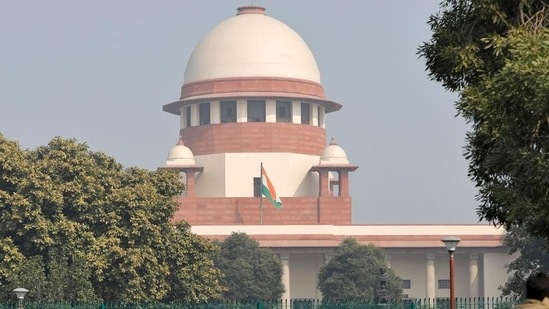
A three-judge bench of the Supreme Court on Thursday observed that it is high time that judges adopt the Wren & Martin principles of précis writing to enable litigants understand Court decisions. “It is the need of the hour to write clear and short judgments which the litigant can understand…There may be times when the complexity of matters gives rise to complex opinions. But we find that judgments are becoming more complex and verbose,” said a bench of Justices Sanjay Kishan Kaul, Dinesh Maheshwari and Hrishikesh Roy in a postscript to its judgment allowing Delhi Assembly’s Peace and Harmony Committee to summon Facebook as part of its proceeding in relation to the communal violence in the Capital in February last year.
The six-page postscript was added to the judgment by the three judges who felt strongly about making judgments meaningful to the common man.
{{/usCountry}}The six-page postscript was added to the judgment by the three judges who felt strongly about making judgments meaningful to the common man.
{{/usCountry}}“The purpose of our postscript is only to start a discussion among the legal fraternity by bringing to notice the importance of succinctly framed written synopsis in advance, and the same being adhered to in course of oral arguments to be addressed over a limited time period and more crisp, clear and precise judgments so that the common man can understand what the law is being laid down. After all, it is for ‘the common man’ that the judicial system exists,” stated the postscript.
While judges have a big role in this, the bench said that lawyers share an equal responsibility by making time-bound arguments and supplying brief, precise synopsis of arguments and laws. “Instead of restricting oral arguments it (court) has become a competing arena of who gets to argue for the longest time.”
In the recent past, complex cases decided by the Supreme Court have invited bulky decisions. The decision in September 2018 declaring Aadhaar card valid with riders numbered 1448 pages. The Ayodhya title suit dispute decided in November 2019 was 1045 pages thick. The Court decision declaring right to privacy as fundamental right in August 2017 had 547 pages while the September 2018 ruling decriminalising gay sex ran into 495 pages. The Court also rued that precious judicial time is consumed to decide routine matters, bail pleas and interim orders in civil matters that have no precedential value.
Currently, the pending cases in the top court as on July 2, 2021 are 69,212 of which 447 cases are before Constitution benches with composition of five, seven and nine judges.