The Narmada canal came as a boon to farmers in western Rajasthan. However, now it’s showing its impact on the biodiversity. The first noticeable change came when desert rodents were driven away to drier areas and replaced by those living in the areas with abundant water supply.
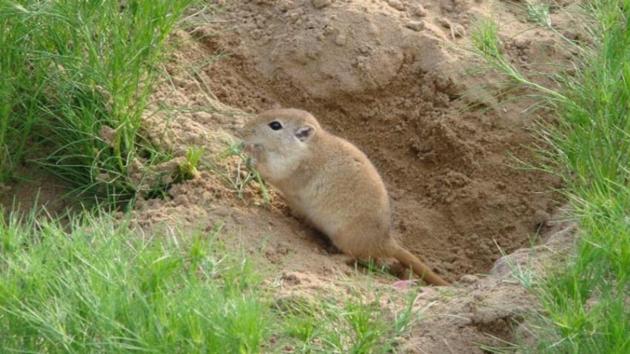
Rajasthan has 18 species of rodents, of which seven harm crops. Rodents — which are the most important bioindicators in nature — are mostly found in the Thar Desert in western Rajasthan.
“We can understand changes in ecology with the behaviour of rodents. After the Narmada Canal in 2008, farmers in Barmer and Jalore districts started getting water for drinking and irrigation. This brought about changes in this arid area. As humidity rose, desert rodents migrated to other places,” said Dr Vipin Chaudhary, principal scientist at the Central Arid Zone Research Institute (CAZRI).
“Before the canal, most farmers were mainly growing rain-fed crops. Some farmers were also irrigating crops using the open well system. After the advent of the canal, the farmers started growing irrigated crops during rabi along with rain-fed crops during kharif. Earlier, the conditions were favourable for desert rodents but the canal changed it all,” said Chaudhary.
“Three years ago, we started monitoring the presence of rodents in the canal area. Earlier, the area was surveyed in the 1970s and a species of rat, Gerbillus gerbillus, was found. Now, this species is not found here. The Indian desert jird or Indian desert gerbil (Meriones hurrianae) is another species found in the desert which has shifted to areas where farming is dependent on monsoon,” Chaudhary said.
{{/usCountry}}“Three years ago, we started monitoring the presence of rodents in the canal area. Earlier, the area was surveyed in the 1970s and a species of rat, Gerbillus gerbillus, was found. Now, this species is not found here. The Indian desert jird or Indian desert gerbil (Meriones hurrianae) is another species found in the desert which has shifted to areas where farming is dependent on monsoon,” Chaudhary said.
{{/usCountry}}“The soft-furred rat (scientifically known as Millardia meltada) usually found in irrigated regions is now found in this area. Even the short-tailed bandicoot rat (Nesokia indica), found in water-logged areas, has been reported in the Narmada command area for the first time,” he said.
According to scientific estimates, every year 10-12 % of crops are lost because of rats. The rodents are also responsible for wastage of 2-5% stored foodgrains.
“Rats expand their population only when they are confident about the availability of food. Rats commonly found in deserts areas only breed after the monsoon when food is readily available. However, the species of rats living in more irrigated areas breed throughout the year,” said Chaudhary, adding that an increase in the number of new species of rats in the Narmada command area is natural and it will also increase the possibility of damage to crops.