
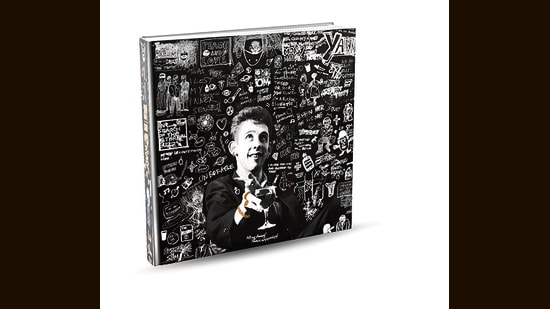
I could start off by being nitpicky, and say that Bruce Springsteen’s cover of A Rainy Night in Soho pales in comparison with Shane MacGowan’s original; or I could gush about how Tom Waits’s gravelly, bourbon-soaked voice elevates Summer in Siam even above the heights of MacGowan’s original (yes, I am biased; I love Waits in any form, including in his brief but very enjoyable cameo in Martin McDonagh’s new dark comedy, Wild Horse Nine).
I could dive into each of the 36 covers on the just-launched tribute album, 20th Century Paddy: The Songs of Shane MacGowan. Don’t fret, though. I’ll spare you the minutiae.
The late Irish singer was best known as the frontman of the influential English-Celtic punk band The Pogues. He died on November 30, 2023, and the new album marks his third death anniversary.
In addition to the aforementioned worthies, it features covers by U2, Dropkick Murphys, Primal Scream, Lisa O’Neill, Bob Geldof, and Johnny Depp, who sings Haunted in a duet with Imelda May (the original featured Sinead O’Connor).
Listening to the album sent me tumbling back down the rabbit hole of MacGowan, The Pogues and everything he did before his wild, eventful life ended at 65.
I started with the official video for the band’s greatest hit, Fairytale of New York (1988). Set on Christmas Day, and shot inside a real police precinct, it features Matt Dillon as a New York policeman, hauling in a drunk and dishevelled MacGowan. Singer Kirsty MacColl glides in as duet partner, and the whole thing plays out like a short film.
{{/usCountry}}I started with the official video for the band’s greatest hit, Fairytale of New York (1988). Set on Christmas Day, and shot inside a real police precinct, it features Matt Dillon as a New York policeman, hauling in a drunk and dishevelled MacGowan. Singer Kirsty MacColl glides in as duet partner, and the whole thing plays out like a short film.
{{/usCountry}}Nearly four decades on, the video still does what the song still does: with its tales of dashed dreams, it makes you laugh but also messes with your mind.
THE IRISHMAN
MacGowan was born on Christmas Day in 1957, and spent childhood summers on a Tipperary farm, soaking up ballads, rebel songs and the gossip of an extended Irish family.
At 18, he was a fixture on the London punk scene, reinventing himself as Shane O’Hooligan and famously being photographed with a bloodied ear at a chaotic Clash gig in 1976.
In 1982, he formed the band Pogue Mahone (from the Irish póg mo thóin or kiss my a**). Their idea for what they wanted to sound like seemed absurd on paper: traditional Irish music, with its tin whistle, banjo and accordion, played it at punk speed, with punk spunk.
But we’re forgetting the lyrics.
MacGowan wrote like a poet who’d been debarred from the library, about Irish emigrants and drunks, lost loves and Soho rain, with a tenderness that contrasted with the ferocity of the delivery. He was compared to Irish poets Brendan Behan and James Joyce, but you could then catch him shouting over a banjo in a pub.
His genius and his struggles were intertwined.
The drinking and drugs became legendary and then tragic. In 1991, amid a series of disrupted performances in Japan, The Pogues fired him. He went on to form Shane MacGowan and the Popes. He returned to The Pogues for reunion tours in the Aughts, but they never again produced anything quite like their music of the mid-1980s.
So why does he endure? Partly because he gave the Irish diaspora a voice. He was part of a generation exiled to England or distant America, to nurse dreams and hangovers in the bars of cities that weren’t their own.
The Pogues also proved one could honour musical tradition by smashing the museum glass that encased it. Dropkick Murphys and Flogging Molly exist because of them, and that lineage runs through Lankum, Lisa O’Neill and Fontaines DC, who also sing in Irish accents about their streets.
Joe Strummer, a hero of MacGowan’s punk youth, fronted The Pogues for a while, after his dismissal. Waits and Springsteen, as the new album shows, are happy to line up to sing his songs. And, last year, Bob Dylan covered A Rainy Night in Soho at concerts, one of them in Dublin.
STILL PLAYING...
That is perhaps the best thing about this tribute. It doesn’t feel like an obituary.
When Hozier and Jessie Buckley take on Fairytale of New York, or Primal Scream work through A Pair of Brown Eyes, it sounds more like a pub session that has gone on for three years and refuses to die down.
Even the charity attached to it, with half of artist royalties going to the Dublin Simon Community for the unhoused, feels right. MacGowan wrote about the people who slip through the cracks, and nearly slipped through them himself.
If The Pogues, for you, begin and end on Christmas Eve, here is a guide to the other 364 days.
Start with the albums. Rum Sodomy & the Lash (1985), produced by Elvis Costello, is a masterpiece: raw, funny, heartbreaking, and the best example for everything I’ve said above. If I Should Fall from Grace with God (1988) is the big, sprawling, adventurous one, where Irish trad meets flamenco, Turkish melodies and jazz. Red Roses for Me (1984), the debut, is the loose and rowdy pub-band record, best played loud and slightly tipsy.
Then, the songs.
A Rainy Night in Soho (1990) is the finest love song MacGowan wrote, with its weary romance and rising strings: “I’ve been loving you a long time / Down all the years, down all the days / And I’ve cried for all your troubles / Smiled at your funny little ways”.
The Sick Bed of Cuchulainn (1985) is a breathless sprint through myth and bad decisions: “There’s devils on each side of you with bottles in their hands / You need one more drop of poison and you’ll dream of foreign lands”.
And Fairytale of New York is worth hearing again with the lyrics actually in focus.
For the man himself, there is Julien Temple’s documentary, Crock of Gold: A Few Rounds with Shane MacGowan (2020), which is funny, chaotic and very moving.
The man didn’t pretend to be a saint, a sage or even a particularly good houseguest. He wrote for the last orders, the sloshed chorus, and the bruised heart alone at the end of the bar.
Posterity kept the songs anyway. So go on, put on Rum Sodomy & the Lash and sing along badly. That’s how Shane would have wanted it.
(To reach out, email sanjoy.narayan@gmail.com. The views expressed are personal)
ABOUT THE AUTHOR
Last summer, while a debate over net neutrality was on in the US, in his very funny news satire show, Last Week Tonight, the comedian John Oliver used a typically risqué example to explain what a non-neutral Internet could do to small web-based entrepreneurs and startups.