The first lot of 5 kg sold for ₹15,000.
But the figures weren’t really the point. With that sale in July, an 83-year-old tea plantation in Tinsukia, Assam, became the first in India to sell homegrown matcha, commercially, at auction.
The specialty leaves were grown and processed at the Chota Tingrai Tea Estate, where the variant has been named Matcha Assamica (from the native Camellia assamica used to make it). “It is distinctly Indian,” says Mrityunjay Jalan, 34, who
The first lot of 5 kg sold for ₹15,000.
But the figures weren’t really the point. With that sale in July, an 83-year-old tea plantation in Tinsukia, Assam, became the first in India to sell homegrown matcha, commercially, at auction.
The specialty leaves were grown and processed at the Chota Tingrai Tea Estate, where the variant has been named Matcha Assamica (from the native Camellia assamica used to make it). “It is distinctly Indian,” says Mrityunjay Jalan, 34, who heads Jalan Industries and the tea estate with his sister, Avantika Jalan, 38.
It was grown, harvested and processed using traditional Japanese techniques, he adds, but the type of tea, environmental conditions and soil lend it a taste that’s slightly different from the Japanese varieties. “Matcha Assamica’s umami profile is lighter and we believe that will suit especially new drinkers of the beverage. The Japanese ceremonial grade matcha is sacrosanct and cannot be replicated, and we don’t want to substitute it. Instead, we wanted to offer a type that’s unique,” Jalan says.
So, what makes it matcha?
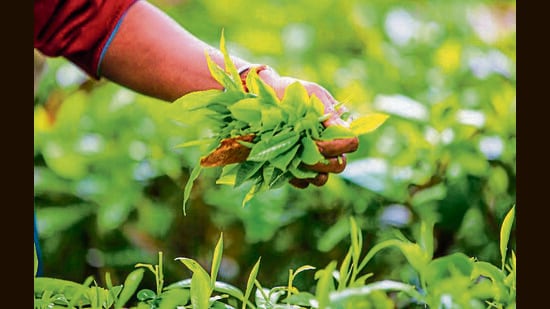
According to ISO (the International Organization for Standardization) guidelines, to qualify as matcha, the tea leaves must be shade-grown (a thick mesh can be enough to block out sunlight), steamed without oxidation to preserve their bright green hue, dried without rolling, and then ground to a fine powder.
This is an expensive and painstaking process. It takes about 16 hours to make 15 kg of matcha powder in our factory, Jalan says. By contrast, it takes just 12 hours to process about 800 kg of regular green tea.
But they’ve done it, and sold multiple lots since that first one in July. But they couldn’t have done it without some very special help.
A UNIQUE COLLABORATION
The story of how Chota Tingrai’s matcha came to be is a gentle tale of friendship and commerce going back to the 1980s.
Back then, Jalan’s father, Mrigendra Jalan, met a Japanese tea grower named Ichiro Hara while he was visiting India. The two hit it off, and decided to collaborate.
“Initially, they tried manufacturing Japanese green tea at Chota Tingrai. But there was little demand for it here at the time,” says Mrityunjay Jalan. The venture didn’t work out, but the two families stayed in touch.
In 2016, a new generation picked up the threads. Jalan reached out to Hara’s son, Shoji Hara. With his help, he began exploring the idea of growing and processing high-quality Japanese green tea in India. “Mr Hara helped us set up a green-tea factory here and introduced us to tea manufacturing expert Masanori Yanagawa, who lived at the estate from 2016 to 2019, advising us and training our staff,” Jalan says.
Producing high-quality green tea, he adds, gave the Jalans the confidence to attempt matcha.
Here, again, the Haras stepped in. They guided the Jalans on how to source the machinery they would need, from manufacturers in Japan. Yanagawa returned to the estate to zero in on the right cultivars (or specific cultured varieties of Camellia assamica), and streamline the process.
By now, he knew Assam’s weather, soil and cultivars. “The harvest cycle here is quite different from in Japan,” he says, smiling. “But the raw material is the same: tea leaves. I believed that with appropriate adjustments to the processing methods, it could be done.”
He was right, and the numbers are already rising.
POT TWIST
When the first batch went under the hammer at the Guwahati Tea Auction Centre, there were only two bidders. The winning bid came from Piyush Bajpai, owner of Sheosons Chai.
“I’ve keenly followed the matcha wave in India and was waiting for this auction,” Bajpai adds. “I sold half that first lot to a client in Bengaluru, and kept the rest so I could send samples to other clients. The response has been good.”
Chota Tingrai has presented its matcha at eight other auctions since, and there have been about five bidders per event, Bajpai says.
He says he plans to use the Indian variety to launch his own brand of specialty teas.
Across the board, there is some relief that Japan need not be the only source.
“What the Chota Tingrai experiment shows is that it’s definitely possible to produce matcha in India,” says Joydeep Phukan, principal officer and secretary at the Tea Research Association in Kolkata. He says the association now plans to help other Indian tea estates do this too. “We’ve been identifying suitable cultivars. This could open up a new avenue for the tea industry,” Phukan says.
FULL STEAM AHEAD
Is this true matcha? It certainly is… in most senses of the word.
Amid a boom in demand over the past decade, as the ingredient has become a trend, a flex and a hashtag, Japan ceased to be the only source. Even within Japan, matcha began to be made from cultivars that were not the original one found in Uji, Kyoto.
Countries such as China and Vietnam entered the market.
“Shading methods can also differ,” says Yanagawa. “Harvesting is increasingly mechanised. The manufacturing process often differs.” But if it is shade-grown, has the high chlorophyll content and the earthy, umami flavour that comes from it, and is manufactured in ways that retain its distinct colour, then it is matcha, he adds.
And it will help meet potential gaps in the market. In 2025, Japan’s agriculture ministry reported that the country was producing three times as much matcha as in 2010, and still the threat of global shortages loomed.
If matcha in India can eventually be produced at scale, it could benefit the food and beverage sector, says Karreena Bulchandani, founder of the Mumbai-based cafe and matcha bar Mokai. “Currently, we source our matcha from Uji, Japan, which is one of the most-respected matcha-producing regions in the world. Homegrown matcha could make sourcing more accessible. If we find an Indian matcha that has the quality, flavour and character we look for, I would be very excited to work with it,” she adds.
It’s a strange boom for a drink that goes back to meditative tea ceremonies that evolved in Japan over 1,000 years ago, in the 9th century, inspired by similar tea ceremonies in China.
The Jalans, meanwhile, have produced 300 kg of it so far. Some of it is already retailing on platforms such as AbsoluTea.
“We’re thrilled to have been the first to do this,” Mrityunjay Jalan says. “We aim to reach out to cafes and restaurants next. And we’re working on tweaking and improving the quality as we go along.”
.
ALSO TRENDING IN THE TEA SPACE NOW...
Hojicha: A Japanese green tea variety that is roasted at high heat, which gives it a toasty, caramel-like flavour and brownish hue. It is used in hojicha lattes and desserts.
Genmaicha: A Japanese green tea blended with roasted rice, for a nutty, toasted, popcorn-like flavour.
Ube: This isn’t actually a tea. It’s a mashed form of vivid purple yams from the Philippines, known for their sweet, vanilla-like flavour. Like matcha, the dramatic colour has made it a popular ingredient in lattes, ice-creams and desserts.
One Subscription.
Get 360° coverage—from daily headlines
to 100 year archives.
Archives
HT App & Website