Storytelling is the foundation of culture, deeply ingrained in human consciousness. For generations, mothers and grandmothers have put children to bed by narrating folktales and stories from collections such as the Panchatantra. During childhood, popular animated shows like Pokémon and Beyblade would also satisfy curiosity and appetite for wonder and adventure.
But animation is not limited to childhood. As perspectives change, creators are using everyday humour and pop culture to connect with Gen Z and young adults.
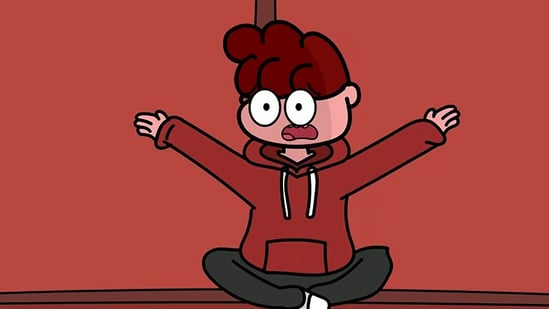
In an interview with HT Lifestyle, animation duo Ayu and Aryan, the creators behind Not Your Type (NYT), who keep their online identities anonymous, shared their perspectives on changing audience expectations and the future of Indian animation.
Is Gen Z changing the perception of animation as children's entertainment in India?
The duo agreed that perceptions are changing, especially among Gen Z and young adults, and credited YouTube with playing a significant role in that shift.
{{/usCountry}}The duo agreed that perceptions are changing, especially among Gen Z and young adults, and credited YouTube with playing a significant role in that shift.
{{/usCountry}}Describing how animation has been perceived in past, they shared, “For a long time, animation in India was largely associated with children’s entertainment, with television programming predominantly catering to younger audiences. As a result, people grew up associating animation with cartoons meant for children, rather than seeing it as a medium that could tell different kinds of stories for different age groups.”
YouTube helped because of its independent animation creators. The duo observed that, over time, audiences have become more receptive to stories featuring everyday experiences, humour, pop culture, and more mature themes.
“At Not Your Type, we’ve been part of this journey, building an audience that connects with our content not just because it’s animated, but because of the writing, characters and humour,” they added.
Their central argument is that animation's appeal need not end with childhood. “Ultimately, animation is a medium of storytelling, not a genre restricted by age.”
What can Indian animation learn from Japan's appeal across age groups?
Japanese animated shows such as Naruto have found enthusiastic audiences in India, with fans who still keep revisiting them well into their adulthood.
The creators believe India is also gradually moving towards animation with a wider appeal across age groups, as independent animators explore different narratives and build new audiences. In their view, this demonstrates the potential of animation beyond children's animation.
What makes everyday Indian experiences suitable for animated storytelling?
Now, let us look at the craft of animation and what goes into scripting. We see plenty of quirky situations around us, but choosing which ones to include in a story requires discernment.
For budding animators hoping to understand scripting, we posed this question to Ayu and Aryan. The creators explained that besides the humorous situation, the key is to enhance it by finding an ‘unexpected angle’ to it.
“A lot of content explores familiar situations by showing exactly how they happen in real life. We try to take those same situations and ask ourselves how we can make them more absurd, exaggerated or completely unpredictable. Sometimes, it’s about finding an unusual point of view, creating an unexpected conflict between characters or taking a very ordinary experience to an extreme that nobody would normally imagine.”
Moreover, animation gives them the freedom to push the boundaries of reality by exaggerating expressions, reactions, and entire scenarios in ways that would be difficult to achieve in live action.
Explaining what sets their storytelling apart beyond presenting relatable everyday situations, the duo said, "The relatability draws them in, but it’s the unexpected perspective and our style of humour that make the story distinctly Not Your Type.”
What gives Indian animation its own storytelling identity?
They mentioned that Indian animation does not need a single, uniform style to establish its identity. Instead, that identity can emerge from the stories creators tell, the unique perspectives they bring and the external influences they combine.
“At Not Your Type, we’re inspired by different forms of animation and storytelling, but we bring those influences together in our own way to create something that feels distinctly ours.”
The animators mentioned influences such as Indian mythology, individual cultural experiences, international animation, and contemporary pop culture. A distinct identity emerges when creators' individual voices shine through, reflecting diversity rather than uniformity in animation style. Every animator should strive to have a distinct voice.
Which genres would you like Indian animation to explore more?
They would like to see more horror comedy and science fiction in Indian animation.
Describing horror comedy as a favourite genre, the creators noted, "We think animation offers so much creative freedom to experiment with horror, absurdity and humour, and we’d be really interested to see how Indian creators interpret the genre in their own way.”
Similarly, science fiction provides plenty of potential to tell stories set in unusual worlds. They would also like to explore both genres through Not Your Type.