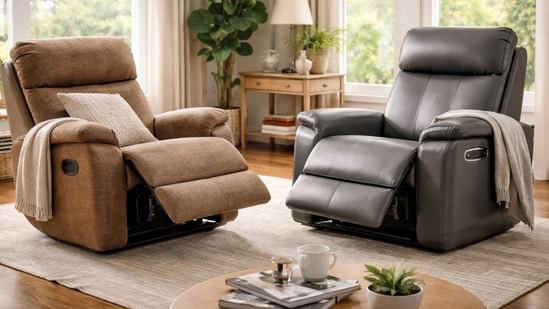
Recliners are the ultimate comfort chair. After a long day, nothing feels better than leaning back and letting your body relax. But choosing one is not as simple as it used to be. Recliners now fall into two clear camps. The familiar manual style and the newer electric version with buttons and add-ons. The right choice is not about which one is better on paper. It really comes down to your space, your budget, and how you plan to use it every single day.
Manual recliners, the classic choice
Manual recliners feel intuitive. You pull a lever or lean back slightly, and the chair responds instantly. No waiting. No buttons. No thinking. It just works. The biggest plus is speed. One second you are sitting, the next you are fully reclined. There are no cords involved either, which makes placement easy. By the window, in the middle of the room, or wherever it feels right. You are not planning furniture around plug points, which is just simpler, right?
They also tend to age better. Fewer parts mean fewer things that can go wrong. Maintenance is minimal, and the price point is far more affordable. This is the kind of recliner you choose if comfort is the priority and you like your living space uncluttered and uncomplicated. And you really do not want to go chasing plug points or buy an extension cord.
Electric recliners, the modern comfort pick
Electric recliners are built for people who like control. Buttons or a remote let you adjust the chair gradually until it feels just right. You are not limited to fixed angles, which makes a noticeable difference during long sitting sessions.
They often come with extras that people genuinely enjoy. Charging ports, adjustable headrests, massage functions, and even heat in some cases. For anyone with joint pain or limited mobility, this ease of use can be a bonus. No pulling. No pushing. Just press and relax. Especially if there are kids at home. Just a lot safer than manual options, which can be operated without supervision, making them unsafe.
That said, they demand a bit more planning. You need power access; they take up more visual space, and they are heavier to move around. They also cost more. For some, the added comfort makes total sense. For others, it feels like too much is going on. And a lot of times, you'd rather use your own tech than the one coming out of a chair.
Maintenance and longevity
Manual recliners are low effort in the long run. Springs and joints will wear with time, but repairs are usually simple and affordable.
{{/usCountry}}Manual recliners are low effort in the long run. Springs and joints will wear with time, but repairs are usually simple and affordable.
{{/usCountry}}Electric recliners come with dependencies. They either need to sit close to a socket or rely on battery packs. If the motor fails, the chair stays frozen until it is fixed. That is something worth keeping in mind before committing.
One major point that won me over is that manual recliners can be easily dry cleaned with zero stress, while electric ones need to be monitored while being cleaned, as they have wiring and plug points.
| Feature | Manual Recliner | Electric Recliner |
| Price | Budget friendly | Higher investment |
| Power source | Human powered | Electrical outlet |
| Speed | Instant recline | Slow and smooth |
| Positions | Limited stops | Precise angle control |
| Weight | Easier to move | Heavier build |
| Maintenance | Low | Higher due to electronics |
There is no right or wrong choice here. Manual recliners keep things simple and focus purely on comfort. Electric recliners add layers of convenience and features. I personally leaned towards manual because I wanted comfort without dependence. But I also see the appeal of electric models, especially for longer lounging hours. Think about how you actually relax at home, not how a showroom makes it look. The right recliner is the one that fits into your day without trying too hard.
Similar articles for you
How to use wallpapers instead of paint to elevate your home's walls: Tips from a decor expert
How to style a throw blanket: Ideas to add instant cosy vibes at home during winter
The author of this article holds a Master's Degree in Interior Design and has spent over a decade in research, teaching, and designing homes from scratch.