...
...
Next Story

Sight, sound, smell, space: How humans have tracked time across millennia

Updated on: Jan 3, 2026, 19:03:37 IST
By
Prefer HTon Google
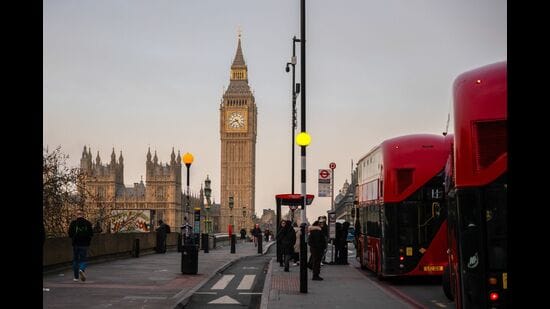
PREMIUMBig Ben, completed in 1859, predates Greenwich Mean Time (agreed upon in 1884). (Bloomberg)
Big Ben, completed in 1859, predates Greenwich Mean Time (agreed upon in 1884). (Bloomberg)
Advertisement

For centuries, we were content to use the sun, moon and stars for a vague sense of where we were in the day. How, and when, did this change? Take a look.

3500 BCE: Artefacts from this period found in Egypt and China look like they may have been gnomons (the part of a sundial that casts the shadow). Was this the dawn of timekeeping?

2100 BCE: The precision era begins. Ancient Egypt invents a system that divides the daylight hours into 12 equal parts. Why 12? Likely because this made it easier to calculate halves, quarters and thirds. The Romans would later adopt the duodecimal system too. Eventually, we all would.

The sundial at the Temple of Apollo in Pompeii. (Wikimedia Commons)

A clepsydra marks time via the flow of water between bowls. (Wikimedia Commons)

5th century CE: In Athens, the clepsydra, which marks time via the flow of water between bowls, is used to measure speeches in courts of law. No spillovers, now!

671 CE: Official timekeeping begins in Japan, when Emperor Tenji installs a water clock to chime the hour with a bell and drum at his capital of Omi Otsu no Miya. In India, the Chinese traveller I-tsing notes that monks at Nalanda use water clocks and gongs to mark study-time.

10th century CE: Cultures across East Asia develop a custom of lighting incense sticks (formulated to burn at a steady rate) to mark time. Different fragrances mark different times of day; a clock you can smell.

An “elephant clock” that used a water-filled basin in an elephant sculpture to tell and announce the time, in 13th-century Turkey. (Wikimedia Commons)

1371: The first mechanical clocks, weight-driven devices, begin to appear in regions ranging from Damascus to the Western world. They still track hours, not minutes. No one needs that much detail yet.

1656: Dutch scientist Christiaan Huygens invents a pendulum with a one-second swing. Clocks can now have more than one hand.

1794: The French, exhilarated by their Revolution and turn to democracy, embark on a unique experiment five years on. The new government decides 100 is more elegant than 60. The French Republican Calendar divides the day into 10 hours of 100 minutes each. There is chaos. Less than a year later, the system is scrapped.

A table watch from 1530. (Wikimedia Commons)

1884: At the International Meridian Conference in Washington, DC, 25 nations accept Greenwich as the spot for the prime meridian (0° longitude). This helps calculate 24 time zones for the globe, an hour apart. India gets two, one each in Calcutta and Bombay.

1906: Indian Standard Time, calculated from Mirzapur (which falls exactly on the +5.30 longitude), becomes official, though Calcutta Time remains in use by some until 1948; and Bombay Time until 1955.

1925: What time is it, exactly? Indian organisations can place a phone call to find out. As travel, tech and businesses develop, every minute matters.

A wristwatch from the 1920s. (Wikimedia Commons)

1951: Pakistan moves off IST, setting up two time zones, one each for its West and East regions. Today, of course, East Pakistan is Bangladesh, half an hour ahead of IST. Pakistan Standard Time is half an hour behind IST.

1951: One nation, one time can be tricky, when the nation stretches 2,933 km from west to east. The Plantations Labour Act lets union and state governments set the local time for particular industries. So, Assam gets Chai Bagan time, allowing tea-garden workers to better sync their clocks with daylight. It is still in unofficial use.

1969: Precision gets personal as Seiko launches the world’s first quartz wristwatch. It costs as much as a car, but the tech will eventually get cheaper, strapping us all in.

1993: 24 GPS satellites become operational. The system of caesium and rubidium atomic clocks flying over our heads, broadcasting the exact time to on-ground receivers, means that we’re globally in sync for the first time.

2011: India becomes the ninth country in the world to operate an indigenous caesium clock.

A smartwatch of today.

2020: German scientists measure the world’s smallest unit of time, the zeptosecond – a trillionth of a billionth of a second, or how long it takes for a photon to cross a hydrogen molecule.

2030: But wait. How long is a second, anyway? Heartbeats are erratic. Earth’s rotation isn’t precise enough. So, at a conference on weights and measures in 1967, scientists finally agreed that 1 second = 9,192,631,770 cycles of radiation frequency of the caesium-133 atom. But even this isn’t cast in stone. The definition of the second will be revisited in 2030.

3500 BCE: Artefacts from this period found in Egypt and China look like they may have been gnomons (the part of a sundial that casts the shadow). Was this the dawn of timekeeping?

2100 BCE: The precision era begins. Ancient Egypt invents a system that divides the daylight hours into 12 equal parts. Why 12? Likely because this made it easier to calculate halves, quarters and thirds. The Romans would later adopt the duodecimal system too. Eventually, we all would.

The sundial at the Temple of Apollo in Pompeii. (Wikimedia Commons)

120 BCE: Already, a backlash. When the first public sundials come to Ancient Rome, people call for the columns on which they stood to be torn down. They didn’t want to have their day reordered for them, they said.

4th century CE: Surya Siddhanta, a Sanskrit treatise on time likely dating to a much earlier era, records the start of new day as the moment when the sun hits the meridian that passes through Ujjain. The same text equates the smallest unit of time with a prana (one breath). Six pranas make a pala; 60 palas make a ghalika, 60 ghalikas make up the naksatra ahoratra, or astronomical day.

A clepsydra marks time via the flow of water between bowls. (Wikimedia Commons)

5th century CE: In Athens, the clepsydra, which marks time via the flow of water between bowls, is used to measure speeches in courts of law. No spillovers, now!

671 CE: Official timekeeping begins in Japan, when Emperor Tenji installs a water clock to chime the hour with a bell and drum at his capital of Omi Otsu no Miya. In India, the Chinese traveller I-tsing notes that monks at Nalanda use water clocks and gongs to mark study-time.

10th century CE: Cultures across East Asia develop a custom of lighting incense sticks (formulated to burn at a steady rate) to mark time. Different fragrances mark different times of day; a clock you can smell.

An “elephant clock” that used a water-filled basin in an elephant sculpture to tell and announce the time, in 13th-century Turkey. (Wikimedia Commons)

1371: The first mechanical clocks, weight-driven devices, begin to appear in regions ranging from Damascus to the Western world. They still track hours, not minutes. No one needs that much detail yet.

1656: Dutch scientist Christiaan Huygens invents a pendulum with a one-second swing. Clocks can now have more than one hand.

1794: The French, exhilarated by their Revolution and turn to democracy, embark on a unique experiment five years on. The new government decides 100 is more elegant than 60. The French Republican Calendar divides the day into 10 hours of 100 minutes each. There is chaos. Less than a year later, the system is scrapped.

A table watch from 1530. (Wikimedia Commons)

1884: At the International Meridian Conference in Washington, DC, 25 nations accept Greenwich as the spot for the prime meridian (0° longitude). This helps calculate 24 time zones for the globe, an hour apart. India gets two, one each in Calcutta and Bombay.

1906: Indian Standard Time, calculated from Mirzapur (which falls exactly on the +5.30 longitude), becomes official, though Calcutta Time remains in use by some until 1948; and Bombay Time until 1955.

1925: What time is it, exactly? Indian organisations can place a phone call to find out. As travel, tech and businesses develop, every minute matters.

A wristwatch from the 1920s. (Wikimedia Commons)

1951: Pakistan moves off IST, setting up two time zones, one each for its West and East regions. Today, of course, East Pakistan is Bangladesh, half an hour ahead of IST. Pakistan Standard Time is half an hour behind IST.

1951: One nation, one time can be tricky, when the nation stretches 2,933 km from west to east. The Plantations Labour Act lets union and state governments set the local time for particular industries. So, Assam gets Chai Bagan time, allowing tea-garden workers to better sync their clocks with daylight. It is still in unofficial use.

1969: Precision gets personal as Seiko launches the world’s first quartz wristwatch. It costs as much as a car, but the tech will eventually get cheaper, strapping us all in.

1993: 24 GPS satellites become operational. The system of caesium and rubidium atomic clocks flying over our heads, broadcasting the exact time to on-ground receivers, means that we’re globally in sync for the first time.

2011: India becomes the ninth country in the world to operate an indigenous caesium clock.

A smartwatch of today.

2020: German scientists measure the world’s smallest unit of time, the zeptosecond – a trillionth of a billionth of a second, or how long it takes for a photon to cross a hydrogen molecule.

2030: But wait. How long is a second, anyway? Heartbeats are erratic. Earth’s rotation isn’t precise enough. So, at a conference on weights and measures in 1967, scientists finally agreed that 1 second = 9,192,631,770 cycles of radiation frequency of the caesium-133 atom. But even this isn’t cast in stone. The definition of the second will be revisited in 2030.

All Access.
One Subscription.

Get 360° coverage—from daily headlines
to 100 year archives.

E-Paper
Full
Archives
Full Access to
HT App & Website
Games
 
Explore the latest Lifestyle News on health, fashion, travel, relationships, food and festivals. Find useful tips, expert advice, trends and inspiring stories for everyday living.
SHARE THIS ARTICLE ON