
 E-Paper



Drawing Room: Madhu Das on the light in Sheela Gowda’s Darkroom

 Prefer HTon Google


Bengaluru's Sheela Gowda uses unconventional materials to create thought-provoking art, exploring themes of identity, marginalization, and hope
Bengaluru-based Sheela Gowda has used cow dung, kumkum powder, human hair and several other unusual objects, often foraged in markets and on roadsides, to create art. Her work is, in her own words, an attempt to “transform the material without changing its identity too much and weave in my own ideas in the larger sense of the work, so both of them exist side by side.”
I admire how Gowda involves the viewer’s physical and psychological state of being through smell, touch, memory and more. It makes for ground-breaking, provocative and thought-provoking art.
In Behold (2009), first shown at the Venice Biennale, Gowda strung together thousands of pieces of talismanic rope, made of hundreds of hair strands taken from different individuals, as if to literally and metaphorically braid humanity as one.
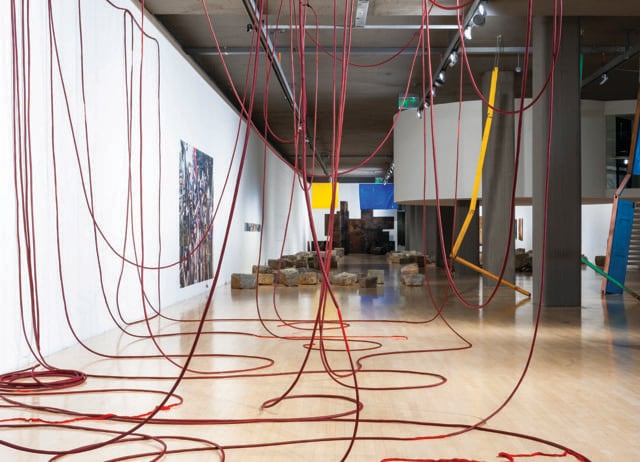
In And Tell Him of My Pain (1998-2001) she dangles 360-foot-long cords around the room. Each of these has been made of threads that have been reddened by immersing them in the kumkum that Hindu married women apply on their forehead, and passed painstakingly through a needle. The work, to many, is a statement on the marginalisation of women in India.
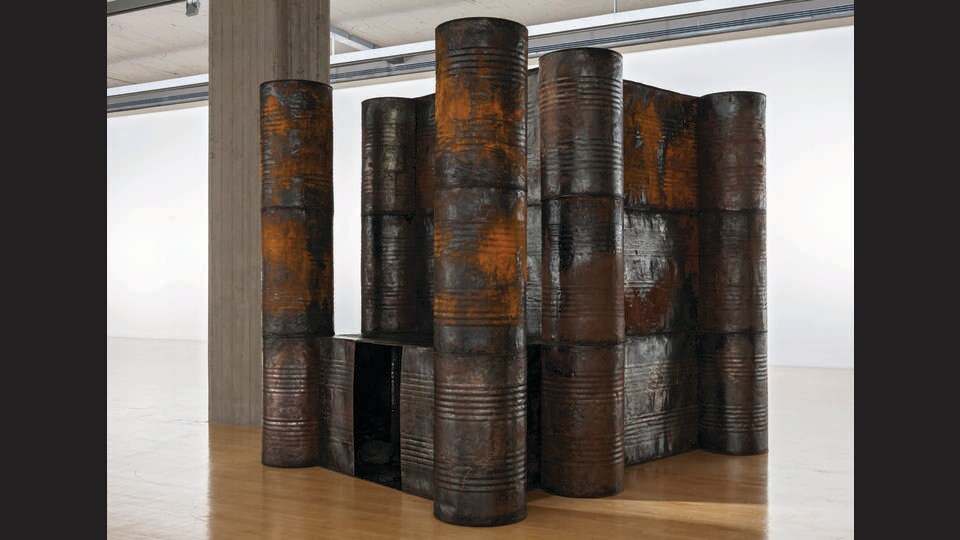
However, the work I’m most drawn to is Darkroom, made in 2006. For this installation, Gowda sourced tar drums from road builders in her hometown to create a hut, two metres in height, much like the makeshift structures found in Indian slums. The drums, stacked one atop another, form pillars and a doorway, but show signs of heavy use, their dents and rust marking the corrosion of time and exposure to natural elements. It makes for an imposing and disturbing structure when viewed from outside. And it puts the viewer in an uncomfortable position. To engage with it, one must crawl on all fours to enter the hut.
Once inside and standing up, it’s not quite what viewers expect. They’re treated to a wonderful play of light and shadow through thousands of tiny dots perforating the ceiling. It mimics a night sky devoid of pollution and smog. Darkroom evokes a sense of hope and positivity in bleak surroundings.
I’m interested in the way the work represents public spaces and the people who occupy them. Gowda chooses discarded tar drums to highlight local methods of craft and architecture. Her structure points to the temporal nature of living spaces. One can’t help but feel the same sense of discomfort that people habituating these spaces must feel, and one is also faced with the reality that despite their many hardships, they find joy in their existence.
When I first saw this work in 2006, I was pursuing my Bachelor’s degree in fine arts. It raised so many questions and doubts in me about the academic methods I was exposed to then. I began to dwell on the relevance of art in the context of geography, identity and history. I also began to question the direction my own practice should take. Darkroom inspired me to look at existing situations from multiple perspectives. There is fragility in Gowda’s work, but it leaves a lasting impact.
Madhu Das’s work explores themes of identity, representation and displacement
From HT Brunch, May 17, 2025
Follow us on www.instagram.com/htbrunch


