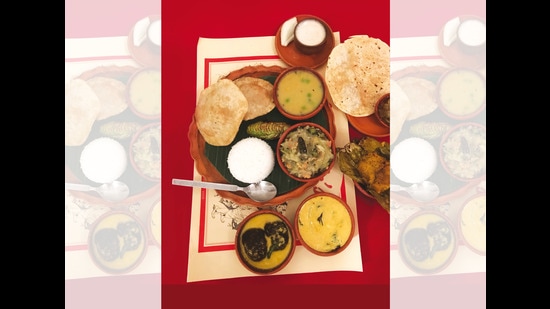
There’s no denying that Bengali food has been stereotyped to maacher jhol (fish in a thin gravy) and mishti doi (sweet yogurt). In reality, though, there is so much more to this vibrant cuisine, which is steeped in history, and shaped by its rich heritage. Just like the people it nourishes, the food is artistic and the dishes have colourful, descriptive names. I spent a few days in my home town, Kolkata (Calcutta), exploring and understanding the real essence of Bengali cuisine.
Course by course, please
“For a Bengali, it is blasphemy to mix all the dishes together. How do you distinguish the flavours if, for instance, you mix the sabzi and dal together?” exclaimed my dear friend, the foodie Somini Sen Dua, while educating me about local culinary traditions.
There is a defined order of eating the Bengali lunch, which is the main meal in daily life. There is the mandatory bitter beginning of shukto, a paanch phoron (five spice)-spiced vegetable medley that includes bitter vegetables like karela or neem. This is because, based on Ayurveda, bitter ingredients start the digestion process, and act as a coolant in the hot and humid weather of Bengal. This is followed by a dal, one bhaja (fried vegetable) for some crunch, a seasonal vegetable course, and then one or two types of fish or a mutton curry. Each of these is paired with the aromatic Gobhindobog rice. A sweet finale of a chutney (raw papaya, raw mango, dates or tomato) paired with papad is then topped off with a mishti and paan.
I had the pleasure of indulging in such a home-style meal at Kewpies in Kolkata while chatting with the proprietor, Rakhi Purnima Dasgupta. Rakhi’s family is iconic when it comes to Bengali food, and recipes from generations have been documented in her cookbooks. She opened her home many years ago to give people a true taste of Bengali food which is very different from that in commercial restaurants.
{{/usCountry}}I had the pleasure of indulging in such a home-style meal at Kewpies in Kolkata while chatting with the proprietor, Rakhi Purnima Dasgupta. Rakhi’s family is iconic when it comes to Bengali food, and recipes from generations have been documented in her cookbooks. She opened her home many years ago to give people a true taste of Bengali food which is very different from that in commercial restaurants.
{{/usCountry}}Kitchen tales
The fish markets in Kolkata are fascinating, and on my recent visit, I was taught by the eager fishmongers to distinguish between rui, katla, bhetki, tangra and mourola. Every possible size of prawn is available. Ilish (hilsa) is the queen of fish and a seasonal delicacy from the monsoon to poila boisakh (spring).
In Bengal, fish is not only food but a symbol of prosperity. When a bride first walks into her in-laws’ home, she carries a fish, which symbolises that she will bring food and prosperity into the home. Along with the wedding gifts, it is tradition to send a decorated fish to the groom’s home.
The principle of ‘zero wastage’ has always been followed in the Bengali kitchen, and when it comes to fish, it is a mantra. I was horrified when I first saw a Bengali friend munch on a prawn head a few years ago, but have since learned that muri ghonto is a flavourful fish head curry, and a delicacy. Soft fish bones are minced into vegetables to add some economical umami and fish oil extracted from the fish’s belly is mixed into vegetables, explained Rakhi.
Zero wastage goes beyond fish. For example, Bengalis use every part possible of a banana tree. The leaf is used as a platter and as a wrap in paturi preparations. The flower, known as mocha, is made into mochar ghonto, mochar dalna (gravy) and other delectable vegetarian dishes while the stem (thor) and the raw fruit are also cooked.
The foreign influence
Invasions and colonisation usually influence the cuisine of any region. The legendary Calcutta fish fry and breadcrumb coated crispy cutlets (vegetable chop, aloor chop, raw jackfruit chop) are the result of Indian bawarchis attempting to recreate British dishes in the Raj era by making the most of local ingredients, and their own taste and expertise. Chicken Kobiraji, for example, gets its name from the English word ‘coverage’ because it is covered with an egg chiffonade.
A popular dish called potol dolma, which is whole parwal stuffed with minced fish, meat or paneer, is the result of Jewish and Armenian integration in Calcutta. It is a local replication of the dolma-stuffed vine leaves and whole vegetables typical of the Mediterranean, the Balkans and the Middle East.
Basic elements
Pungent mustard oil and robust yellow mustard seeds are principal in the Bengali kitchen. The mustard seeds are ground into a paste which is known as kasundi. Today, this is readily available in bottles, saving cooks like me the stress of grinding the seeds.
The paanch phoron or five -spice mix is the base pillar. It consists of fenugreek seeds, nigella seeds, cumin seeds, fennel seeds, and the fifth spice depends on which side of the border the family originates from: mustard seeds if you are from West Bengal and radhuni or celery seeds if you came from East Bengal.
Posto or poppy seeds derived from the opium poppy plant is the queen of the Bengali kitchen, and is combined with any vegetable, fish or meat. “Eat posto and sleep is what we were told as kids,” laughed my friend Somini, referring to the slightly soporific effect of posto, which deepens the post-lunch siesta in Bengal’s easy way of life. Garlic and red chilli powder are barely used as both are considered to heat up the body, which is not suitable for the sultry climate of the state. Coconut in all forms is used extensively in curries.
Dahi plays the role of a tart flavouring agent in several dishes. Doi maach is a staple dish where tender pieces of fish are slow simmered in a mild yogurt gravy. While some may not agree with the concept of cooking dairy and fish together, Bengali grandmothers surely do. However, ask for a bowl of dahi with the meal in a Bengali home and you will be told to wait till the end of the meal since mishti doi is a dessert.
Now that you have gained an insight into the glory of Bengali culinary culture and its tantalising flavours, get in touch with that Bengali friend or befriend the Bengali family in your colony and get yourself invited for a delicious homely meal!
Natasha Celmi is a chef and food writer. She is the author of the award-winning cookbook, Fast Fresh Flavourful. Her mantra is Smart Cooking: minimal effort, maximum flavour using fresh local produce
From HT Brunch, December 19, 2021
Follow us on twitter.com/HTBrunch
Connect with us on facebook.com/hindustantimesbrunch