I have been thinking about two completely different restaurants this week. One is in Bangkok. The other is in New York. Both are wildly popular. Both are run by Indian chefs. And the success of both is extraordinary enough to suggest that something is changing in the way the world looks at Indian food.
The Bangkok restaurant is run by Gaggan Anand. As you probably know, Gaggan, his flagship restaurant, is now a counter-only 16 seats operation, open only for dinners four nights a week. It is the most difficult reservation in that part of the world, and the focus is on the food and the (often witty and entertaining) explanations by the chefs (mainly Gaggan himself) that may include a small amount of profanity.
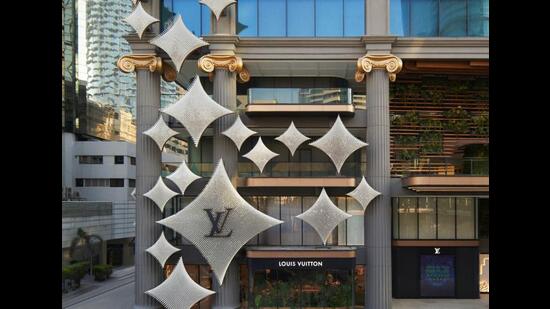
But that’s not the restaurant I have been thinking of. The place that surprised me was the new Gaggan at Louis Vuitton. If you are familiar with Bangkok, you will remember the old, rundown Amarin Plaza shopping centre on Ploenchit (next to the Erawan mall and roughly opposite Gaysorn Plaza).
The building has been taken over by Louis Vuitton, and has been transformed into a vast, elegant Vuitton complex. It must be the fanciest, most up-to-date Vuitton store in the world. As part of the super-cool, designer element, there is a small restaurant (around 40 covers) run by Gaggan.
{{/usCountry}}The building has been taken over by Louis Vuitton, and has been transformed into a vast, elegant Vuitton complex. It must be the fanciest, most up-to-date Vuitton store in the world. As part of the super-cool, designer element, there is a small restaurant (around 40 covers) run by Gaggan.
{{/usCountry}}There are several extraordinary things about this. First, why would Vuitton not choose a French chef? Second, if not French, then why not a Thai chef in Bangkok? And three, why choose Gaggan, with his reputation as the unpredictable and volatile genius of the kitchen and his love of Japanese designer wear over European fashion?
I don’t have answers to these questions, but when I went for dinner last week, I was startled by how elegant the restaurant was (every last detail is by Louis Vuitton including the glasses and the napkin holders) and how absolutely perfect the service was. It was the sort of experience you would get at a two-Michelin star restaurant in Paris .
Because it is still a new restaurant and very hard to book, the dinner crowd consisted of Louis Vuitton fans and Bangkok millionaires. Even Gaggan looked impossibly smart, all dressed in made-to-measure Vuitton.
The food was guaranteed to please. Gaggan has done a menu of his greatest hits, recognising that you can’t go wrong with such classics as the Yogurt Explosion, Charcoal, Lick It Up, his take on Ghewar etc. There are more luxury garnishes than before: Lots of caviar on many dishes and some new out-and-out Indian dishes: Crab curry, palak paneer etc.
Frankly, I wasn’t surprised by the deliciousness of the food. With Gaggan, that is never a concern, but I was astonished by how well modern Indian food fit into a state-of-the-art European fashion experience. It is a new frontier for our cuisine.
The second restaurant that I have been thinking about this week is New York’s Semma. It is part of the Unapologetic Foods group run by Roni Mazumdar and Chintan Pandya, but the chef is the unassuming, ever-smiling Vijaya Kumar. Vijaya serves a simple South Indian menu with very few frills. There is a much-praised Masala Dosa, for instance. And one of the specialities is a casserole of snails, a dish he says that his mother used to make in their village in Tamil Nadu because they did not have much money and would forage their surroundings for leaves, wild vegetables and yes, snails.
It is unpretentious, spicy southern Indian food cooked to a very high standard in a cheerful but not particularly luxurious room. Despite that, it has been, for the last year, one of the hardest restaurants to book in New York. It won a Michelin star and last week, when the New York Times did its list of the 100 Best Restaurants in New York, Semma was at number 7 ahead of Jean-Georges, Daniel Boulud, The Gramercy Tavern, Torrisi and nearly every New York restaurant you may have heard of. A few days later, Semma was at number three in Food and Wine’s list of the Top 20 restaurants in America.
Also on the New York Times list was Dhamaka, the flagship of the Unapologetic Foods group, which also serves gimmick-free, simply presented Indian food with no apologies made for the use of mirchi or the oil. This is an unpretentious restaurant located in a market but is nevertheless, also almost impossible to get into because Chef Chintan Pandya’s food is such a hit.
What is going on? Well, here’s my theory. I think that Indian food abroad has now reached the stage where not only do foreigners realise that our food varies dramatically from region to region but are also willing to distinguish between modern Indian food and traditional cooking.
Once upon a time, only modern Indian cooking was taken seriously at upmarket or Michelin-starred restaurants (Vineet Bhatia, Atul Kochhar, Srijith Gopinathan, Manish Mehrotra and Gaggan himself). These chefs were admired for innovation and flair. That still endures. But there is now also an appetite for traditional Indian food cooked as we would make it at home.
Our cuisine has now been recognised at two different levels: fashionable enough to shine as part of a Louis Vuitton experience and also distinguished by awards and Michelin stars for masala dosas and Champaran meat.
It is an important distinction and it has been a long time coming. Indian street food has found popularity in such cities as London ( Masala Zone, Bombay Bustle, Dhishoom etc) but solid-home-cooking has taken a while to be appreciated. It’s only now that foodies around the world have realised that nobody makes tandoori chicken at home in India. But India has a great home cuisine that has rarely been exported.
Just as Unapologetic Foods have shown Americans what we really eat, the JKS group has had the same sort of impact in London. Hoppers is London’s answer to Semma. And Gymkhana which won two Michelin stars this year is, as the JKS group’s chef and founder Karam Sethi points out, the only two Michelin star Indian restaurant in the world that does not do modern Indian food and still flourishes despite that .
I suspect that even the chefs who made their name with modern Indian food are now also serving traditional Indian. Gaggan has longed to open his take on a curry house for years and his third restaurant (Maria and Singh on the top floor of the main Gaggan building in Bangkok’s Sukhumvit) serves delicious simple Indian food. Manish Mehrotra continues to innovate at Indian Accent but at Comorin he serves heartier, simpler, food.
All this is good news for Indian food. You can have Vijaya’s Masala Dosa at Semma or Gaggan’s greatest hits at Gaggan at LV, but you will have to fight to get a table at either place because our cuisine has reached new levels of popularity and respect.
Modern or traditional, fancy or unfancy, innovative or faithfully reproduced, Indian food abroad has entered a new phase.
From HT Brunch, April 13, 2024
Follow us on www.instagram.com/htbrunch