Can a hotel be very large and still be luxurious? Yes it can. Many of the grand hotels of Europe are large. And even in India, the country’s most famous hotel, the Taj Mahal Palace in Mumbai, is huge.
But can a hotel be very small and still be luxurious? There are two answers to that question. The first is that it’s very difficult to deliver a luxury experience without scale. You need staff to pamper guests and most small hotels can’t afford too many employees.
The second answer is a little paradoxical: The future of luxury is small places that deliver personalised experiences. It’s hard to pull off. It can be expensive to hire enough staff. But well-heeled travellers are now demanding a different kind of luxury, and small is even more beautiful.
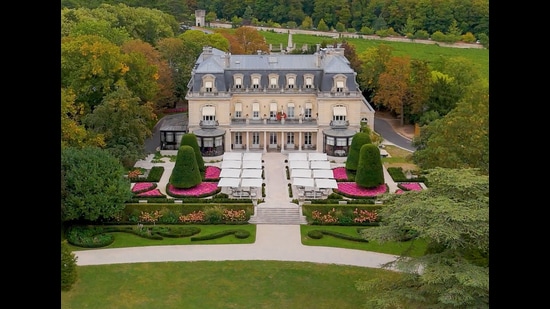
I was talking about this apparent paradox to Laurent Gardinier, who owns Domaine Les Crayères in the champagne town of Reims. Les Crayères is small (20 rooms), is famous for its restaurant (two Michelin stars; it used to have three) and offers a superlative luxury experience. I was blown away when I stayed there.
Gardinier is now president of Relais & Châteaux, an organisation of independent, small, mostly family-owned hotels around the world, and says that he wants all member hotels to go the extra mile to provide luxury experiences.
{{/usCountry}}Gardinier is now president of Relais & Châteaux, an organisation of independent, small, mostly family-owned hotels around the world, and says that he wants all member hotels to go the extra mile to provide luxury experiences.
{{/usCountry}}Relais & Châteaux has had its ups and downs. Its larger properties can be disappointing. The single worst ‘luxury’ hotel I have ever stayed in was The Yeatman in Porto, Portugal, booked for me by Relais & Châteaux. It has 120 rooms, which is too large for a Relais & Châteaux property, and shamefully enough is (I think) still a member.
It’s the smaller properties that Relais & Châteaux excels at, because many of them are family-owned and managed. For instance, not only is the best small luxury hotel in India a member of Relais & Châteaux but its owners helped put the organisation on the map in our country. One of them, Jaisal Singh, was global vice-president of the organisation and helped turn it around when it was in a bit of a hole.
I wrote about Sujan Jawai Camp (owned and run by Jaisal and his brilliant wife Anjali Singh) four years ago, though I focused more on the wildlife aspect in that column. Sujan started out with Sher Bagh in the Ranthambore tiger sanctuary, which still remains the best regarded toger camp in India. Jawai is in leopard country (somewhere between Jodhpur and Udaipur) and it’s one of the few places where you are more or less guaranteed a sighting of the elusive leopards. (I saw four on a single two-hour safari last week.)
Speaking for myself, I would go back to Jawai like a shot even if I never see a leopard again because the hotel part of the operation is so well run. It has 137 employees for only ten luxury tents (a tent is where boy scouts sleep while camping; a luxury tent is a glamorous villa with a tented roof) and outstanding food (the group’s culinary head Cosmo Palling worked at London’s The River Cafe) and truly personalised service.
We had a large ‘tent’ with a swimming pool that looked out into the bush, and a safari jeep on standby. At most wildlife lodges, you have to book a ride into a national park and then join a frantic melee when your guide receives a message that a tiger has been sighted. Because every jeep gets the same sort of message, a dozen vehicles congregate at the same spot to wait for the tiger and the net effect is roughly equal to a crowd of hundreds of fans jostling each other in the hope of catching a glimpse of Shah Rukh Khan (who doesn’t show up).
At the Jawai camp, Anjali and Jaisal have acquired hundreds of acres of land around the camp and rewilded the area. The leopards are not part of a park but roam wild in the hills and rocks. It’s a completely different experience from the mad scramble at tiger parks. Last week, after a day of sightings, we were about to head back to the camp when we noticed a leopard sitting quietly a short distance away from the side of our jeep. We stared silently at each other for a few minutes until the leopard departed.
Anjali and Jaisal have a camp in Jaisalmer and two others in Africa. Though wildlife has been their specialty, given how good they are at running small exclusive camps it is only a matter of time before Sujan goes beyond wildlife and opens small luxury hotels elsewhere in India and abroad.
The Singhs came to luxury hospitality as outsiders who channelled their own expectations and vast global travel experience into a hotel company. But even veteran hoteliers are embracing the idea of small, personalised luxury experiences. Deepak Ohri, one of the best known hoteliers in the Far East, has launched a new company that takes luxury to a different level.
Deepak’s idea is to offer travellers exclusive experiences tailored to the tastes of well-heeled guests. He has begun in Bangkok (where he first made his name with Lebua). A typical experience involves collecting guests from their hotels and taking them for breakfast on the riverside at the Peninsula hotel. Then a helicopter takes them to Khao Yai, a destination favoured by affluent Thais but largely unknown to foreigners. At Khao Yai National park, the guests see hundreds of species of birds and herds of wild elephants.
The trip continues with visits to vanilla and agarwood plantations. Guests are shown how oudh is extracted from agarwood trees. Khao Yai is the centre of Thailand’s wine industry, so guests also get a tour of the vineyards before taking the chopper back to the riverside in Bangkok, where they board a private yacht for a wine tasting cruise down the river.
There are around 21 such options for trips, each designed to show guests the Thailand tourists never see. Guests travel by private planes, helicopters and yachts and the meals are at top restaurants like Gaggan and at such hotels as the Capella, which has won awards for being the best hotel in the world.
None of this is cheap but Deepak understands luxury, having founded two restaurants which now have two Michelin stars each and having employed such chefs as the Suhring twins (whose restaurant, a member of Relais & Châteaux, has three stars) in their early years.
His view is that guests want different experiences, far from the madding crowd, tailored to their interests and enjoyed in total luxury. It’s a new concept of luxury but one that is becoming increasingly popular as guests no longer want the usual tourist experiences but something special and more luxurious.
From HT Brunch, October 31, 2026
Follow us on www.instagram.com/htbrunch