
 E-Paper



The re-verse of love: Urdu poetry gets a 2024 update

 Prefer HTon Google


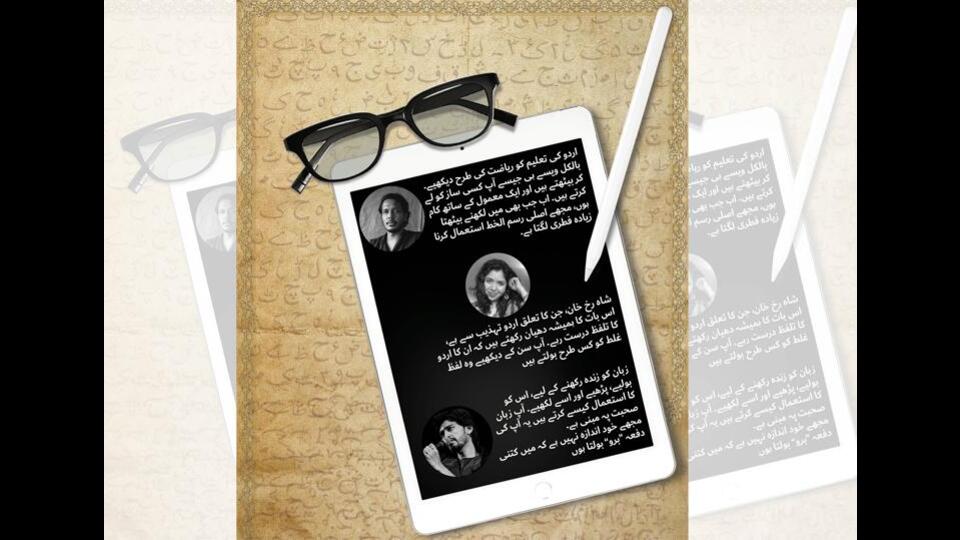
Urdu poetry, fuelled by love and longing, fired up by politics, amplified by Instagram and reimagined by indie bands, is finding new fans
What’s your love language? For young people in India today, it’s literally a language: Urdu. It’s been around for at least 800 years; the 2011 census shows that India has well over 67 million Urdu speakers. “But that audience has surged with the rise of Instagram poetry in the last decade,” says Aamir Aziz, 33, a poet, musician, composer and actor in Mumbai.
Poems are unfolding, couplet by couplet, on platforms such as Terribly Tiny Tales (@TTT_Official). Urdu poetry is referencing ghosting and mobile phones. It’s getting quoted in Pakistani rap. Rekhta, a decade-old archive for poetry and literature in the language, has close 925K followers on Instagram (@Rekhta_Foundation). Online searches for Pakistani poet Jaun Elia (1931-2002) have surged.
And Urdu itself seems to have relaxed somewhat. It had a stricter form around Independence, when it emerged as a symbol of identity among Muslims of the subcontinent. Ghazals structured around couplets and refrains flourished then. “Today, the nazm is more popular because its single-theme descriptive style offers liberty of expression,” says Akshita Nagpal, 32, from Mumbai. Nagpal has been teaching Urdu via Google Meets since 2020. She says she’s taught more than 400 students across 36 batches.
In cinema, Urdu is inextricably linked to music. If you can follow the words to Chaiyya Chaiyya (Bombay, 1998), Jiya Dhadak Dhadak Jaye in Kalyug (2005), and Kun Faya Kun in Rockstar (2011), you’ve understood a bit already. Urdu was pushed back somewhat, as the millennium turned and a newly connected generation began to respond to English lyrics, says poet, musician and lyricist Sameer Rahat. But in a twist worthy of its own nazm, the same connected world is cheering the return of Urdu in South Asian music.
“The language isn’t complex. It appears so because we aren’t used to speaking it outside of homes,” says Aziz. What most people struggle with, is the complex connections Urdu makes. Love doesn’t just mean a person. Yearning isn’t about crushes. Beauty isn’t just visual. They’re all paths to the ever-elusive understanding of the cosmos and the divine.
See how music, Reels and workshops are giving an old language a smitten new audience.
Writing the balance
Aamir Aziz, 33

“Even fifteen years ago, Urdu poetry was a small-town endeavour,” says the poet, musician, composer and actor. “Now, writing Urdu in the Roman script is common. The internet, especially Instagram, has a big role to play in this.”
Aziz was born in Patna and grew up in Delhi. He’s heard Urdu being spoken at home, listened to qawwali in the neighbourhood, and consumed poetry in the language, writing his own from the age of 17. He worked as a civil engineer for four years and moved to Mumbai in 2016, exploding on to the scene in 2019 with his lightning-speed protest poem Sab Yaad Rakha Jaayega, in the midst of the protests against the Citizenship (Amendment) Act. Pink Floyd guitarist Roger Waters quoted it, in English, at a London event months later, catapulting Aziz to global fame. He’s since released Blues songs with Urdu lyrics and worked on the soundtrack for Anurag Kashyap’s Kennedy (2023).
Aziz isn’t sure whether Urdu’s new popularity is a win or a loss for the language. “Much of it now is missing a crucial element – the script,” he says. Most people learning Urdu today tend to write in English. It allows for more people to understand the basics, but it’s in the details – the delicate differences between ja and za, sha and shah – that the flavour of the language lies. “There’s a Pakistani qawwali song that’s been adapted from Bol Kaffara Kya Hoga to Bol Hamara Kya Hoga,” Aziz says. “Kaffara means repenting after a betrayal. Changing one word throws off the whole meaning.” “How you use language depends on whom you hang out with. I don’t know how many times I say “bro” these days.”
Another worry: New fans tend to put Urdu on a pedestal, revering the poetry without revelling in the bite and sarcasm the language allows. But, Urdu is actually a very shararti language. “Bh**wa is used a lot. That’s not what a language full of tehzeeb and sophistication sounds like,” he says.
In matters of love, thankfully, the poets have been busy. “Urdu has always talked of love, but the way people love has changed,” he says. “How do we define the love of our time, when it’s all window shopping?
Letting love cross the border
Akshita Nagpal, 32
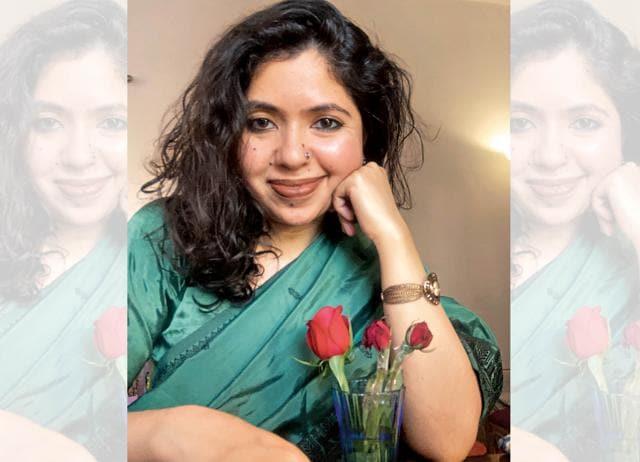
Akshita Nagpal grew up in Delhi, in a family that crossed over to India from Lahore, Pakistan at Partition. Her grandfathers wrote in the Urdu script, she picked up poetry during summer vacations, and by 22, she’d taught herself enough to be able to write in Urdu fluently. “The land was lost. I wanted to hold onto the language. We have very harsh political borders. I learned Urdu to transcend them,” she says.
Nagpal worked a corporate job, dabbled in journalism, produced films for non-profits. Then, in the pandemic, she read a 1970s poem by Parveen Shakhir, which examined romance and desire from a woman’s perspective. It’s what fired her up to move to Mumbai and teach the language to others. Her workshops use pop-culture references. Her students include actors, singers and lyricists.
“For the social class that has the privilege of English-language education (The class I also belong to), the workshops involve a lot of unlearning that English is the only aspirational language,” Nagpal says. It’s exactly what’s getting young people to sign up too.
City folks and Insta-famous poets prefer the nazm or prose style. “It allows them to comment on social issues and contemporary themes. People in smaller cities coming from more traditional Urdu backgrounds are sticking to ghazals.”
Both styles follow their own rhythmic patterns and are meant to be sung and recited, not read silently. “There is a lot of drama. It’s designed to get a reaction from the audience,” Nagpal says. It’s why Urdu works so well in film music and protest poetry. “We express love by calling it ishq, mohabaat, which are Urdu. If these words weren’t such a part of Bollywood, we’d be expressing our feelings quite differently.” To get the pronunciation right, listen to Shah Rukh Khan, who is from an Urdu-speaking culture, ensures his Urdu pronunciations are immaculate. Listen to how he says the word Ghalat.”
Putting life to music
Sameer Rahat, 34
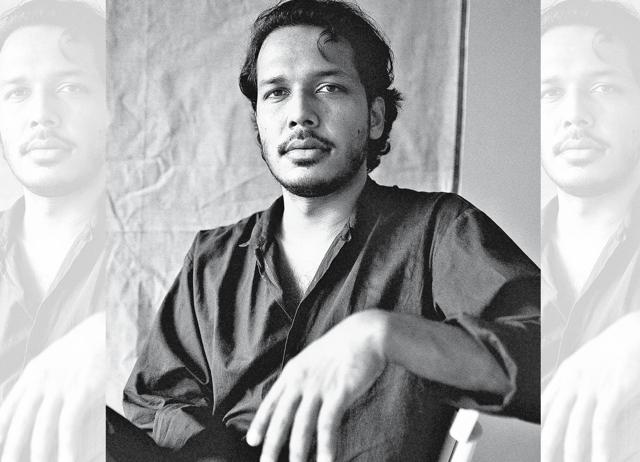
Madhya Pradesh-born Rahat’s parents wrote Urdu poetry. By age eight, he could read and write in it too. “I’m still learning though,” Rahat says. He now lives in Mumbai and contributed the music and lyrics for Hansal Mehta’s Faraaz (2022) and Modern Love (2022).
He’s seen the language of his living room gallop into the mainstream via social media. “Before this, you had to go to a poetry evening or read books or newspapers to find new poems,” Rahat says. With YouTube, the same performances spread to wider audiences. “Portals such as Rekhta collected and amplified new work. Now, it’s as simple as putting up a post or a Reel featuring a fresh Urdu poem. It’s at our fingertips in a way it never was.”
It’s also changing the old notion of Urdu (like most Indian languages) being perceived as uncool. “I’ve being seeing independent bands show huge inclination towards making music in a regional language,” Rahat says. “It’s slow but it’s happening. A lot of people are trying to get Urdu to reclaim the cool.” Treat learning Urdu like riyaaz, he says. “Just like you have to sit with your instrument and follow a certain routine. Now, every time I write, I find it much more natural to use the original script.”
They’re doing it on new terms, breaking away from stodgy themes such as romanticising despair and focusing on contemporary ideas. “Young poets are incorporating English words, there are ghazals with words like telephone or bus or train or mobile,” says Rahat. His own work includes composing ghazals in a Blues music format. “Blues music is about storytelling, and talking about heartbreak, revolt, agony and the realities of life. Ghazals talk about this too, and is nostalgic and melancholic,” he says. To his fans, it’s a seamless fit.


