E-Paper



Travel special: How one library became the national attraction in Finland

 Prefer HTon Google


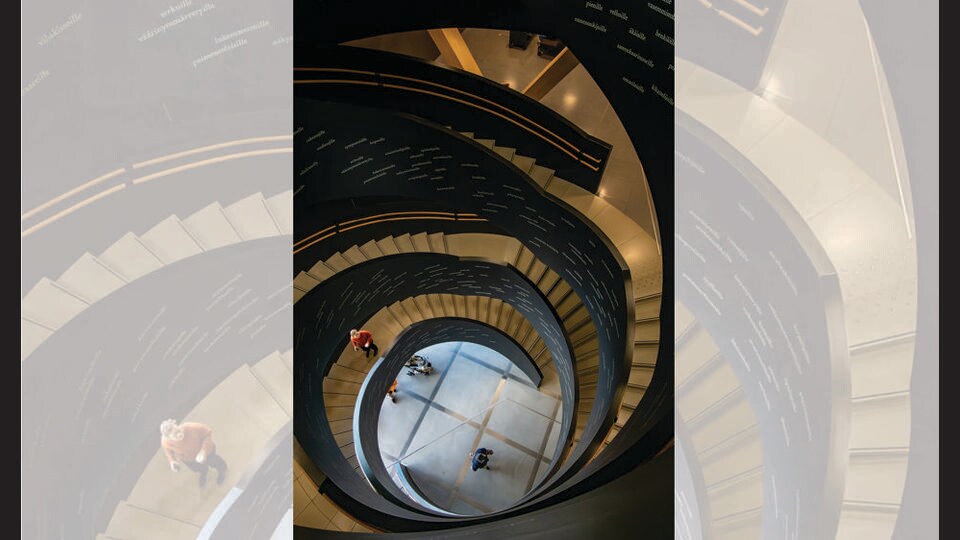
Who returns from Finland, gushing about a public library? You will too, after a visit to Oodi in Helsinki, where you’ll find chess, sewing, robots, and more
I was in Helsinki last month, as part of a Climate Solutions visit organised by the Finnish government. I was hoping the airport taxi driver would be chatty, that he’d tell me what to expect from the weather, at least list the good spots to eat. Ali didn’t do any of that. Instead, he told me how he escaped the conflict back home in Somalia and ended up in Finland. He pointed out the Parliament building en route only because I asked. But less than a minute before the ride ended, Ali pointed to one gigantic building and said, “You should visit the public library. It’s good.”
No one expects taxi drivers to recommend a library above all else. I was intrigued.
And so, I wandered there the next morning, my breath catching on the clean, frigid autumn air as I took in the sprawling three-storey ship-shaped Oodi Helsinki Central Library.
Oodi is Finnish for Ode. The library opened in 2018, the 100th year of Finland’s independence. “Oodi will be a centre for people and reading, a place for democracy and learning, and a gift for the 100-year-old Republic of Finland and for the Finns,” Ritva Viljanen, jury chair and Helsinki’s deputy mayor, had said.
It’s so much more. It’s a public space to read, create, work and relax. And for the locals, it’s free.
On the first floor -- in Finland, that’s the ground level -- I expected to see rows of bookshelves and some stern old lady ready to shush people. Instead, I saw a café, a warm buzz of visitors and chess tables. Every one of them was occupied with a father competing against his son, a grandfather against his grandson, friends against each other.
So, where are the books? Are they on the floor above? No luck. The second floor, Attic, had a set of 3-D printers, women brainstorming ideas in small glass cubicles, teens composing music in the studio and groups of locals playing video games in the gaming rooms. What kind of library is this? They even had a set of sewing machines that members could use to mend or embroider their clothes. Yes, for free. This is the kind of library that also lends members a drill for members who need a spot of home improvement.
The books, ultimately, are on the third floor – more than 1 lakh titles, in about 20 languages. Of course, you’ll be overwhelmed. That’s why there’s a crew of robots doing the stacking and retrieving. They even use the elevator. Even on this floor, you’re allowed to be noisy. Serious readers can head to designated silent rooms.
Skip a floor or two, but don’t leave without visiting The Citizen’s Balcony, an open-air deck on the library floor. It opens right to a view of the Parliament building across the street. A public library in prime location in a big city. That’s how much the Finns value community, reading, ideas and shared resources. Oodi impressed a Somalian immigrant who’d made Helsinki his home. It certainly impressed a visiting journalist from Mumbai.
From HT Brunch, November 1, 2025
Follow us on www.instagram.com/htbrunch