For the longest time, I thought of Indian wear in terms of occasions. There were kurtas for family gatherings, dressier outfits for festivals and sarees that came out when there was a wedding to attend. But lately, I have found myself looking at Indian fabrics differently. I am increasingly drawn to the richness of traditional textiles, the stories behind their patterns and the way a well-chosen piece can make an outfit feel special without trying too hard.
The more I explore Indian wear, the more I realise that not every beautiful fabric needs to be reserved for a grand occasion. Some make a statement the moment you walk into a room. Others have a quieter charm that grows on you, especially when you learn how to style them.
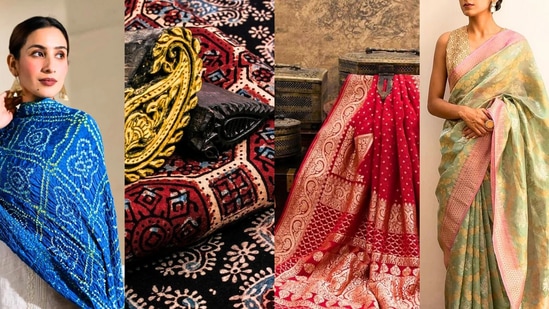
Banarasi, Chanderi, Bandhani and Ajrakh are four textiles I keep coming back to, each for a different reason. While Banarasi feels elegant and occasion-ready, Ajrakh has a sophisticated, understated appeal. Chanderi looks stunning when styled well, although I can see why its delicate, sometimes sheer texture might take a little getting used to for beginners. Bandhani, meanwhile, has that evergreen quality that makes it feel relevant across generations.
So, if you are also trying to figure out which Indian fabric suits your personal style, here is how I would approach the choice.
1. Banarasi: For when you want understated elegance with a little grandeur
{{#product}}{{/product}}
There is something about Banarasi fabric that makes Indian wear look instantly elevated. Traditionally associated with Varanasi, Banarasi textiles are known for their intricate weaving, rich textures and elaborate motifs, often featuring floral patterns and zari work.
For me, Banarasi represents the kind of elegance that does not need much explanation. Even a relatively simple silhouette can look dressed up when the fabric has beautiful detailing. It is the sort of textile I would gravitate towards when I want an outfit to feel polished, feminine and timeless.
A Banarasi saree is an obvious choice for weddings and festive celebrations, but I also like the idea of incorporating the fabric in smaller doses. A Banarasi dupatta paired with a solid kurta and straight trousers can make a relatively simple outfit feel occasion-worthy. A woven Banarasi skirt with a plain blouse is another way to enjoy the richness without committing to an elaborate ensemble.
Who should choose Banarasi?
If your style leans towards classic Indian elegance, rich colours, intricate details and outfits that photograph beautifully, Banarasi is worth exploring. It is particularly suited to weddings, festive gatherings and occasions when you want your clothing to do most of the talking.
My styling tip would be to let the weave take centre stage. If the fabric is heavily patterned or features prominent zari work, keep the jewellery relatively restrained. The aim is to complement the textile rather than compete with it.
One practical consideration: traditional silk Banarasi pieces can be expensive and may need careful storage and maintenance. If you are buying your first piece, consider how frequently you will wear it and whether a dupatta or a lighter garment might be a more versatile starting point.
2. Ajrakh: For a classy, artistic and quietly confident wardrobe
{{#product}}{{/product}}
Our Principles
Full Transparency
Every product review clearly lists the Pros and Cons, giving you a balanced view.
Brand Confidence
We focus on products from brands with a proven reputation and long-standing market trust.
If Banarasi is about grandeur, Ajrakh is about detail. This traditional block-printing craft is associated with Kutch in Gujarat and parts of Sindh, and is recognised for its geometric patterns, repeated motifs and rich combinations of indigo, red, black and earthy tones.
What I find particularly appealing about Ajrakh is that it does not have to look festive to feel special. Its beauty lies in the intricacy of the print. The patterns can be striking without appearing overly ornate, which makes the fabric an interesting option for someone who wants Indian wear to feel sophisticated rather than heavily dressed up.
I would consider Ajrakh one of the more versatile choices for building a wardrobe around Indian textiles. An Ajrakh kurta with straight cotton trousers can work for a casual lunch, a day of errands or a relaxed workday, depending on the garment and dress code. A printed shirt or tunic paired with well-fitted jeans is another way to make the craft feel contemporary.
For a more traditional look, an Ajrakh dupatta can add depth to a simple solid-coloured kurta set. I would lean towards silver jewellery, understated earrings and neutral footwear to keep the overall outfit balanced.
Who should choose Ajrakh?
If you enjoy prints, earthy colours, artistic details and clothing that feels distinctive without being flashy, Ajrakh could be your match. It is also a good option if you are trying to move beyond plain kurtas but are not quite ready for heavily embellished Indian wear.
The important thing is to pay attention to the actual fabric and printing technique. Ajrakh is a craft, not a guarantee that every garment will be made using the same process or materials. Check the fabric composition, printing method and care instructions before buying, particularly if you are looking for an authentic hand-block-printed piece.
Of the four textiles I am exploring, Ajrakh has a particularly strong appeal for everyday styling. It offers a way to wear Indian craft without feeling as though you need a wedding invitation to justify the outfit.
3. Chanderi: For a light, graceful and polished look
{{#product}}{{/product}}
Chanderi has a very different personality. Originating in the Madhya Pradesh town of Chanderi, the textile is known for its lightweight feel, delicate appearance and subtle sheen. Depending on the weave, it can combine silk, cotton and other fibres, creating fabrics that feel airy yet look refined.
I find Chanderi beautiful, but I can also understand why it might feel a little challenging for someone who is just beginning to explore Indian wear. Its delicate appearance, potential sheerness and the way it falls on the body can make choosing the right garment and underlayers more important.
That said, once you get the styling right, Chanderi can look stunning. It has a quiet sophistication that works especially well when you want to look dressed up without wearing something visibly heavy.
A Chanderi kurta paired with cigarette trousers or straight pants is an easy starting point. For a more festive look, a Chanderi suit with a contrasting dupatta can create a beautiful balance between simplicity and detail. A Chanderi saree is also worth considering if you enjoy a lighter alternative to heavier occasion-wear fabrics.
Who should choose Chanderi?
Chanderi is worth exploring if you prefer delicate textures, lighter-looking outfits and a graceful silhouette. It is particularly appealing for daytime celebrations, intimate family functions, festive lunches and occasions when heavily embellished clothing feels excessive.
My advice for beginners would be to start with a lined kurta or a well-constructed suit rather than immediately investing in a saree. Check the fabric's opacity, how it drapes and whether the garment needs a slip or lining. These small details can make a substantial difference to how comfortable and confident you feel wearing it.
Also, do not assume that every Chanderi garment is delicate in exactly the same way. The fibre composition, weave and finish affect its care requirements, so follow the garment's specific instructions.
For me, Chanderi is the textile that rewards a little patience. It might not be the first thing you reach for when you are unsure what to wear, but a thoughtfully chosen piece can become one of the most elegant items in your Indian wardrobe.
4. Bandhani: For a timeless Indian look that works across generations
{{#product}}{{/product}}
Bandhani is one of those crafts that feels familiar without ever becoming irrelevant. Traditionally associated with Gujarat and Rajasthan, it is a form of tie-dye in which sections of fabric are tied before dyeing to create distinctive dotted patterns and designs.
Its appeal lies in its versatility. Depending on the colours, pattern, fabric and silhouette, Bandhani can look festive, traditional, playful or contemporary. It is equally capable of bringing colour to a simple kurta set and becoming the focal point of a celebratory saree.
What I particularly like about Bandhani is that it does not feel restricted to one age group. A young woman can wear a Bandhani dupatta with a simple kurta and jeans, while someone who prefers a more traditional wardrobe might choose a saree or a coordinated suit. The craft adapts to the person wearing it rather than demanding a particular aesthetic.
For everyday styling, I would start with a Bandhani dupatta in a colour that complements pieces already in your wardrobe. It can instantly brighten a plain kurta without requiring an entirely new outfit. For festive occasions, a Bandhani saree or a coordinated set can deliver a more traditional look, especially when paired with classic earrings and comfortable footwear.
Who should choose Bandhani?
If you love colour, traditional Indian motifs and pieces you can style in several different ways, Bandhani is a strong choice. It is particularly useful for people who want to introduce more Indian textiles into their wardrobes gradually rather than buy an entirely new set of occasion wear.
My practical tip is to think beyond the brightest or most elaborate versions of the craft. A Bandhani piece in a muted palette can feel just as striking as one in vivid colours, especially when the rest of the outfit is kept simple.
As with any textile, check whether the garment is hand-tied, machine-produced or made using another method. Colourfastness and care requirements can vary, so avoid assuming that every Bandhani garment should be washed or stored in the same way.
Banarasi vs Chanderi vs Bandhani vs Ajrakh: Which one should you choose?
The easiest way to decide is to start with how you want your clothes to make you feel and where you intend to wear them.
Fabric | The overall aesthetic | Best suited for | A good starting piece |
| Banarasi | Elegant, rich and timeless | Weddings, festivals and dressier occasions | Dupatta or woven skirt |
| Ajrakh | Classy, artistic and understated | Everyday wear, casual outings and relaxed workdays | Printed kurta or tunic |
| Chanderi | Light, delicate and polished | Daytime celebrations and festive gatherings | Lined kurta or suit |
| Bandhani | Colourful, versatile and traditional | Everyday styling, festivals and family functions | Dupatta or kurta |
These are starting points, not strict rules. A lighter Banarasi garment can work beyond weddings, a Chanderi piece can be styled casually, and Ajrakh or Bandhani can look festive depending on the garment and accessories.
How I am approaching Indian wear differently
As I explore more Indian fabrics, I am realising that building a wardrobe around them does not mean abandoning contemporary clothing or dressing traditionally from head to toe. It is more about finding pieces that feel natural to my personal style.
I am drawn to the elegance of Banarasi, particularly when the weave does the work instead of layers of embellishment. Ajrakh appeals to me for its classy, almost effortless character. Chanderi is something I would like to explore more carefully because the right fit and construction seem essential to enjoying it. And Bandhani feels like the kind of textile that can stay relevant in a wardrobe for years, regardless of changing trends.
I would rather begin with one well-chosen piece than buy several garments simply because a particular textile is trending. A beautiful dupatta, for instance, can introduce a new craft into an existing wardrobe without requiring a complete style overhaul.
I am also learning that the most flattering outfit is not necessarily the one with the most elaborate fabric or the highest price tag. It is the one that works with your comfort level, the occasion and the way you genuinely like to dress. That might mean wearing an Ajrakh kurta with jeans, pairing a Bandhani dupatta with a simple suit or choosing Banarasi when you want to feel particularly dressed up.
There is no single Indian fabric that suits everyone best. The trick is to understand what each one brings to your wardrobe and choose accordingly.
The verdict: Which Indian fabric suits your style best?
If you love timeless elegance and a little grandeur, start with Banarasi. If you prefer understated sophistication and prints that can work beyond festive occasions, Ajrakh deserves your attention. If delicate textures and graceful silhouettes appeal to you, give Chanderi a chance, beginning with a well-constructed garment. And if you want a versatile, colourful textile that works across generations, Bandhani is difficult to overlook.
Personally, I am leaning towards the elegance of Banarasi and the understated charm of Ajrakh, while keeping Chanderi and Bandhani on my list as I explore Indian wear further.
Perhaps that is the best way to approach traditional textiles: not as trends to collect, but as crafts to discover, wear and make your own.
Similar stories for you:
7 Handbags every woman should have in her wardrobe
The 'Quiet Luxury' secret: 5 Simple fashion hacks to look expensive on a budget
5 Capsule fashion investments for September 2026 that skip the microtrend noise
- Which Indian fabric is best for everyday wear?
Ajrakh and Bandhani are versatile choices for everyday Indian wear. Printed kurtas and dupattas can be paired with simple trousers for comfortable, stylish outfits.
- Is Bandhani suitable for all age groups?
Yes, Bandhani is a versatile traditional tie-dye craft that suits different age groups. Depending on the colours, patterns and silhouettes, it can work for everyday dressing, festive occasions and weddings.
- Is Ajrakh fabric suitable for casual wear?
Yes, Ajrakh prints work well for casual wear, including kurtas, tunics and dupattas. Their geometric patterns and rich colours add character to simple outfits without requiring heavy embellishments.
- What is the difference between Banarasi and Chanderi fabric?
Banarasi is known for its rich weaving, intricate motifs and often elaborate zari work, while Chanderi is recognised for its lightweight texture, delicate appearance and subtle sheen.
Disclaimer: At Hindustan Times, we help you stay up-to-date with the latest trends and products. Hindustan Times has an affiliate partnership, so we may get a part of the revenue when you make a purchase. We shall not be liable for any claim under applicable laws, including but not limited to the Consumer Protection Act, 2019, with respect to the products. The products listed in this article are in no particular order of priority.
Catch your daily dose of Fashion, Taylor Swift, Health, Festivals, Travel, Relationship, Recipe and all the other Latest Lifestyle News on Hindustan Times Website and APPs.
Catch your daily dose of Fashion, Taylor Swift, Health, Festivals, Travel, Relationship, Recipe and all the other Latest Lifestyle News on Hindustan Times Website and APPs.