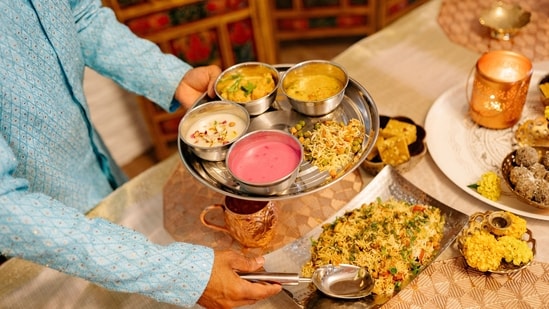
Ask anyone what Diwali tastes like, and they will usually tell you about a childhood memory: kachoris frying in the kitchen, a bowl of halwa still warm, mithai laid out on the big family platter. A traditional festive menu starts there, with flavours people already know and the joy of sharing them. You don’t need a huge spread to get that feeling at home. A few good choices are enough. In an interview with HT Lifestyle, Vibhanshu Mishra, founder of Banaraswala – Ghat Se Ghar Tak, shared quick ways to spice up your Diwali menu.
Also read | Hosting a Diwali party? Here's how to enjoy it without living in the kitchen
Start with a taste of Banaras
Welcome guests with small portions of khasta kachori and aloo ki sabzi, or set up a little chaat counter with dahi bhalla, papdi chaat and tamatar chaat. “Each of these has its own texture: crisp pastry, soft lentil dumplings, cool curd, sharp tangy chutneys,” said Mishra. Keep the servings small. Guests should enjoy the starters and still have room for dinner.
Build the meal around family favourites
“Pick dishes that already belong to your household’s celebrations,” advised Mishra. Bedmi poori with aloo sabzi, matar-paneer, a seasonal vegetable and a fragrant pulao make a filling vegetarian meal. It feels even more personal if one dish comes from a parent or grandparent, such as their kaddu ki sabzi, a homemade pickle or a special dal. Give that dish a prominent place on the table and tell your guests where it comes from.
Use what the season gives you
{{/usCountry}}“Pick dishes that already belong to your household’s celebrations,” advised Mishra. Bedmi poori with aloo sabzi, matar-paneer, a seasonal vegetable and a fragrant pulao make a filling vegetarian meal. It feels even more personal if one dish comes from a parent or grandparent, such as their kaddu ki sabzi, a homemade pickle or a special dal. Give that dish a prominent place on the table and tell your guests where it comes from.
Use what the season gives you
{{/usCountry}}According to Mishra, singhara, fresh peas, carrots and leafy greens are all good options if you can find them locally. Go easy with ghee, roasted cumin, ginger, cardamom and saffron so every dish still tastes like itself. If your family follows a sattvik tradition during the festival, plan a no-onion, no-garlic menu from the start. That way, the meal feels complete rather than adjusted at the last minute.
End with mithai, but keep it simple
A few well-chosen sweets work better than a table crowded with too many. Pair a rich gulab jamun with something lighter, like phirni in small earthen bowls. Add besan laddoo or barfi for guests who look for the usual festive favourites. Smaller pieces let people try a bit of everything, and a mithai box to take home carries the celebration into the next day.
Set the table the traditional way
Serve chutneys in katoris and arrange the sweets on a thali. Brass or kansa serving pieces look lovely, as long as they are clean and food-safe. Flowers and diyas add to the setting, but keep them well away from the food. Make the chutneys, fillings and sweets ahead of time where you can, and leave the breads and fried snacks for just before serving.